
Cart
0
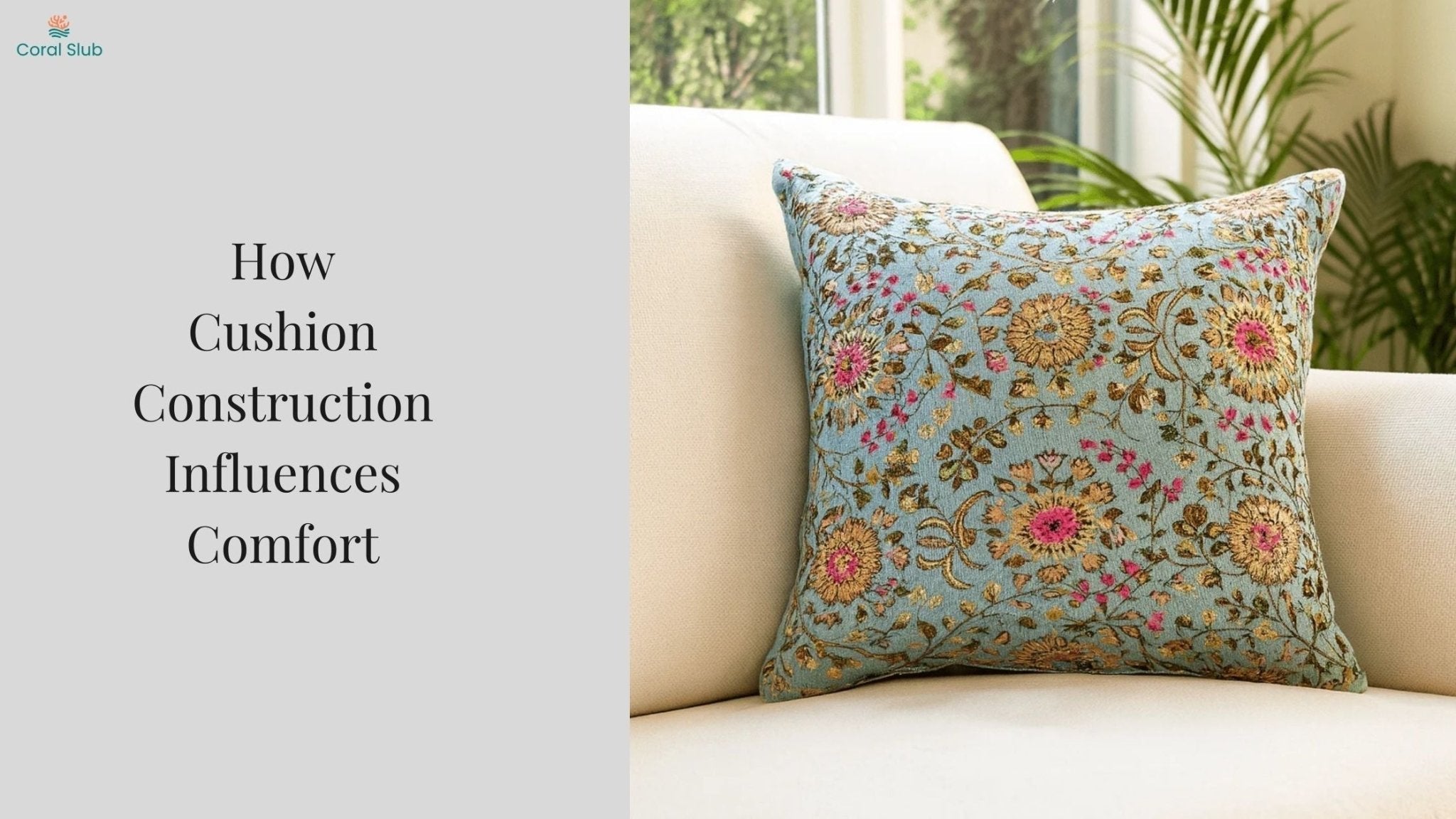
A cushion may look simple from the outside, but what lies within determines how comfortable, supportive, and long lasting it truly is. Two cushions with the same fabric can feel completely different depending on how they are constructed. The filling, stitching, seams, inner lining, and shape all play a key role in deciding whether a cushion feels soft, firm, bouncy, or perfectly balanced.
Understanding cushion construction helps you choose better cushions for your sofa, bed, chairs, and reading corners. It also explains why some cushions retain their shape for years while others go flat within months.
Here is a beginner friendly guide to how the construction of a cushion directly influences the comfort it provides.
The Role of Cushion Filling

The filling is the heart of any cushion. It defines the softness, support, and durability of the piece. Foam filled cushions feel structured and supportive. They keep their shape for longer and work well for sofa seating and back support. Microfibre or polyfill cushions feel softer and more cloud-like. They are ideal for decorative cushions and cosy lounging.
Many well constructed cushions combine both structure and softness by using layered fillings. This blend ensures comfort without losing shape. The quality and density of the filling decide how the cushion responds to weight, how fast it recovers, and how long it lasts.
How the Shape and Size Affect Comfort

Cushion shape is not just about aesthetics. Square cushions offer even support and are the most versatile for sofas and beds. Lumbar cushions support the lower back and offer comfort during long sitting hours. Bolster cushions provide side support or neck comfort depending on where they are placed.
Larger cushions feel plush and inviting, while smaller ones are perfect for layering and styling. The right mix of shapes ensures comfort for different sitting postures and body needs.
Importance of Inner Lining and Fabric Layers
A well constructed cushion usually includes an inner lining that protects the filling. This lining prevents the filling from shifting, clumping, or thinning out over time. It also acts as a barrier between the outer fabric and the inner material, keeping the cushion hygienic and easy to maintain.
The outer fabric plays an equally important role. Cotton cushion covers feel breathable and soft, making them ideal for summer. Velvet and suede feel warm and luxurious, perfect for winter. Woven fabrics offer durability for everyday use. The fabric texture decides how the cushion feels against the skin and how well it holds up with daily handling.
Stitching and Seams Matter More Than We Think

The seam construction determines the strength and finish of the cushion. A piped seam adds structure and keeps the edges crisp. Overlocked seams prevent fraying and ensure the cushion survives multiple washes. Strong seams mean the filling stays intact and the cushion does not burst or lose shape over time.
Topstitching reinforces the edges while adding a decorative element. The quality of stitching directly influences comfort because a well stitched cushion stays firm, smooth, and supportive for longer.
How Loft and Resilience Influence Feel

Loft refers to the height or fluffiness of a cushion. High loft cushions feel airy, soft, and plush. They are perfect for cosy corners and decorative layering. Low loft cushions feel flatter and more supportive, ideal for back support or firm seating.
Resilience is the cushion’s ability to bounce back after pressure. A resilient cushion does not stay dented. It returns to its original shape quickly. This is a key indicator of durability and comfort because resilient cushions stay comfortable even after long use.
Why Construction Quality Should Guide Your Purchase

A cushion might look beautiful on the outside, but true comfort depends on what you cannot see. Good construction ensures the cushion supports your back, feels soft where needed, stays breathable in warm weather, and remains warm during winter.
A well constructed cushion lasts longer, requires less fluffing, and continues to look full and inviting even after everyday use. When you understand cushion construction, you start choosing cushions that suit your lifestyle instead of only the design or colour.
Final Thoughts
Comfort is a combination of thoughtful construction, quality materials, and skilled craftsmanship. From the filling inside to the seams that hold everything together, every element affects how a cushion feels and performs. When you look beyond the fabric and design, you begin to appreciate the engineering behind something as simple as a cushion.
Whether you want soft, stylish, or supportive accents for your home, understanding these details helps you select pieces that enhance both comfort and long term durability.