Cart
0
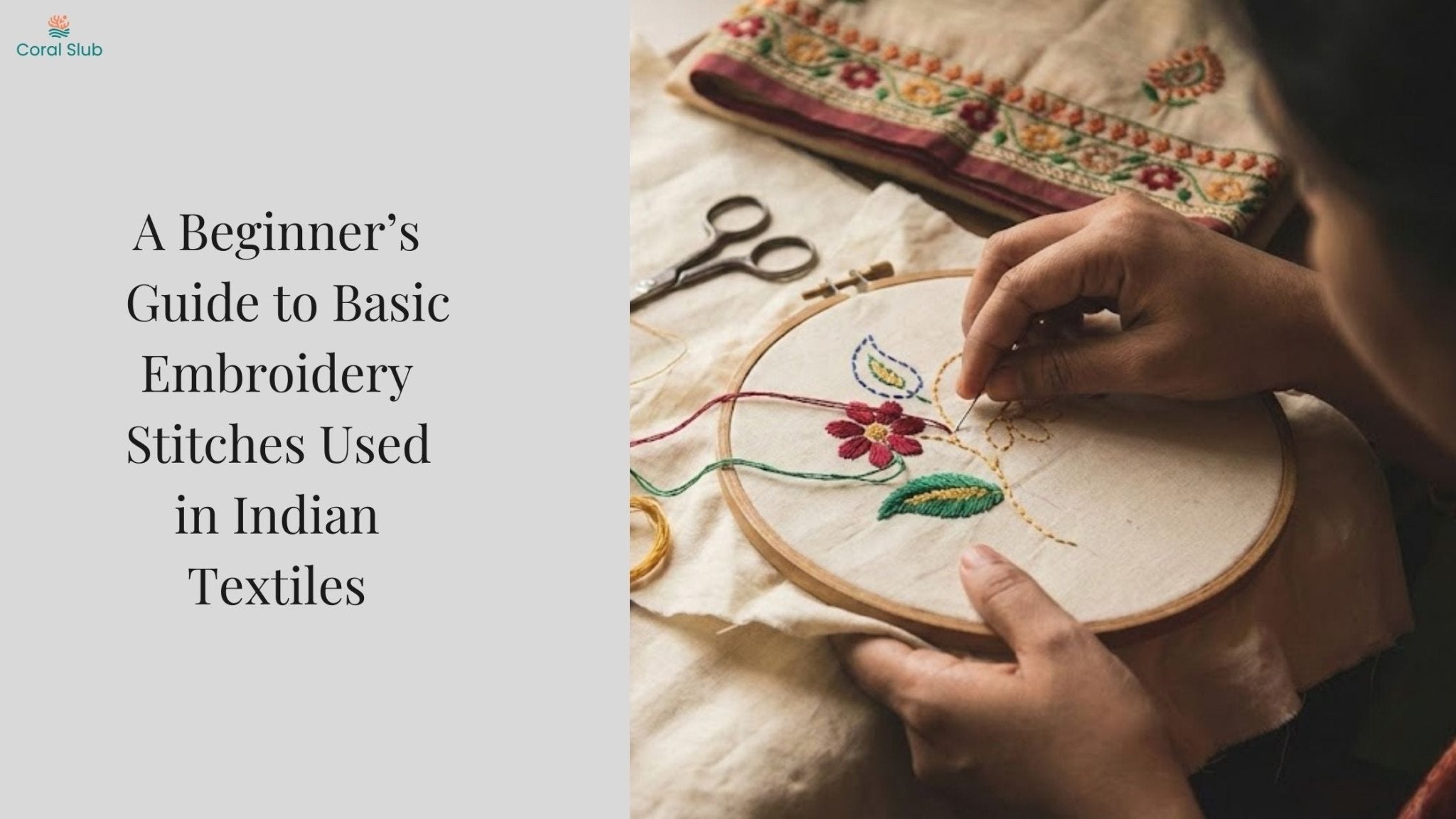
Embroidery has always been an essential part of Indian textile heritage. From traditional sarees to handworked cushion covers and quilts, stitches tell stories of skill, culture, and timeless artistry. Even the simplest stitches carry a beauty that has shaped regional crafts across India.
If you are just beginning to explore textile craftsmanship or want to understand how embroidery gives life to Indian fabrics, this beginner-friendly guide will help you learn the foundation stitches used in both heritage and modern designs. These stitches are easy to recognise and form the backbone of many famous art forms.
Running Stitch

The running stitch is the most basic and widely used embroidery stitch. It creates a simple up and down movement on the fabric, forming small dashed lines. Despite its simplicity, it plays a key role in Indian crafts such as Kantha from Bengal and Sujani from Bihar.
In Kantha work, rows of running stitches form intricate patterns that resemble ripples or waves. In home furnishings, this stitch is often used for light quilting, outlining, and reinforcing seams. Its clean rhythm gives fabric a hand-touched, warm aesthetic.
Back Stitch

The back stitch creates a stronger, more defined line compared to the running stitch. Each stitch is made by moving the needle backward to fill the small gap left previously. This makes the line appear continuous and firm.
Back stitches are often used for outlines, borders, lettering, and detailed shapes. They give embroidery a neat and confident look. Crafts that focus on contours or motifs rely on this stitch because it produces clarity and accuracy.
Chain Stitch

The chain stitch forms loops that resemble the links of a chain. It is one of the most decorative and expressive stitches in Indian embroidery. Chain stitch is the foundation of several regional art forms, including Kashmiri Kashida and Aari work from Gujarat and Rajasthan.
This stitch adds texture and fullness to motifs, making flowers, vines, and paisley patterns appear rich and dimensional. Many traditional cushion covers, wall hangings, and textile panels still use chain stitch to highlight cultural patterns.
Stem Stitch

The stem stitch is named for its resemblance to the twisted rope-like look of botanical stems. It creates a smooth, slightly raised line that is perfect for curved outlines and flowing motifs.
This stitch is commonly used in floral embroidery, whether in sarees, table linen, or cushion covers. It follows curves beautifully, giving vines and stems a natural and fluid appearance.
Satin Stitch

The satin stitch fills shapes with closely packed threads that create a smooth, glossy surface. It is used to fill petals, leaves, geometric spaces, and solid motifs in Indian embroidery.
The beauty of satin stitch lies in its finish. When stitched carefully, it creates a surface that looks almost painted. This technique is popular in contemporary home décor accents, premium fabrics, and traditional crafts that require fullness and shine.
Cross Stitch

The cross stitch is created by making two diagonal stitches that cross each other. It is one of the easiest counted-thread stitches and is used to create geometric patterns, borders, and motifs.
Cross stitch appears prominently in Kasuti embroidery from Karnataka. The precision of this stitch creates mathematical patterns that look both traditional and modern. It is also a popular choice for beginners exploring small home projects such as bookmarks, coasters, and framed embroidery.
Herringbone Stitch

The herringbone stitch forms a crisscross pattern that resembles a zigzag. It can be stitched lightly for delicate effects or more tightly for a bold finish.
This stitch adds texture and dimension to fabric, making it suitable for edging borders, filling spaces, or adding decorative accents. In home furnishings, herringbone stitching offers a handcrafted visual interest that elevates plain surfaces.
Why These Stitches Matter in Indian Textiles

Basic stitches may seem simple, but they form the foundation of India’s most celebrated embroidery traditions. Regional crafts often combine multiple stitches to create layers of texture, depth, and storytelling.
When you recognise these stitches, you begin to notice the details in cushion covers, rugs, quilts, runners, and clothing. Each stitch reflects time, patience, and cultural identity. Basic stitches also show how artisans bring life to fabric using only thread, rhythm, and skill.
For anyone exploring embroidery as a hobby or learning about the craft behind home décor, understanding these stitches is the first step toward appreciating the artistry of Indian textiles.
Final Thoughts

Embroidery is a language created with thread. Even the simplest stitches carry the history of Indian homes, traditions, and artistry. From running stitches in Kantha quilts to chain work in Kashmiri crafts, these techniques have shaped the visual identity of Indian textiles for generations.
By learning these foundational stitches, you not only understand how patterns are formed but also gain a deeper respect for the handmade beauty in everyday furnishings.
Suggested Resources
- Understanding Block Print vs Screen Print
- What Makes Chikankari Unique in Indian Embroidery
- How Cushion Construction Influences Comfort