Cart
0
For centuries, Indian textiles have travelled across continents, carrying stories of craftsmanship, culture, and tradition. From the intricate weaves of Banaras to the delicate embroidery of Kashmir and the timeless block prints of Rajasthan and Gujarat, India's textile heritage has long inspired designers, collectors, and fashion houses around the world.
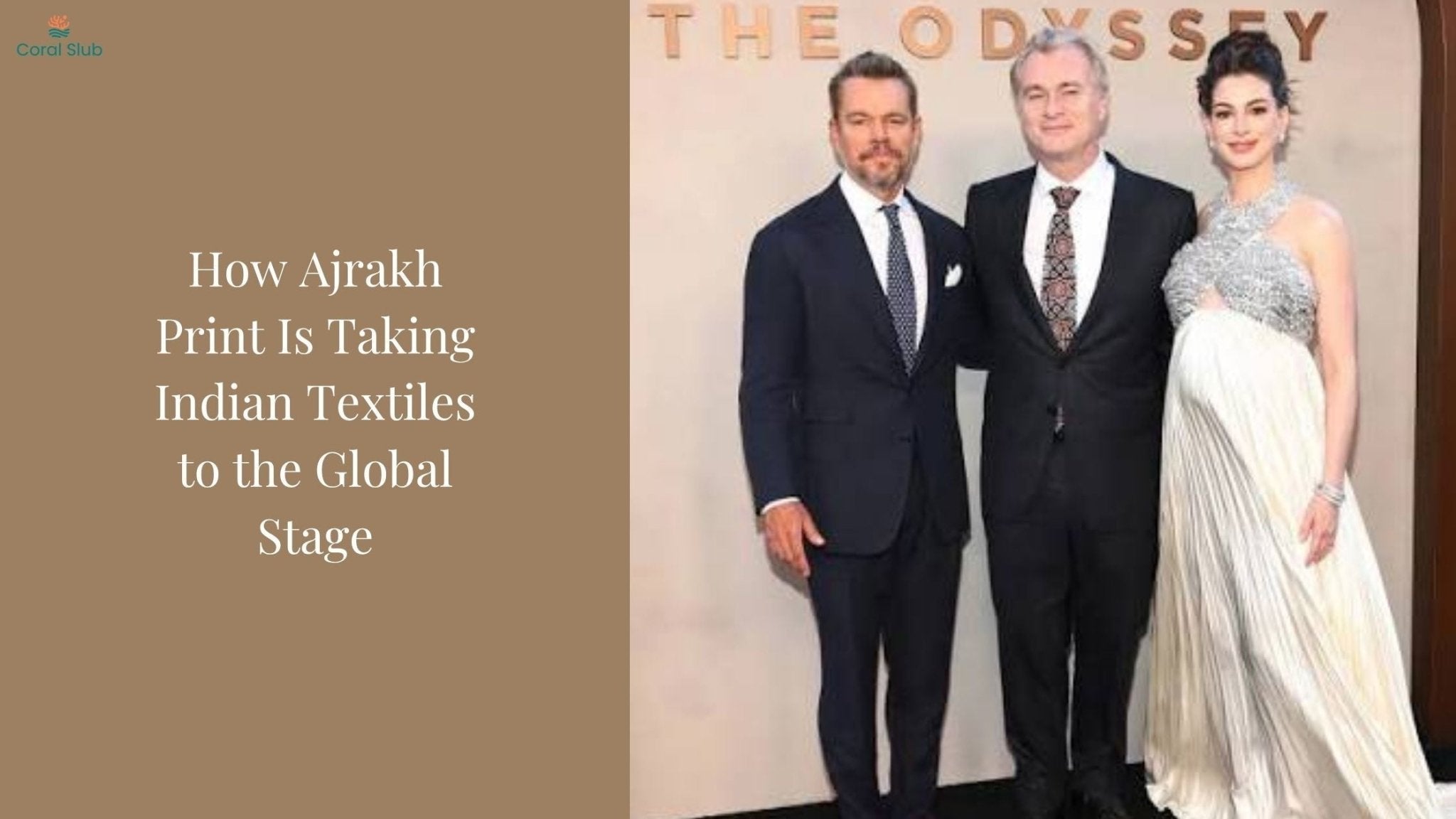
Today, that story is entering a new chapter.At the New York premiere of Christopher Nolan's The Odyssey, the acclaimed filmmaker made a subtle yet powerful style statement by wearing a custom Ajrakh silk tie designed by Indian-origin designer Aahaan Tandon. Instead of opting for a conventional solid tie, Nolan chose a centuries-old Indian hand-block print, quietly introducing one of India's oldest textile traditions to one of cinema's biggest international stages. The look immediately sparked conversations across the fashion and design world about the enduring relevance of Indian craftsmanship.
Far from being just another red-carpet accessory, the tie became a reminder that Indian textiles are no longer confined to museums, heritage exhibitions, or traditional attire. They are becoming part of contemporary global fashion.
What Is Ajrakh Print?

Ajrakh is one of South Asia's oldest surviving textile traditions, practised for generations by artisan communities in the Kutch region of Gujarat and parts of Sindh. It is renowned for its intricate geometric patterns, rich indigo and madder-red colour palette, and the painstaking process of hand block printing using natural dyes.
Unlike modern digital printing, every Ajrakh fabric is created through multiple stages of washing, resist printing, dyeing, drying, and reprinting. Depending on the complexity of the design, the process can take several weeks before a single piece is completed. This meticulous craftsmanship means that no two pieces are ever exactly alike.
Why Christopher Nolan's Ajrakh Tie Matters
Indian Craftsmanship on an International Red Carpet

Christopher Nolan is known for his understated personal style. His wardrobe typically consists of dark suits and plain ties, making his decision to wear a custom Ajrakh tie particularly noteworthy. Rather than making an overt fashion statement, he demonstrated how a heritage textile can seamlessly complement contemporary tailoring.
The tie was created by New York-based Indian-origin designer Aahaan Tandon, who sourced the Ajrakh fabric from India before handcrafting the accessory in New York. According to the designer, the project aimed to showcase how traditional Indian textiles can naturally exist within modern global fashion rather than being limited to ethnic wear.
This single accessory introduced millions of people to Ajrakh, many encountering the textile for the very first time.
Indian Textiles Are Gaining Global Recognition

Nolan's appearance is part of a much larger movement.Across international fashion weeks, luxury brands, museums, and independent designers, there is growing appreciation for handcrafted textiles that carry cultural identity and sustainable production methods.
Consumers are increasingly looking beyond fast fashion in favour of products that tell authentic stories. Indian textile traditions offer exactly that.
Hand block printing, natural dyeing, hand weaving, quilting, embroidery, and regional crafts are being celebrated not only for their visual beauty but also for the generations of artisan knowledge they preserve.Rather than chasing fleeting trends, these crafts represent timeless design.
Why Ajrakh Appeals to Modern Design

Ajrakh feels surprisingly contemporary despite its ancient origins.Its repeating geometric patterns complement minimalist interiors, modern tailoring, and contemporary home décor. The balanced motifs, earthy colours, and handcrafted imperfections give every piece depth and character that machine-made prints often cannot replicate.Whether incorporated into a silk tie, a scarf, cushion covers, table runners, tote bags, or bedding, Ajrakh effortlessly bridges tradition and modern living.
This versatility is one of the reasons designers across the world continue to reinterpret the craft in new forms.
The Rise of Heritage Luxury
Craftsmanship Is the New Definition of Premium

Luxury today is no longer defined solely by logos or exclusivity.Increasingly, it is measured by craftsmanship, authenticity, sustainability, and the story behind each product.
Ajrakh embodies all of these qualities.Each piece reflects hours of skilled labour, natural dye techniques, hand-carved wooden blocks, and centuries of inherited artisan knowledge. These qualities resonate strongly with modern consumers who value meaningful design over mass production.
As appreciation for handcrafted products grows, heritage textiles like Ajrakh are becoming symbols of quiet luxury.
Beyond Fashion: Ajrakh in Modern Homes
Why Interior Designers Love Ajrakh

The growing popularity of Ajrakh extends beyond clothing.Interior designers are increasingly incorporating block-printed textiles into contemporary homes through cushion covers, quilts, table runners, bed linens, curtains, and decorative accessories.
The geometric rhythm of Ajrakh patterns pairs beautifully with natural materials such as wood, linen, brass, ceramics, and cotton, making it suitable for both traditional and modern interiors.Its timeless appeal allows homeowners to celebrate Indian craftsmanship in subtle yet sophisticated ways.
A Moment of Pride for Indian Craftsmanship
A Global Opportunity for Indian Artisans

When internationally recognised figures choose handcrafted Indian textiles, the impact reaches far beyond fashion.It shines a spotlight on artisan communities, encourages appreciation for traditional skills, and reminds the world that heritage crafts continue to evolve rather than remain frozen in history.
Christopher Nolan's Ajrakh tie demonstrated that a centuries-old textile from Kutch could sit comfortably alongside contemporary luxury tailoring on one of the world's most watched red carpets.Sometimes, a single thoughtfully chosen accessory can tell a much larger story.
Final Thoughts

Ajrakh is more than a print. It is a living tradition that reflects patience, precision, artistry, and cultural heritage. Its journey from the workshops of Kutch to the international stage is a testament to the enduring value of Indian craftsmanship in a rapidly changing world.
Christopher Nolan's appearance at The Odyssey premiere may have lasted only a few moments on the red carpet, but it sparked a global conversation about one of India's oldest textile traditions. It served as a reminder that handcrafted textiles are not relics of the past. They are timeless expressions of design that continue to inspire fashion, interiors, and culture across the world.
As more designers and global tastemakers embrace Indian textiles, crafts like Ajrakh are finding new audiences while honouring the generations of artisans who have preserved them.
Bring the Timeless Beauty of Ajrakh into Your Home with Coral Slub
Inspired by Tradition, Designed for Modern Living

Inspired by one of India's most celebrated textile traditions, Coral Slub's Ajrakh Print Cushion Covers bring the artistry of handcrafted block printing into contemporary living spaces. Featuring intricate geometric patterns, rich earthy hues, and premium cotton fabrics, these cushions beautifully capture the essence of Ajrakh while complementing modern, minimalist, and traditional interiors alike.
Whether you're styling a neutral sofa, creating a heritage-inspired reading nook, or adding a touch of artisan craftsmanship to your living room, Ajrakh cushion covers offer a timeless way to celebrate India's rich textile legacy. Thoughtfully designed for everyday living, they transform your home with warmth, culture, and understated elegance, proving that centuries-old craftsmanship continues to inspire modern homes.
Frequently Asked Questions
What is Ajrakh print?
Ajrakh is a traditional hand block-printing and resist-dyeing technique originating from the Kutch region of Gujarat and parts of Sindh. It is known for its intricate geometric patterns and natural indigo and madder-red dyes.
Why did Christopher Nolan's Ajrakh tie receive so much attention?
Christopher Nolan wore a custom Ajrakh silk tie designed by Indian-origin designer Aahaan Tandon to the New York premiere of The Odyssey. The accessory highlighted Indian textile craftsmanship on a major international stage and sparked widespread interest in Ajrakh.
Why is Ajrakh considered sustainable?
Ajrakh is traditionally produced using hand-carved wooden blocks, natural dyes, and labour-intensive artisanal techniques. The slow, handcrafted process supports traditional craftsmanship and uses fewer industrial manufacturing methods than mass-produced textiles.