Cart
0
Festivals in India are more than celebrations. They are expressions of culture, devotion, and traditions that have been lovingly passed down through generations. Every ritual, every decoration, and every symbol carries a deeper meaning, transforming homes into spaces filled with positivity and togetherness.
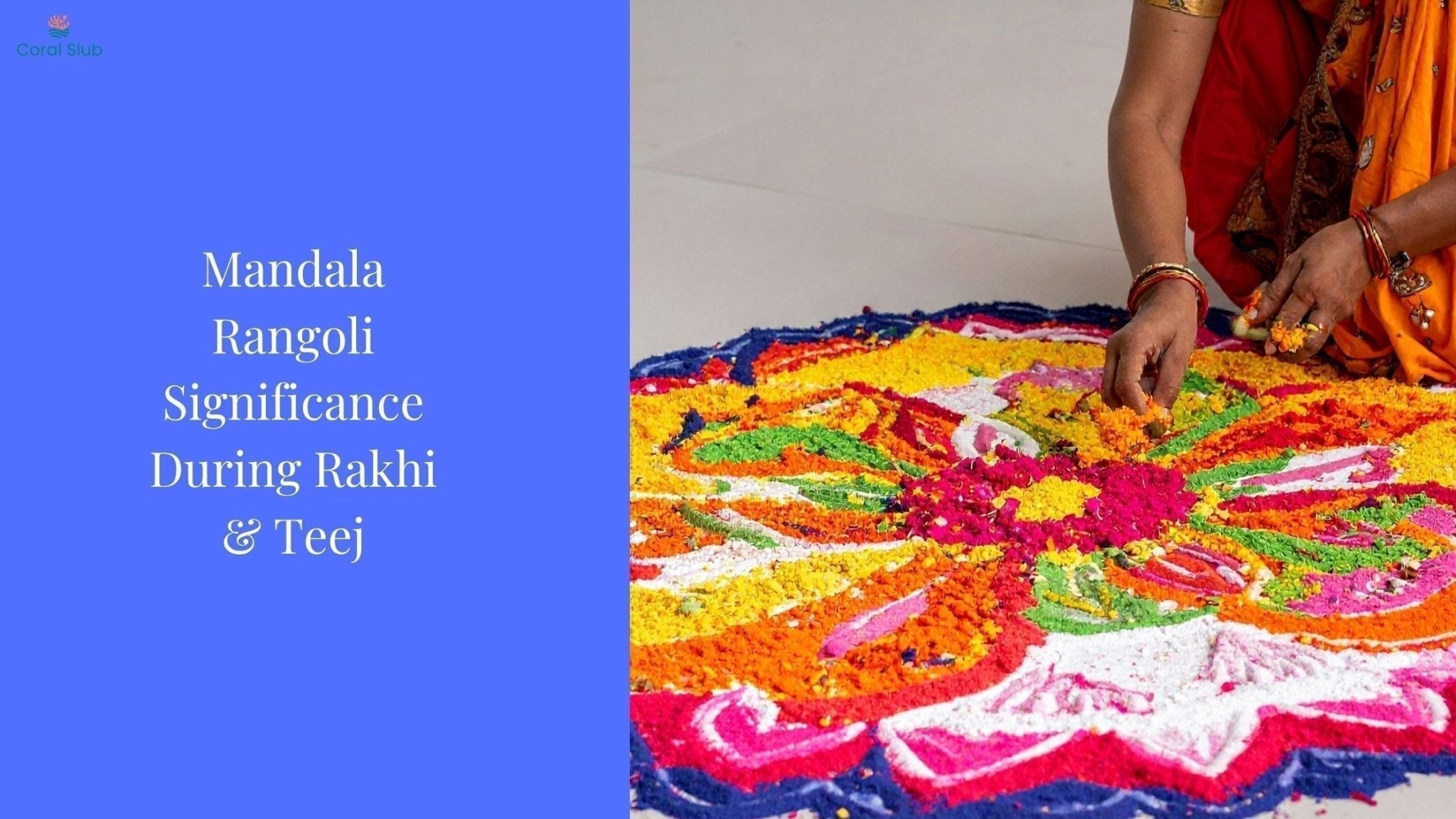
Among these timeless traditions, Mandala Rangoli holds a special place. Whether it's welcoming guests on Raksha Bandhan or preparing the home for the joyous celebrations of Hariyali Teej, a beautifully crafted mandala rangoli is much more than decorative art. Its intricate circular patterns represent harmony, balance, and the continuous cycle of life, making it one of the most meaningful additions to festive décor.
As modern homes embrace minimal yet thoughtful celebrations, Mandala Rangoli continues to remain relevant, blending ancient symbolism with contemporary aesthetics.
Let's explore why Mandala Rangoli is considered so auspicious during Rakhi and Teej
What Is a Mandala?

The word "Mandala" comes from the ancient Sanskrit language and means "circle" or "sacred geometric pattern." Across Hinduism, Buddhism, and Jainism, mandalas have long been used as spiritual symbols representing the universe, wholeness, and the interconnectedness of all life.
A mandala begins from a central point and expands outward in perfectly balanced patterns. This symmetry reflects harmony between the inner self and the outer world, making it a powerful symbol of peace and spiritual well-being.
When recreated as a rangoli at the entrance of a home, a mandala is believed to invite positive energy while creating a sacred space for celebration.
Why Is Mandala Rangoli Made During Festivals?

Indian festivals are centred around welcoming happiness, prosperity, and divine blessings into the home.
Creating a rangoli at the entrance has traditionally symbolised inviting auspiciousness while keeping away negativity. A mandala design enhances this belief because its balanced geometry represents stability, completeness, and protection.
Unlike free-flowing floral rangolis, mandala patterns are carefully structured. Every circle, petal, and repeating motif contributes to a design that reflects order, mindfulness, and spiritual balance.
This is why mandalas are commonly seen during festivals, religious ceremonies, weddings, and housewarming celebrations.
The Significance of Mandala Rangoli During Raksha Bandhan
Celebrating the Bond of Love and Protection

Raksha Bandhan is a festival that celebrates the timeless bond between siblings. The Rakhi thread tied around a brother's wrist symbolises love, trust, protection, and lifelong support.
A Mandala Rangoli beautifully complements these values.Its circular design represents unity and eternal relationships, with no beginning and no end. Just as the Rakhi thread signifies an unbreakable bond, the continuous patterns of a mandala reflect lasting connections between family members.
Many families create a mandala near the entrance or in the space where the Rakhi ceremony is performed. It not only enhances the festive atmosphere but also symbolically welcomes blessings, happiness, and harmony into the home.
The symmetry of the design reminds us that relationships flourish through balance, mutual respect, and unconditional love.
The Significance of Mandala Rangoli During Hariyali Teej
Welcoming Prosperity, Renewal, and Divine Blessings

Hariyali Teej arrives with the refreshing beauty of the monsoon. Dedicated to the divine union of Lord Shiva and Goddess Parvati, the festival celebrates devotion, marital happiness, fertility, and new beginnings.
A Mandala Rangoli during Teej reflects these very themes.The circular patterns symbolise the continuous cycle of life, while floral motifs often incorporated into mandalas represent growth, abundance, and the flourishing beauty of nature during the rainy season.
Green, yellow, pink, and earthy colours commonly used in Teej rangolis echo the lush landscapes of the monsoon and create a joyful atmosphere within the home.
For many families, preparing a rangoli before the Teej puja is a mindful ritual that marks the beginning of the celebrations with gratitude and positivity.
Symbolism Behind Mandala Rangoli Patterns

One of the reasons Mandala Rangoli remains timeless is the meaning hidden within its designs.
Circle - The outer circle represents eternity, wholeness, protection, and the infinite nature of life.
Lotus - A lotus motif symbolises purity, spiritual awakening, and resilience, reminding us that beauty can flourish even through challenges.
Petals - Radiating petals reflect growth, hope, abundance, and positive transformation.
Geometric Symmetry - Balanced geometric patterns signify stability, mindfulness, harmony, and order.
Dots and Repeating Motifs - These represent continuity, unity, and the interconnectedness of family, community, and nature.Together, these elements transform a simple rangoli into a meaningful expression of devotion and celebration.
Colours That Enhance the Spiritual Meaning

Colour plays an important role in Mandala Rangoli, especially during Rakhi and Teej.
-
Green represents prosperity, fertility, renewal, and the beauty of the monsoon.
-
Yellow symbolises happiness, optimism, and divine blessings.
-
Red stands for love, strength, energy, and auspiciousness.
-
White reflects peace, purity, and spiritual harmony.
-
Pink represents affection, compassion, and celebration.
-
Orange signifies enthusiasm, warmth, and positive energy.
Choosing colours thoughtfully adds another layer of symbolism to your festive decorations.
Creating a Minimal Yet Elegant Mandala Rangoli

Beautiful festive décor doesn't need to be elaborate.
A simple Mandala Rangoli created with coloured powders, flower petals, rice flour, or eco-friendly natural colours can make a striking impression. Position it at your entrance, near the pooja room, or around the Rakhi or Teej celebration area.
Pair the rangoli with brass diyas, fresh marigolds, candles, or floating flowers to create an inviting festive setting that feels elegant rather than overwhelming.
This minimalist approach allows the intricate geometry of the mandala to become the focal point.
Decorating Your Home Around a Mandala Theme

A Mandala Rangoli becomes even more impactful when complemented by coordinated home décor.
Decorate your living room with embroidered cushion covers featuring mandala-inspired motifs, style your dining table with handcrafted cotton table runners, and use fresh flowers, brass accents, and warm lighting to create a cohesive festive ambience.
Natural cotton textiles and artisan-inspired home furnishings beautifully reflect the symmetry and timeless craftsmanship found in traditional mandala designs.
Why Mandala Rangoli Remains Relevant Today

Despite changing lifestyles, Mandala Rangoli continues to hold its place in modern homes because it offers more than visual beauty.
Drawing or arranging a mandala encourages mindfulness and creativity, turning decoration into a calming ritual. Families often gather to create rangolis together, making it a shared experience that strengthens bonds across generations.
In today's fast-paced world, this simple tradition offers an opportunity to slow down, celebrate meaningful moments, and reconnect with cultural heritage while creating a warm and welcoming environment for loved ones.
Final Thoughts

Mandala Rangoli is far more than a decorative pattern created during festivals. It is a timeless symbol of harmony, protection, prosperity, and spiritual balance. During Raksha Bandhan, it beautifully reflects the enduring bond between siblings, while during Hariyali Teej, it celebrates renewal, devotion, and the blessings of a joyful married life.
Whether crafted with vibrant colours, delicate flower petals, or eco-friendly materials, a Mandala Rangoli transforms ordinary spaces into sacred places of celebration. As families gather to honour traditions and create new memories, these intricate circular designs continue to remind us that every festival is an opportunity to invite positivity, gratitude, and togetherness into our homes.
Celebrate Rakhi and Teej with Coral Slub

Complete your festive décor with Coral Slub's collection of mandala-inspired cushion covers. Pair timeless textiles with a beautiful Mandala Rangoli to create a home that celebrates tradition with contemporary elegance.
Frequently Asked Questions
Why is Mandala Rangoli important during Rakhi?
Mandala Rangoli symbolises unity, protection, and harmony. During Raksha Bandhan, its circular patterns represent the unbreakable bond between siblings and are believed to invite positive energy and blessings into the home.
Why is Mandala Rangoli made during Teej?
During Hariyali Teej, Mandala Rangoli symbolises prosperity, renewal, marital happiness, and spiritual balance. It complements the festival's celebration of Lord Shiva and Goddess Parvati's divine union while welcoming good fortune.
What does a mandala represent in Hindu traditions?
A mandala represents the universe, completeness, balance, and the continuous cycle of life. Its symmetrical design is associated with peace, mindfulness, and spiritual harmony.
Which colours are considered auspicious for Rakhi and Teej Mandala Rangoli?
Green, yellow, red, white, pink, and orange are commonly used. These colours symbolise prosperity, happiness, love, purity, compassion, and positive energy, making them ideal for festive rangoli designs.
Can I create a simple Mandala Rangoli for festivals?
Yes. A minimalist Mandala Rangoli made with coloured powders, flower petals, rice flour, or eco-friendly natural colours can be just as meaningful as an elaborate design. Pairing it with diyas and fresh flowers creates an elegant festive display.