Deep indigo blues, earthy reds, intricate geometric patterns and beautifully balanced motifs make Ajrakh one of India's most distinctive textile traditions. More than just a decorative print, Ajrakh represents centuries of craftsmanship, cultural exchange and the knowledge of artisan communities who have preserved the art of hand block printing across generations.
Rooted in the historic textile traditions of the Sindh region and western India, Ajrakh has travelled from traditional community clothing to contemporary fashion, accessories and home décor. Its characteristic patterns have found appreciation among designers, textile enthusiasts and craft lovers across the world.
Today, as interest in handmade textiles and traditional Indian craftsmanship continues to grow, Ajrakh is receiving renewed attention. The Geographical Indication recognition for Kutch Ajrakh in 2024 marked an important milestone in protecting its regional identity and acknowledging the artisans behind the craft.
But where did Ajrakh originate? What makes its printing technique so distinctive? And how did a traditional textile become recognised beyond its place of origin?
Let's explore the fascinating journey of Ajrakh, from its historical roots to its place in contemporary design.
1. The Origin of Ajrakh:
Where Did Ajrakh Printing Originate?
Ajrakh is a traditional resist-dyeing and hand block-printing technique associated with the historic textile traditions of Sindh, Kutch in Gujarat and Barmer in Rajasthan. Its origins are closely connected to the cultural and trading networks of the wider Indus region.
The craft developed through generations of textile artisans, particularly members of the Khatri community, who carried their knowledge of printing and dyeing across regions. In Kutch, Gujarat, the craft became deeply established in villages such as Dhamadka and Ajrakhpur, where artisan families continued to refine its techniques.
Ajrakh was traditionally worn by the Maldhari pastoral community of Kutch. Men used the fabric as turbans, shoulder cloths and wrapped garments. Its cultural significance extended beyond clothing, with the textile also associated with identity, community traditions and ceremonial occasions.
What Does the Word Ajrakh Mean?
The word Ajrakh is commonly associated with the Arabic word Azraq or Azrak, meaning blue. This connection is particularly relevant because deep indigo is one of the most recognisable colours in traditional Ajrakh textiles.
Another popular explanation comes from the phrase Aaj Rakh, meaning "keep it today". According to a local legend, a ruler admired a beautifully printed textile so much that he asked for it to be kept for another day.
Although the exact linguistic origin remains debated, the association with blue reflects the importance of indigo in the craft's traditional colour palette.
The Historical Connection with the Indus Valley
Ajrakh is often associated with the ancient textile traditions of the Indus Valley Civilisation. The geometric and trefoil motifs visible in certain archaeological representations have been compared with patterns found in traditional Ajrakh designs.
However, a direct, unbroken connection between the modern Ajrakh printing process and the textile techniques of the Indus Valley has not been conclusively established. It is more accurate to understand Ajrakh as part of the wider and long-standing textile heritage of the Indus region.
2. The Art of Ajrakh:
The Craft of Resist Printing
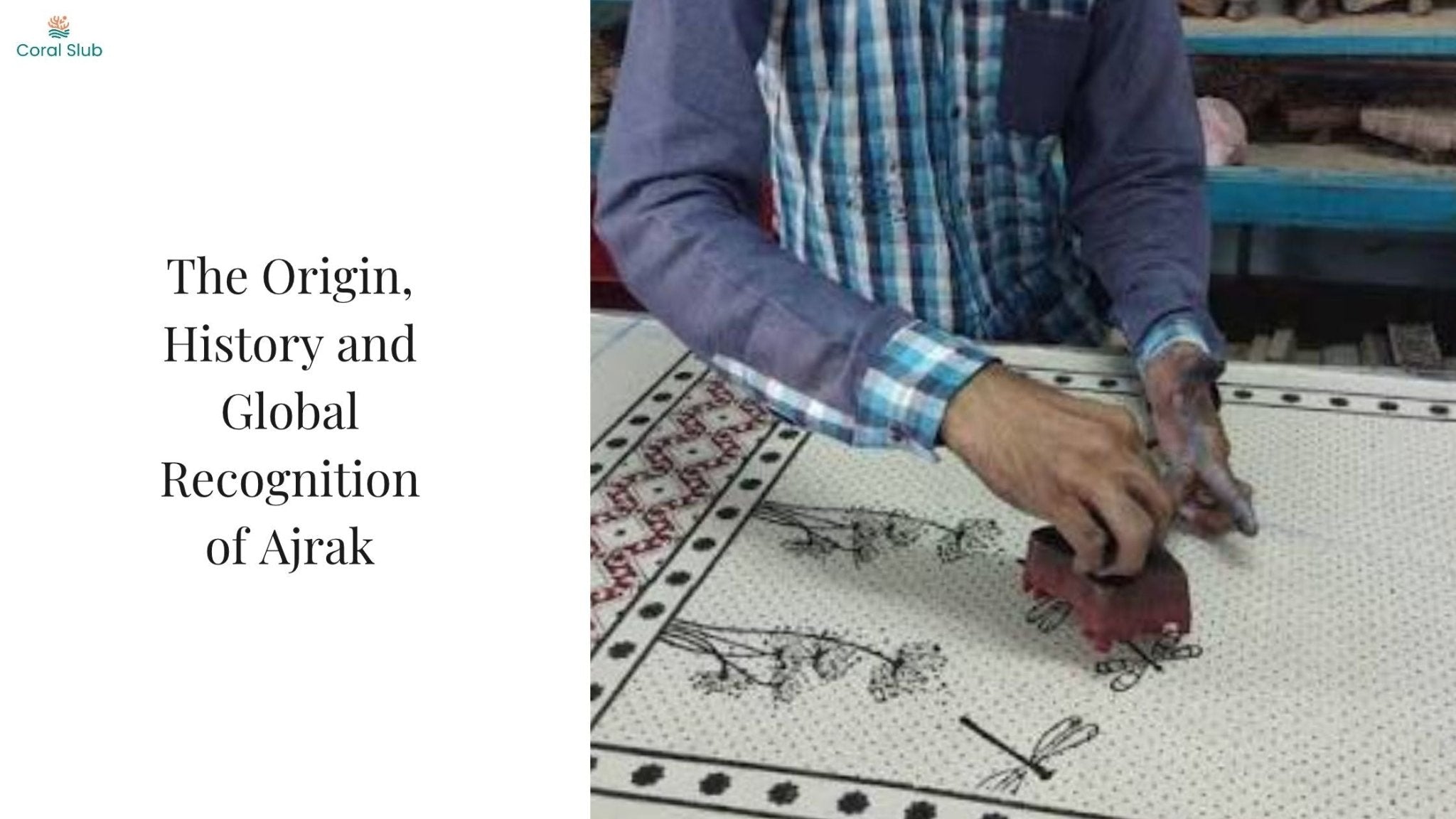
Ajrakh is created through a complex process of hand block printing and resist dyeing. Unlike printing methods in which colour is simply stamped onto the fabric, resist printing involves applying a protective paste to selected areas of the cloth. This prevents dye from reaching those sections, allowing the artisan to create intricate patterns through successive printing and dyeing stages.
The process requires considerable precision, patience and technical knowledge. Each stage contributes to the final appearance of the fabric, from the clarity of the motifs to the depth and richness of its colours.
Traditional Ajrakh production involves repeated washing, mordanting, block printing and dyeing. Depending on the design and technique, the process can include numerous stages before the finished textile is ready.
The Importance of Hand-Carved Wooden Blocks
The wooden block is one of the most essential tools in Ajrakh printing. Artisans use carefully carved blocks to transfer intricate geometric, floral and symmetrical patterns onto the fabric.
Different blocks are used for different parts of a design, including the central motifs, borders and fine detailing. Their alignment requires precision because even a slight variation can affect the continuity of the pattern.
The skill of the block maker is therefore just as important as the expertise of the printer. Together, these craftspeople preserve the visual identity of Ajrakh.
Natural Dyes and Traditional Colours
Traditional Ajrakh is particularly known for its use of natural dyes and carefully developed colour combinations. Indigo creates its signature blue, while madder is traditionally used to produce rich red tones. Other ingredients and mordants contribute to black, white and additional earthy shades.
These colours are not merely decorative. Their arrangement creates the depth, contrast and visual balance that make Ajrakh instantly recognisable.
Although contemporary production may also incorporate modern dyes and materials, traditional natural-dye techniques remain an important part of the craft's heritage.
3. Understanding the Signature Colours and Patterns of Ajrakh
Indigo Blue: The Colour That Defines Ajrakh
Indigo blue is perhaps the most recognisable feature of Ajrakh. Its deep, rich appearance creates a striking background for the intricate patterns printed across the fabric.
Traditionally obtained from indigo dye, the colour is associated with the craft's historical relationship with the landscape, materials and dyeing knowledge of the region.
Madder Red: Adding Warmth and Contrast
Deep red is another defining colour in traditional Ajrakh. Madder dye creates warm red tones that contrast beautifully with indigo, giving the textile its characteristic visual richness.
The combination of red and blue is often complemented by black and white, resulting in patterns that feel both bold and harmonious.
Geometric Symmetry and Floral Motifs
Ajrakh designs are known for their carefully arranged geometric patterns, stars, circles, floral forms and repeated motifs. These elements are often organised within grids, with central patterns framed by intricate borders.
The symmetry is one of the craft's most distinctive qualities. Each motif connects with the next, creating a continuous visual rhythm across the fabric.
The result is a textile that combines mathematical precision with the individuality of handmade craftsmanship.
4. Ajrakh and the Artisan Communities of Kutch
The Khatri Community and Generations of Craftsmanship
The Khatri community has played a central role in preserving and developing Ajrakh printing in Kutch. Printing knowledge, dyeing techniques and design traditions have been passed down through generations of artisan families.
Villages such as Dhamadka and Ajrakhpur remain important centres of the craft. Their workshops reflect the close relationship between traditional knowledge, family-based production and the local cultural landscape.
Ajrakh is not simply a pattern applied to fabric. It is the result of specialised knowledge involving materials, chemistry, block carving, printing, dyeing and washing.
Dhamadka and Ajrakhpur: Important Centres of Ajrakh
Dhamadka has historically been one of the major centres of Ajrakh production in Kutch. Following the 2001 Gujarat earthquake, many artisan families relocated and rebuilt their craft community in Ajrakhpur.
Today, Ajrakhpur is closely associated with the continuation of this textile tradition. The village represents the resilience of its artisans and their commitment to preserving a craft that remains an important part of Gujarat's cultural identity.
5. How Ajrakh Gained Recognition Beyond India
From Traditional Community Clothing to Contemporary Fashion
For generations, Ajrakh was closely associated with the everyday clothing and cultural identity of communities in Kutch and Sindh. Over time, designers and textile practitioners began exploring its patterns and techniques for contemporary clothing.
Its transformation from a traditional community textile into a popular fashion fabric has been documented in textile scholarship. Researchers have examined how artisan-designer collaborations, government initiatives and changing consumer preferences helped introduce Ajrakh to wider fashion markets.
Today, Ajrakh-inspired designs can be seen in sarees, dresses, jackets, scarves, stoles and other contemporary clothing. Its distinctive colour combinations and geometric motifs make it appealing to designers looking for textiles with a strong cultural identity.
International Textile Exhibitions and Academic Recognition
Ajrakh has also attracted interest from international textile researchers, museums and cultural heritage platforms. Its techniques and history have been documented in specialist publications and educational resources, allowing audiences outside India to understand the skill involved in its production.
Historical research into Indian printed textiles has also highlighted their place in international trade. Textile fragments found at the Fostat archaeological excavations in Egypt have been studied as evidence of the historic movement of Indian printed fabrics through trade networks.
This broader history places Ajrakh within the international story of Indian textile craftsmanship and its influence on textile traditions beyond the subcontinent.
Recognition in Contemporary Global Design
Ajrakh's appeal lies in its ability to work across traditional and modern design settings. Its intricate motifs can bring character to contemporary fashion, while its rich colour combinations offer possibilities for interior styling.
Designers and textile enthusiasts appreciate the contrast between its structured geometric patterns and the natural variation of handmade printing. This makes Ajrakh relevant to conversations around heritage-inspired design, craft preservation and the continued use of traditional techniques in contemporary products.
Its international visibility is therefore not limited to fashion. It is also part of a wider appreciation of Indian craftsmanship and the cultural stories behind handmade textiles.
6. Kutch Ajrakh Receives Geographical Indication Recognition
What Is a GI Tag and Why Does It Matter?
One of the most significant milestones in the recognition of Ajrakh came in 2024, when Kutch Ajrakh Print of Gujarat received Geographical Indication (GI) registration.
A GI tag identifies a product with a specific geographical origin and recognises qualities or characteristics associated with that region. It also provides legal protection against unauthorised use of the registered geographical name.
Kutch Ajrakh Print of Gujarat was registered under Application Number 1050. The application was filed on 31 January 2023, and the registration certificate was issued on 22 April 2024.
Why This Recognition Is Important for Artisans
The GI recognition is an important step towards protecting the identity of Kutch Ajrakh and supporting the communities that have preserved its techniques.
It helps distinguish the registered regional craft from imitations and strengthens its visibility in the marketplace. It also creates an opportunity for consumers to learn more about the textile's origin and the traditional knowledge behind its production.
However, it is important to understand that a GI registration in India is not the same as an international certification. It provides recognition and legal protection under India's GI framework, while broader international visibility develops through trade, design, cultural documentation and awareness.
A Milestone for India's Textile Heritage
The registration of Kutch Ajrakh is part of a larger effort to recognise and protect India's traditional crafts. It acknowledges the contribution of artisan communities and highlights the importance of preserving techniques that might otherwise be overshadowed by faster, mass-produced alternatives.
For Ajrakh, this recognition strengthens the connection between the textile, its geographical roots and the people who continue to create it.
7. Ajrakh in Modern Homes:
From Traditional Fabric to Home Décor
Ajrakh has evolved beyond its traditional use as clothing. Its intricate patterns and distinctive colours have made it an appealing choice for contemporary home décor.
Today, Ajrakh-inspired textiles can be incorporated into cushion covers, table runners, bed linen, throws and other decorative accents. The patterns add visual interest while bringing a sense of Indian craft heritage into everyday spaces.
The beauty of Ajrakh lies in its versatility. Its traditional motifs can complement contemporary interiors, whether styled in a colourful setting or used as an accent against neutral surroundings.
Styling Ajrakh Cushion Covers
Ajrakh cushion covers can introduce colour, pattern and texture to a living room or bedroom. Deep indigo and red designs pair beautifully with neutral sofas, wooden furniture and natural materials.
For a layered look, combine Ajrakh cushions with solid-coloured cushions in complementary shades. This allows the intricate motifs to stand out without overwhelming the space.
Adding Ajrakh to Dining Spaces
An Ajrakh-inspired table runner can bring traditional craftsmanship to a contemporary dining table. Its repeating patterns create an interesting focal point, especially when paired with simple tableware and understated décor.
For festive occasions, it can be styled with brass accents, flowers and warm lighting. For everyday dining, a simpler arrangement allows the textile to remain the centre of attention.
Creating a Heritage-Inspired Bedroom
Ajrakh patterns can also bring character to bedroom interiors. Cushion covers, decorative throws and carefully chosen bedding accents can introduce the craft's rich colour palette without making the room feel overly busy.
Pairing traditional prints with soft, understated fabrics creates a balanced look that celebrates Indian artistry while maintaining contemporary comfort.
For Coral Slub, exploring heritage-inspired textiles such as Ajrakh is an opportunity to bring traditional Indian design into modern homes through thoughtfully styled home furnishings.
Conclusion:
From its historical roots in the Sindh and Indus region to its continued practice in Kutch and Barmer, Ajrakh represents a remarkable journey of Indian textile craftsmanship. Its deep indigo blues, rich reds, intricate geometric patterns and labour-intensive printing techniques tell a story of artistry passed down through generations.
Its growing visibility in contemporary fashion, textile research and international design conversations reflects an appreciation for the skill and cultural heritage behind handmade textiles. The 2024 GI recognition of Kutch Ajrakh further strengthens the importance of protecting its regional identity and supporting its artisan communities.
As Ajrakh finds new applications in clothing and home décor, it reminds us that traditional craftsmanship does not belong only to the past. It can continue to inspire modern design while preserving the stories, skills and communities that make it meaningful.
At Coral Slub, we believe that Indian craftsmanship deserves a place in contemporary homes. Through thoughtfully styled textiles and heritage-inspired designs, traditional artistry can become part of the spaces we live in every day. Because some patterns are more than beautiful designs. They are stories woven, printed and preserved through generations.