Cart
0
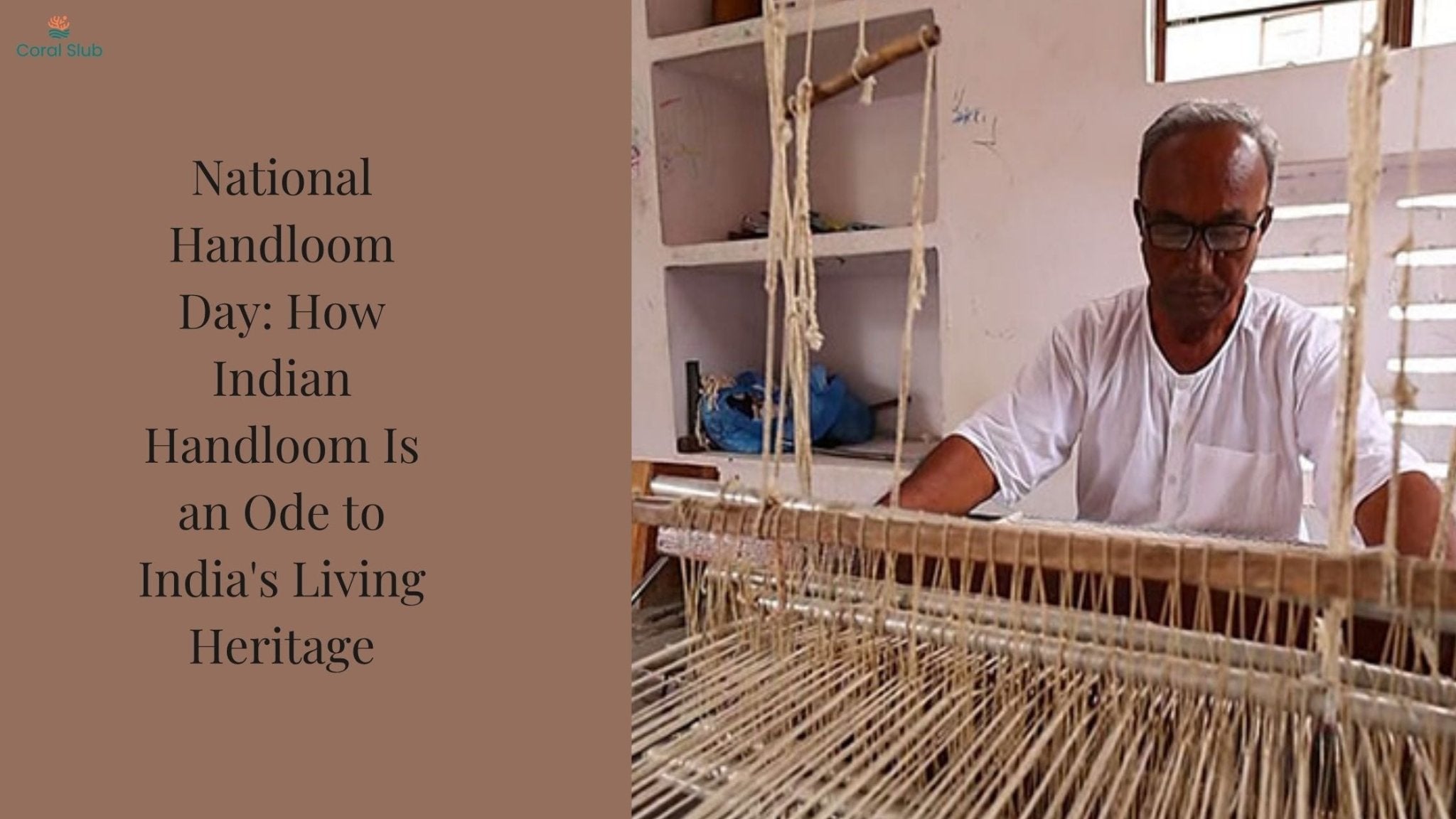
Every thread woven on a handloom tells a story.It is a story of generations of artisans preserving centuries-old techniques, of villages where weaving is more than a profession, and of textiles that carry the identity of a region, its people, and its culture. Unlike machine-made fabrics produced in minutes, handloom textiles are created patiently, one thread at a time, with every movement guided by the hands and experience of a skilled weaver.
Every year on 7 August, India celebrates National Handloom Day, recognising not only the country's extraordinary weaving traditions but also the artisans who continue to keep these crafts alive. It is a day that reminds us that Indian handloom is more than fabric. It is an expression of history, creativity, sustainability, and cultural pride.
As homes increasingly embrace handcrafted textiles and consumers seek products with meaning, National Handloom Day offers an opportunity to appreciate the remarkable journey behind every handwoven creation.
Why Is National Handloom Day Celebrated?
Honouring India's Rich Weaving Heritage

National Handloom Day is observed every year on 7 August to commemorate the Swadeshi Movement, which was launched on 7 August 1905. The movement encouraged Indians to support locally made products, particularly handwoven textiles, as a symbol of self-reliance and national pride.
The day was officially established by the Government of India in 2015 to celebrate the country's handloom industry and recognise the millions of artisans whose livelihoods depend on traditional weaving.
Today, National Handloom Day highlights the importance of preserving India's weaving traditions while encouraging consumers to choose handcrafted textiles over mass-produced alternatives.
Indian Handloom Is More Than Fabric
Every Weave Carries a Story

Handloom is often described as India's living heritage because every region has its own unique weaving style.Whether it is the luxurious Banarasi silk of Uttar Pradesh, the elegant Chanderi of Madhya Pradesh, the colourful Pochampally Ikat of Telangana, the intricate Kanjeevaram silk of Tamil Nadu, the delicate Jamdani of West Bengal, or the vibrant Bhujodi weaves of Gujarat, each textile reflects the traditions, geography, and history of its place of origin.
These fabrics are not simply woven for beauty. They preserve cultural identity and centuries of inherited knowledge.
The Beauty of Handwoven Craftsmanship
Woven One Thread at a Time

Unlike power looms that operate mechanically, handlooms rely entirely on human skill.
Every thread is manually placed and interlaced using traditional looms, requiring precision, patience, and years of experience. Depending on the complexity of the weave, creating a single textile may take several days or even weeks.
The Human Touch Makes Every Piece Unique
No two handwoven fabrics are exactly alike.Subtle variations in texture, weave, and finish are natural characteristics of authentic handloom textiles. These differences are not flaws but evidence of genuine craftsmanship, making every piece one of a kind.
A Sustainable Way of Creating Textiles
Handloom Respects Both People and the Planet

Long before sustainability became a global conversation, Indian handloom naturally embraced environmentally conscious production.
Most traditional weaving techniques consume significantly less electricity than mechanised textile production because they rely primarily on manual labour. Many artisan communities also continue to use natural fibres and traditional dyeing methods that reduce environmental impact.Choosing handloom supports a slower, more responsible approach to textile production.
Supporting Artisan Communities
Every Purchase Supports Generations of Skill

India's handloom sector provides livelihoods to millions of weavers, artisans, dyers, and craftspeople across rural communities.For many families, weaving is more than employment. It is a tradition passed from one generation to the next.
When consumers choose authentic handloom products, they contribute directly to preserving these skills while supporting artisan livelihoods and strengthening local economies.
Handloom in Modern Homes
Tradition Finds a Contemporary Expression

Handloom is no longer limited to traditional clothing. Today, handwoven textiles are finding a place in modern interiors through cushion covers, throws, table runners, bedsheets, curtains, and decorative accessories.
Their natural textures, timeless patterns, and artisanal character add warmth and authenticity to contemporary homes while celebrating India's rich textile heritage.
Minimalist interiors, farmhouse homes, Scandinavian spaces, and modern Indian décor all benefit from the understated elegance of handloom textiles.
Why Handloom Still Matters Today
Preserving Culture Through Everyday Choices

In an age of mass production, handloom reminds us of the value of craftsmanship.Every handwoven textile represents hours of dedication, inherited knowledge, and careful attention to detail. Supporting handloom helps preserve techniques that have survived for centuries despite industrialisation and changing consumer habits.
Choosing handcrafted products is not simply about aesthetics. It is about protecting cultural heritage for future generations.
Handloom and Home Décor
Bringing Heritage into Everyday Living

Home décor has become one of the most meaningful ways to celebrate Indian craftsmanship. Handwoven cotton fabrics bring texture, warmth, and authenticity to everyday spaces. Whether used as elegant table runners, cushion covers, or bed linens, they create interiors that feel both timeless and personal.
These textiles remind us that beautiful homes are often built through thoughtful choices rather than fleeting trends.
Celebrating National Handloom Day at Home
Small Actions Make a Big Difference

National Handloom Day offers an opportunity to reconnect with India's weaving traditions. Choosing handcrafted textiles, learning about regional weaving techniques, supporting artisan-made products, or simply appreciating the stories behind handwoven fabrics are meaningful ways to celebrate the occasion.
Every conscious purchase encourages the continuation of skills that have shaped India's cultural identity for centuries.
Why Handloom Is an Ode to India
Threads That Connect the Past and the Future

Indian handloom is more than an industry. It is a reflection of India's diversity, creativity, and resilience.Each woven textile carries the memory of its maker, the traditions of its community, and the heritage of its region. These fabrics have witnessed generations of celebrations, rituals, festivals, and everyday life, becoming silent storytellers of India's evolving culture.
National Handloom Day reminds us that preserving handloom is not only about protecting a craft. It is about honouring the people, traditions, and stories woven into every thread.
Final Thoughts

Indian handloom is an enduring symbol of craftsmanship, patience, and cultural identity. Every handwoven textile represents countless hours of skilled work and generations of knowledge passed from one artisan to the next. As the world increasingly values authenticity and sustainability, handloom continues to prove that true luxury lies in craftsmanship rather than mass production.
National Handloom Day is more than a celebration of fabric. It is a celebration of India's living heritage and the artisans who continue to preserve it. By choosing handwoven textiles, we not only bring timeless beauty into our homes but also become part of a larger story, one that honours tradition while ensuring it continues to thrive for generations to come.