
Cart
0
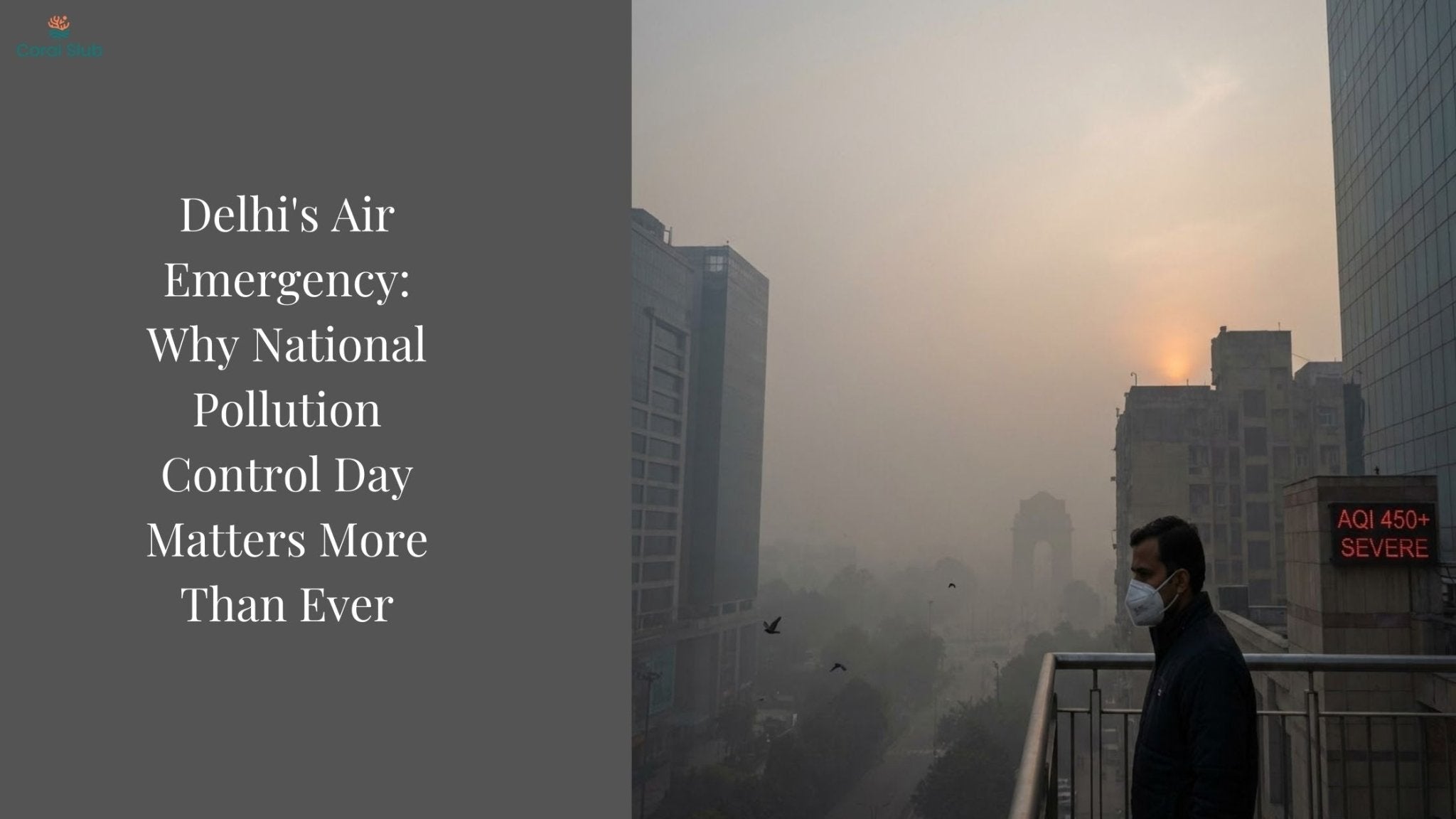

Every winter, Delhi wakes up to the same unsettling sight. A sky that should be blue turns grey. Buildings disappear behind a toxic haze. The Air Quality Index shoots past safe limits, and breathing becomes a daily challenge. What was once a seasonal inconvenience has now become an air emergency that affects millions of people.
Against this backdrop, National Pollution Control Day feels more relevant than ever. Observed every year on December 2, the day is meant to remind the country of the tragic Bhopal Gas Disaster of 1984 and to raise awareness about the urgent need for stronger environmental protection. But for Delhi, the day goes far beyond remembrance. It highlights a crisis that residents confront every single day during winter.
Why Delhi Faces an Air Emergency Each Winter

Delhi's air pollution does not come from one source alone. It builds layer by layer, until the entire city is trapped under a blanket of smog. Stubble burning in neighbouring states begins just as winter sets in. Cold air settles close to the ground, preventing pollutants from rising. Construction dust, vehicle emissions, industrial smoke, and urban congestion add to the mix.
This combination creates a toxic atmosphere that is difficult to escape. Schools shut temporarily. Outdoor activities stop. People avoid early morning walks. Doctors see a rise in respiratory and heart related cases. Homes begin to feel like shelters rather than living spaces.
Winter in Delhi has slowly become synonymous with air pollution, making the need for awareness and action even more pressing.
Why National Pollution Control Day Matters Today

National Pollution Control Day was established to honour the victims of one of the world’s worst industrial disasters. But with time, the day has taken on a much broader meaning. It serves as a reminder that environmental negligence is not a past event. It is an active problem that continues to impact daily life.
For Delhi residents, the day brings attention to the importance of air quality measures, cleaner technologies, and responsible industrial practices. It reminds us that pollution control is not just a government responsibility. Communities, households, and individuals all contribute to the environment and therefore share the responsibility of protecting it.
The day also encourages discussions about long term reforms: better waste management, sustainable urban planning, cleaner transportation, and stricter regulations for industries. Without these changes, Delhi’s winter pollution will continue to worsen year after year.
How Air Pollution Affects Life Indoors

People often assume that staying indoors is enough to stay safe during high pollution days. But indoor air is also affected by the outdoor environment. Pollutants enter through windows, doors, and ventilation systems. Dust settles more quickly on furniture and fabrics. Homes begin to feel stuffy, and humidity levels drop.

Indoor air quality becomes particularly important in Delhi’s winter months. Simple habits like using air purifiers, allowing sunlight to enter, cleaning fabrics regularly, and adding indoor plants can help reduce some of the effects. While these solutions do not solve the larger problem, they make day to day living more manageable.
What Individuals Can Do to Reduce Household Pollution

National Pollution Control Day encourages action at both the national and personal level. Small changes inside homes can gradually make a difference. Reducing burning of household waste, avoiding excessive use of synthetic room fresheners, choosing cleaner fuels for cooking, and supporting sustainable materials contribute to healthier surroundings.
Even mindful consumption plays a role. When more people choose long lasting textiles, reusable décor, or responsibly sourced materials, it decreases the demand for mass production that contributes to environmental stress.
Why Awareness Is the First Step

Pollution is a problem that often feels too big to solve. But awareness brings clarity. It helps people understand why certain policy decisions matter. It motivates communities to act. It influences families to choose cleaner practices. Most importantly, it keeps the issue from fading into the background.
National Pollution Control Day is not just about remembering a tragedy. It is about recognising that environmental safety affects every home, every breath, and every future generation. Delhi’s air emergency is a reminder that awareness must turn into action, and that collective responsibility is the only way forward.
Final Thoughts

Delhi’s winter air crisis is a reality that no resident can ignore. As pollution levels rise each year, National Pollution Control Day becomes more relevant and more urgent. It is a reminder that environmental protection is not a distant goal but an immediate need.
Cleaner air requires policy changes, technological improvements, and community participation. It also requires each household to make thoughtful choices. When awareness grows, action follows. And with action comes the possibility of a healthier future, not just for Delhi but for every city facing the same challenge.