
Cart
0
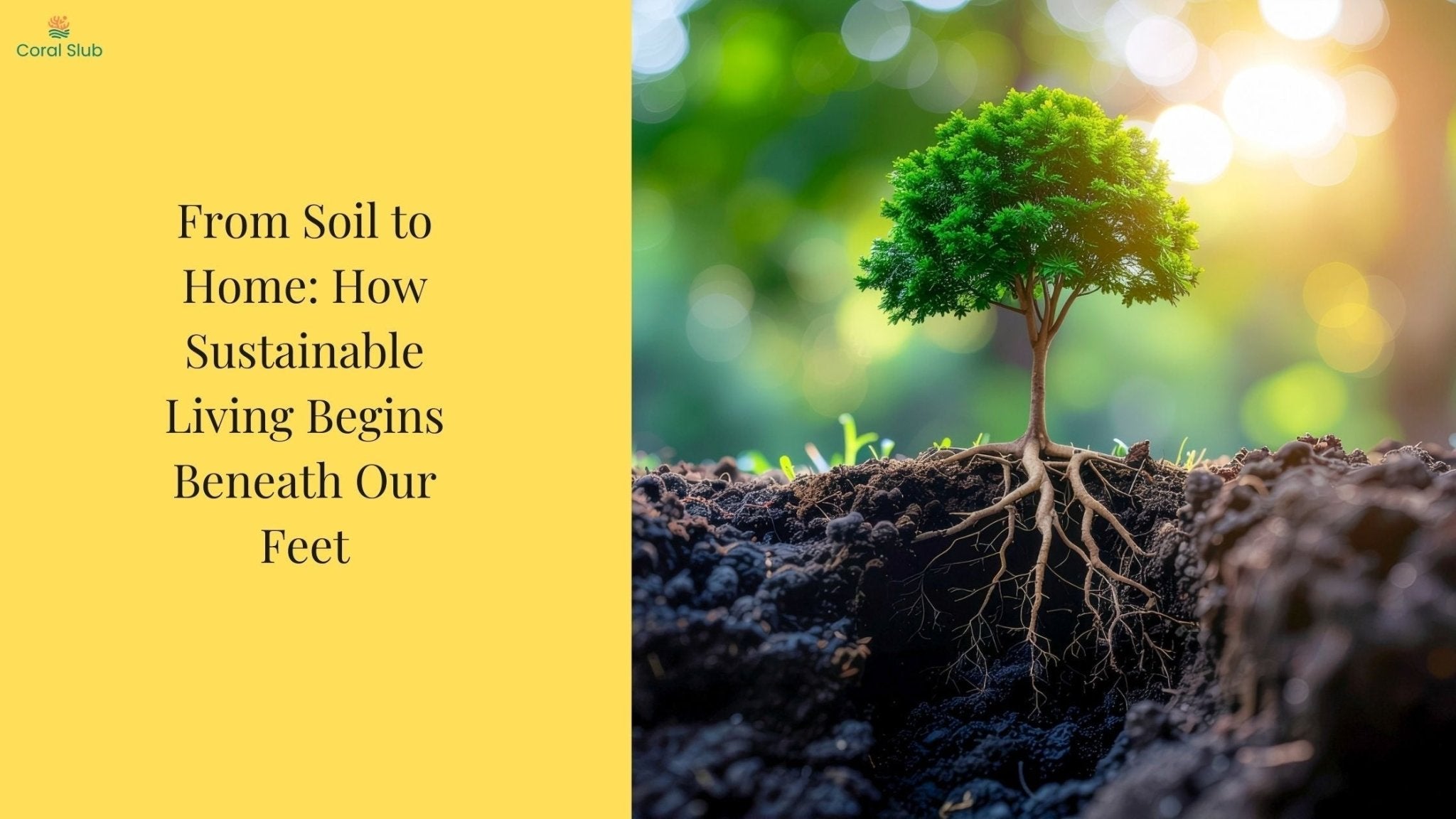
Every home begins long before its walls are built or its décor is chosen. Its story starts deep in the earth, in the soil that supports every form of life. World Soil Day reminds us that the ground beneath our feet is not just dust and minerals. It is the very foundation of sustainable living. Healthy soil grows the food we eat, nurtures the fibres we weave, sustains the trees that build our homes, and supports the ecosystems that keep our planet balanced.
The journey from soil to home is quieter than most modern stories. It unfolds in seasons rather than seconds. Yet it shapes everything about the way we live. Understanding this connection helps us appreciate why sustainability is not a trend but a responsibility we owe to the earth that supports us.
Why Soil Is the Beginning of Everything

Soil is often described as living earth because it breathes, evolves, and nurtures. A handful of healthy soil contains more microorganisms than the number of humans on the planet. These tiny organisms break down organic matter, enrich the land, and make life possible.
The fruits, vegetables, fibres, herbs, and plants that shape our daily lives come from soil. Whether it is the cotton in our bedsheets, the jute in our rugs, or the herbs used in natural dyes, everything begins as a seed nurtured by the earth. When soil thrives, homes thrive. When soil suffers, the chain weakens at every level.
The Journey of Fibres: From Earth to Fabric

Most natural textiles come from the soil. Cotton grows in fields nourished by rain, sun, and nutrients. Linen comes from flax, a crop rooted in fertile ground. Even the plants used in traditional dyeing, such as indigo or turmeric, depend entirely on soil quality.
Every time we choose natural fibres, we participate in a cycle that begins in the soil and returns to it. Natural fabrics biodegrade, enrich compost, and leave behind minimal waste. This cycle makes our homes more sustainable and reduces environmental burden. When we value the origin of our fabrics, we start choosing with more awareness and respect for the earth.
How Soil Influences Home Decor Choices

Healthy soil produces stronger, longer-lasting fibres. Cotton grown in nutrient-rich soil yields softer and more resilient threads. Jute becomes sturdier. Linen grows more beautifully.
When we bring these materials into our homes, we bring in the purity of nature as well.
The warmth of cotton cushions, the texture of woven rugs, or the softness of natural quilts carries a story of land and labour. Understanding this connection encourages us to choose sustainably made textiles, support mindful farming practices, and prioritise natural materials over synthetic ones.
Every small choice at home reflects back on the soil it came from.
Sustainable Living Begins With Awareness

Sustainability does not begin with big decisions. It begins with consciousness. When we acknowledge that our homes are linked directly to the health of soil, our habits change.
We start caring for fabrics so they last longer. We reduce waste by repurposing textiles. We value handmade goods that use natural materials. We support brands and artisans who nurture traditional weaving, dyeing, and crafting techniques rooted in the land.
This is how sustainable living quietly enters our routines. Through everyday choices made with intention.
Soil Conservation and the Future of Homes

If soil degrades, everything that depends on it begins to collapse. Agriculture weakens. Natural fibres diminish. Crafts lose their foundation. Even climate patterns shift. This is why soil conservation is essential not just for farmers but for every household.
Practices like crop rotation, organic farming, reduced chemical use, rainwater harvesting, and composting enrich soil. When individuals support these practices, they contribute indirectly to healthier homes and communities.
A sustainable home is not defined only by what it contains. It is defined by what it respects. Respect for soil is respect for life itself.
Final Thoughts

From soil to seed, from seed to fibre, from fibre to fabric, and from fabric to home, the journey is continuous. It is a reminder that sustainability begins beneath our feet. Every cushion, every bedsheet, every woven thread carries the imprint of the earth that nurtured it.
On World Soil Day which falls on 5th Dec, we are reminded that protecting soil is not just an environmental effort. It is a way of honouring the source of our food, our textiles, our homes, and our future. The more we value this connection, the more we build homes that are gentle on the planet and grounded in gratitude.