Cart
0
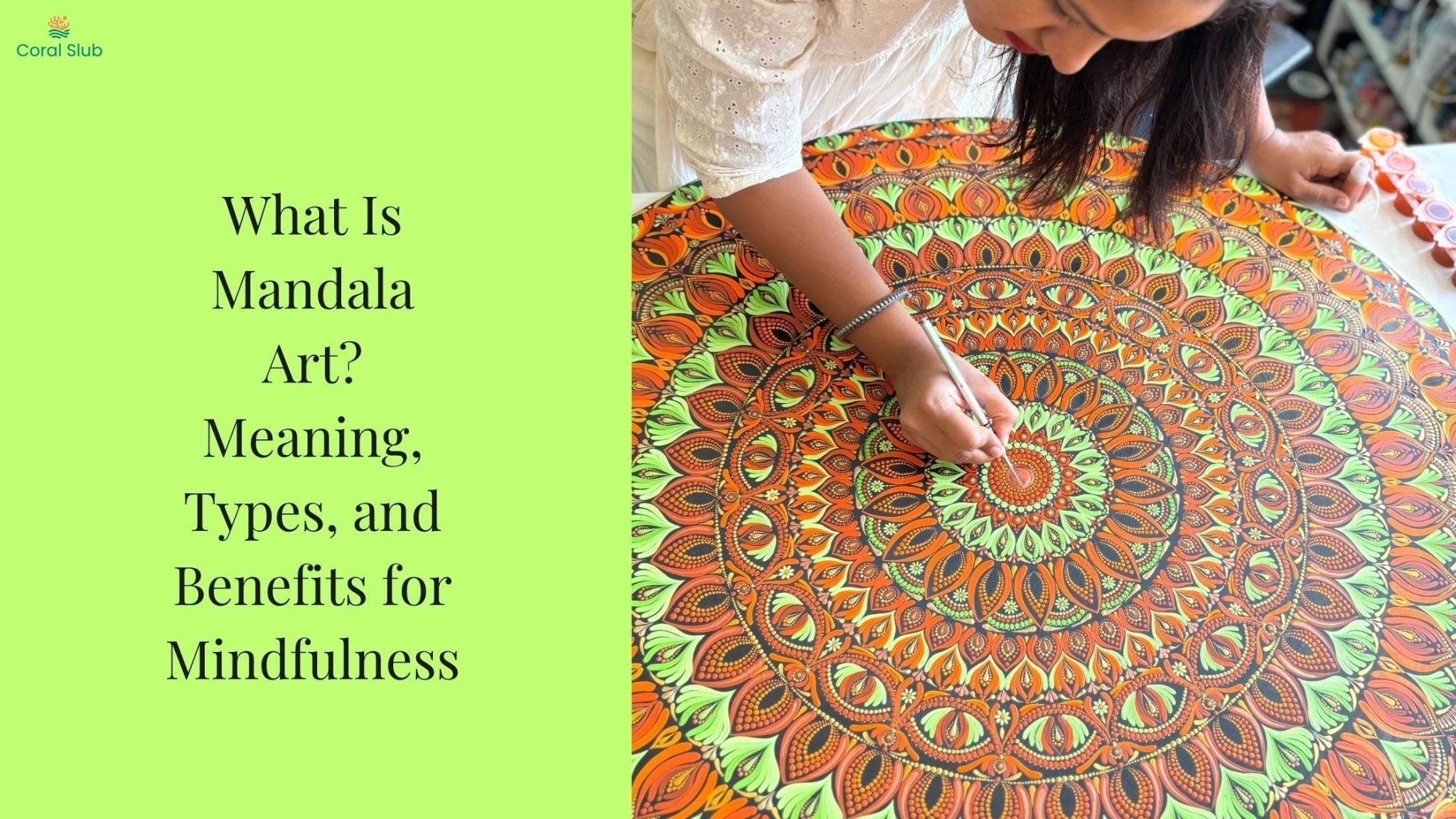
Mandala art has quietly moved from ancient spiritual traditions into modern homes, studios, and everyday creative practices, yet its essence has never changed. What draws millions of people to mandalas today is not just their visual beauty, but the measurable way they influence how we think and feel.
In a world that constantly demands attention, mandala art offers something genuinely rare: stillness without force.
At first glance, a mandala appears to be a decorative circular design. In reality, it is a structured system of patterns built around a centre point, specifically designed to guide the mind toward focus and inner balance. This is what makes mandala art far more than decoration. It is a tool for attention, awareness, and calm, and one that anyone can use.
What Is the Meaning of a Mandala?
The Definition and Symbolism of Mandala Art

The word mandala comes from Sanskrit and translates directly to "circle." But the meaning of mandala art extends far beyond geometry. Traditionally, a mandala is understood as a symbolic representation of the universe, reflecting both the outer world and the landscape of the inner self.
At the centre of every mandala lies a single focal point, representing stillness and origin. From this centre, patterns expand outward in symmetrical layers, creating a powerful visual sense of order, completeness, and harmony. This structure mirrors the movement of awareness itself, from external distraction toward inner clarity.
The Historical Origins of Mandala Art

Mandalas originated in ancient India within Hindu and Buddhist traditions, where they were used as tools for meditation, ritual, and spiritual teaching. Over centuries, Buddhist monks carried the practice across Tibet, China, Japan, and Southeast Asia through the Silk Road trade routes.
As the practice travelled across cultures, the visual form evolved, but the core purpose remained consistent. Mandalas continued to serve as visual frameworks for spiritual focus, personal transformation, and deep understanding of the self.
The Different Types of Mandalas Explained
Understanding the types of mandala art helps you choose the right practice for your needs, whether that is creative expression, emotional healing, or focused meditation.
Teaching Mandalas

Teaching mandalas are structured and deeply symbolic, with each element representing a specific concept or philosophical idea. They function as visual systems of knowledge, helping individuals organise complex information and internalise teachings through form, colour, and pattern.
Healing Mandalas

Healing mandalas are more intuitive and expressive in nature. Created to calm the mind and restore emotional balance, they prioritise process over outcome. The act of making a healing mandala, choosing colours, drawing patterns, and finding rhythm, becomes the therapeutic experience itself. This makes them widely used in art therapy, counselling, and mindfulness practices worldwide.
Sand Mandalas

Sand mandalas are among the most intricate and revered forms of mandala art. Created by Buddhist monks using coloured sand, they can take days or even weeks to complete. Once finished, they are ceremonially dismantled. This intentional destruction represents the Buddhist teaching of impermanence, that beauty, like all things, is transient.
Mandala Art vs Zentangle Art: What Is the Difference?
What Is Zentangle Art?

Zentangle is a contemporary drawing method built around repetitive, structured patterns. Unlike mandala art, Zentangle does not follow a central focal point or geometric symmetry. Instead, it allows patterns to develop organically across a surface through small, deliberate, repeated strokes, often in a square tile format.
How Zentangle Supports Mindfulness

Like mandala art, Zentangle works through the power of repetition. The practice of drawing simple patterns repeatedly helps quiet mental noise and brings full attention to the present moment, without pressure, planning, or a fixed goal.
Key Differences Between Mandala Art and Zentangle

Mandala art is centred and structured, guiding attention inward through symmetry and radial balance. Zentangle is fluid and open-ended, allowing creativity to emerge naturally without a predetermined form. Both approaches lead to mindfulness and stress reduction, but through meaningfully different paths. Mandala art suits those who find comfort in structure; Zentangle suits those who prefer open creative flow.
Why Mandala Art Naturally Promotes Mindfulness
The Role of Repetition and Visual Structure

Mandala art relies on predictable repetition and geometric order, giving the mind a clear and manageable path to follow. This reduces mental distractions and allows attention to stabilise, which is the same neurological mechanism that underlies formal meditation practice.
How Mandala Art Triggers a Meditative State

The act of creating or simply observing mandala art slows mental activity. Breathing becomes steady, thoughts become less scattered, and awareness shifts inward. This creates a genuine meditative state without requiring any prior meditation experience or formal practice. It is mindfulness made accessible.
The Psychological Benefits of Mandala Art
Reduces Stress and Anxiety

Mandala art helps redirect attention away from overwhelming thoughts and anxious mental loops. The structured patterns calm the nervous system and create a reliable sense of stability, making mandala colouring and drawing particularly effective during periods of high stress.
Research in art therapy has consistently found that creating circular, symmetric patterns reduces cortisol levels and promotes a relaxed physiological state.
Improves Focus and Mental Clarity

Engaging with mandala art requires sustained, deliberate attention. Practiced regularly, this strengthens concentration, reduces mental fatigue, and sharpens overall cognitive clarity, with benefits that extend well beyond the drawing session itself.
Supports Emotional Balance and Processing

Mandala art provides a structured space for emotional expression. The balance between freedom and form makes it both grounding and restorative, allowing difficult feelings to surface safely within a contained creative process. This is why mandala art is increasingly integrated into trauma-informed therapy and emotional wellbeing programmes.
How to Use Mandala Art in Everyday Life
Passive Mindfulness Through Mandala Design

You do not need to actively draw mandalas to benefit from them. When mandalas are present in your surroundings, as wall art, textiles, or décor, they create subtle, automatic moments of visual pause. The eye naturally engages with their symmetry, offering calm without conscious effort.
Why Mandala Art Works in Home Décor

Mandalas introduce visual balance and rhythm into interior spaces. They reduce the sensation of clutter and make rooms feel more grounded and intentional, especially in spaces designed for rest, focus, or reflection. A single mandala artwork in a bedroom or meditation corner can meaningfully shift the atmosphere of the room.
Starting Your Own Mandala Art Practice

Beginning mandala art requires no artistic background. Start with a pencil, compass, and ruler, or use a mandala dot painting kit for textured, tactile work. Many beginners also find mandala colouring books an effective and low-pressure entry point that delivers the same mindfulness benefits as freehand drawing.
Shop Our Mandala Art Colouring Book

If this guide has inspired you to begin your own mandala practice, our Mandala Art Colouring Book is the perfect starting point.
Designed for both beginners and experienced artists, it brings together a carefully curated collection of original mandala designs spanning a range of styles, from simple geometric forms to richly detailed spiritual patterns. Every page is created to help you slow down, focus, and experience the calming benefits of mandala art from the very first stroke.
What is inside:

Over 12 original mandala designs across varying levels of complexity, single-sided pages to prevent bleed-through with any colouring medium, a brief mindfulness guide at the opening to help you settle into the practice, and designs that suit coloured pencils, fine liners, watercolour, and gel pens.
Who it is for:
It is ideal for adults seeking a creative stress-relief habit, beginners who want a structured and approachable entry into mandala art, and experienced artists looking for fresh, high-quality designs to colour and display.
Why it works:
Colouring mandalas delivers the same psychological benefits as drawing them from scratch. The repetition, the symmetry, and the focused attention all activate the same calming, meditative state described throughout this guide. You do not need to be able to draw. You simply need the willingness to begin.
Final Thoughts: Why Mandala Art Still Matters

Mandalas are not simply patterns. They are systems of attention, visual tools designed to bring structure to a distracted mind, create calm through repetition, and guide focus without force.
Understanding what mandala art is, where it comes from, and how it connects to practices like zentangle adds genuine depth to how you experience it, whether you create, observe, or simply live alongside it.
The effect, in all cases, is the same: a gradual return to stillness in a constantly moving world.
Ready to begin? Browse our full collection of mandala art prints, dot painting kits, and our Mandala Art Colouring Book to start your practice today.
Frequently Asked Questions About Mandala Art
What is the spiritual meaning of a mandala? A mandala spiritually represents the universe and the self simultaneously. The centre point symbolises stillness and origin, while the expanding patterns represent the journey of awareness from chaos to order.
Is mandala art good for anxiety? Yes. Mandala art is widely used in therapeutic settings to reduce anxiety. The repetitive, structured nature of drawing or colouring mandalas calms the nervous system and redirects attention away from anxious thought patterns.
What is the difference between a mandala and a Zentangle? A mandala is centred and symmetrical, expanding outward from a focal point. Zentangle is freeform and unstructured, allowing patterns to develop organically without a fixed centre or symmetrical form.
How long does it take to draw a mandala? Simple mandalas can be completed in 20 to 30 minutes. Intricate, detailed mandalas may take several hours. The extended duration is part of the benefit, as longer, focused creative time deepens the mindfulness effect.
Can anyone learn mandala art? Absolutely. Mandala art requires no prior drawing experience. Basic geometric tools and a willingness to repeat patterns are all you need to begin.