Cart
0
Most homes treat doors as functional elements. They interrupt walls, break visual flow, and are often styled as separate pieces. Even when painted well, they remain visible boundaries within a space.
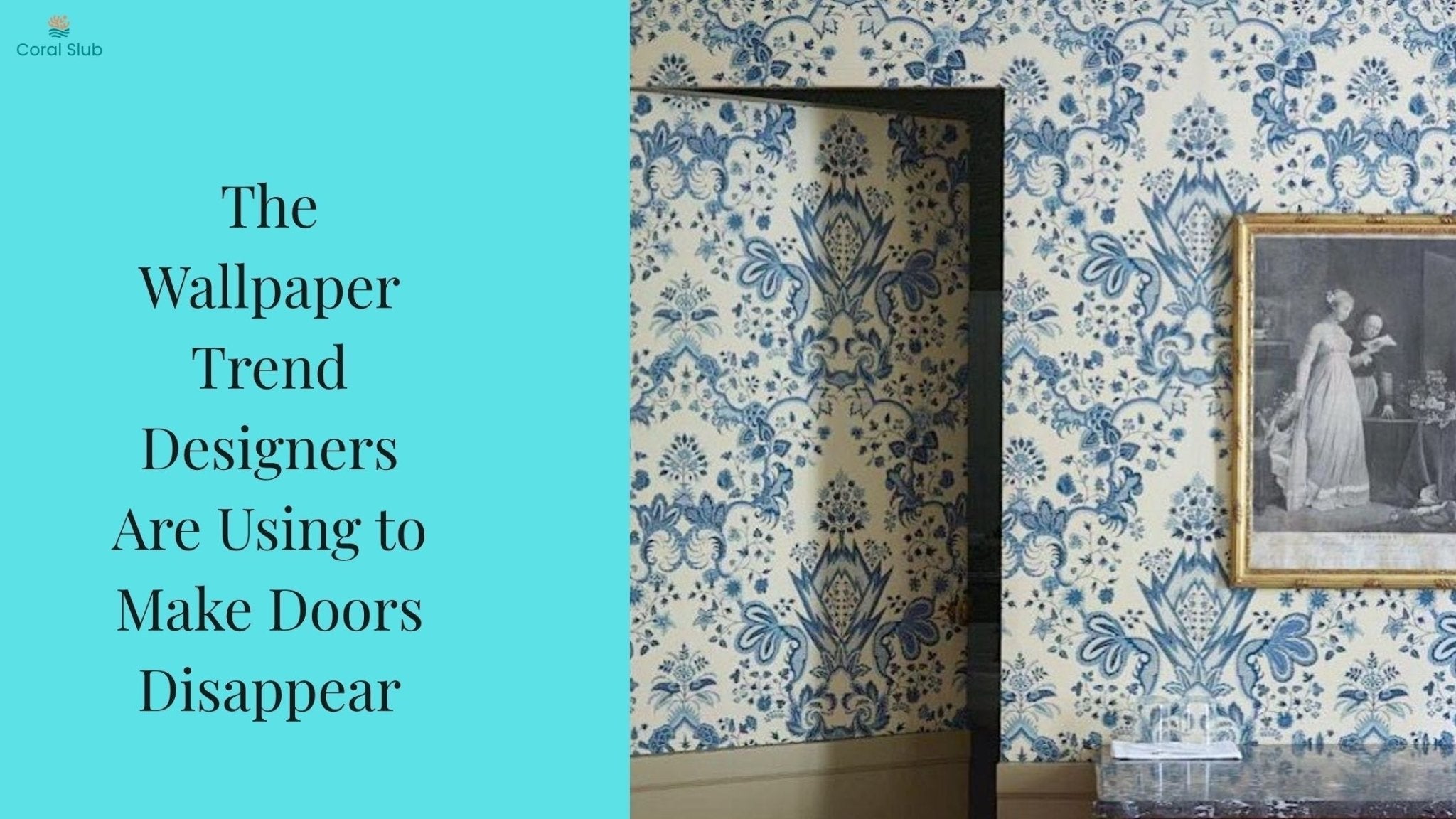
Designers are now approaching this differently. Instead of highlighting doors, they are blending them into the background by extending wallpaper seamlessly across both walls and doors. The result is subtle, but impactful. The architecture recedes, and the space begins to feel more cohesive.
Why This Trend Works So Well
Creating Visual Continuity

When wallpaper continues across a door, the eye no longer stops at that point.Instead of seeing a wall and then a door, the space reads as one continuous surface. This reduces visual interruptions and creates a smoother, more unified composition.
This approach works particularly well in smaller spaces or narrow layouts where too many breaks can make the room feel fragmented.
Making Spaces Feel Larger and Calmer

A visible door creates contrast. It divides the wall into sections.When that contrast is removed, the space feels more open. The boundaries soften, and the room appears larger and more composed.
This aligns with a broader shift in interior design toward calm, uninterrupted spaces.
Adding Subtle Drama Without Excess

This trend is not about bold statements. It is about controlled impact.
From a distance, the room feels clean and minimal. On closer look, the continuity creates a refined and almost unexpected effect.
It introduces interest without adding clutter.
The Concept of the “Hidden Door”
When Architecture Becomes Invisible

When wallpaper flows seamlessly across a door, the door visually disappears.This creates what designers often refer to as a “hidden door” effect. The entry point becomes less obvious, almost blending into the surrounding design.
This approach works especially well in hallways, transitional areas, or rooms where you want the focus to remain on the overall space rather than individual elements.
A Balance Between Function and Design

The door remains fully functional, but visually it no longer dominates. This balance is what makes the trend effective. It solves a design problem without compromising usability.
Where This Trend Works Best
Transitional Spaces and Hallways

Hallways often have multiple doors, which can break the flow of the space.
Using continuous wallpaper helps unify these areas, making them feel intentional rather than fragmented.
Smaller Rooms

In compact rooms, reducing visual breaks can significantly improve how the space feels.
When doors blend into the wall, the room appears less crowded and more expansive.
Minimal and Contemporary Interiors

This approach works particularly well in homes that favour clean lines and understated styling.
It enhances minimal spaces without adding additional elements.
What You Need to Get Right
Alignment Is Everything
The success of this trend depends on precision.
The wallpaper pattern must align perfectly between the wall and the door. Any mismatch disrupts the illusion and makes the door more noticeable instead of less.
Choosing the Right Pattern Scale
Medium-scale patterns tend to work best.
They are large enough to create continuity but not so bold that they overwhelm the door surface. Extremely large patterns can distort across the door, while very small patterns may lose impact.
The Importance of the Door Structure
Flush doors work best for this technique.
Doors that sit level with the wall allow the wallpaper to flow naturally. Visible frames or protruding edges can break the effect.
Durability for Everyday Use
Doors are high-contact surfaces.The wallpaper must be applied carefully, especially around edges, to prevent peeling or fraying over time. This ensures that the design remains intact even with regular use.
How to Apply This in Your Home

This trend does not require a complete redesign.It can be introduced gradually, starting with one area such as a hallway or a single room. The goal is not to make every door invisible, but to use the technique where it enhances flow.
Even subtle application can change how a space is experienced.
Final Thoughts

The shift toward wallpapered doors reflects a larger movement in interior design.It is moving away from highlighting individual elements and toward creating cohesive environments.
When done correctly, this approach simplifies a space without making it plain. It reduces visual noise while adding depth and intention.In the end, the most effective design decisions are often the ones you notice the least.And this trend proves exactly that.