Cart
0
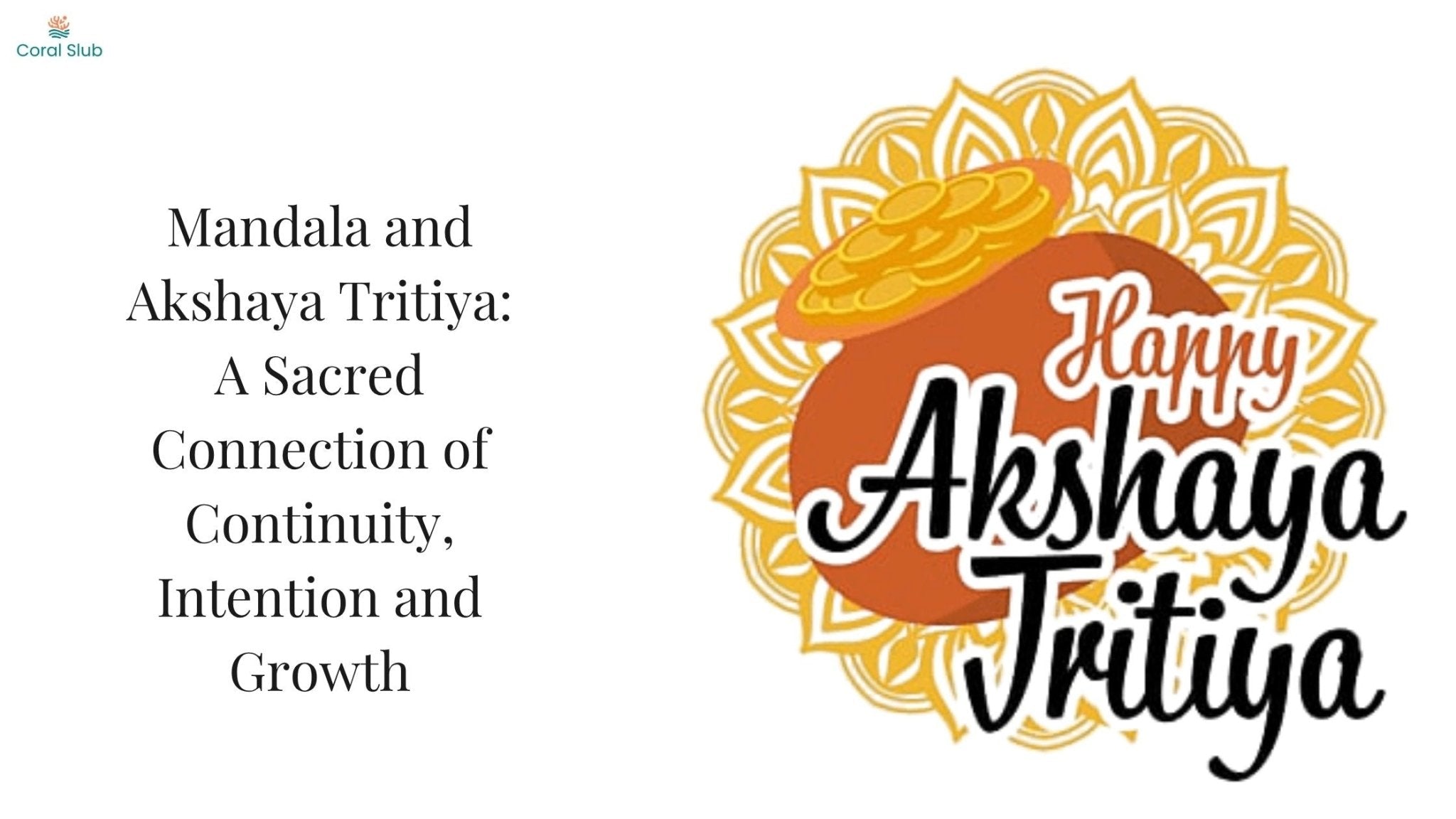
In the Hindu tradition, certain days are not just observed but deeply experienced. Akshaya Tritiya is one such day, a moment in the calendar that carries the idea of continuity, abundance, and timeless growth. The word “Akshaya” itself means that which never diminishes, reflecting a belief that any action performed on this day continues to grow and expand over time.
When we look at the philosophy of mandalas, we find a striking alignment with this idea. A mandala is not merely a decorative pattern but a symbolic representation of the universe, structured around a central point and expanding outward in balanced, symmetrical layers. This expansion mirrors the very essence of Akshaya Tritiya, where intention becomes action and action continues to grow without losing its value.
The Spiritual Meaning of Akshaya Tritiya
Why This Day Is Considered Eternally Auspicious

Akshaya Tritiya, also known as Akha Teej, falls on the third lunar day of the bright fortnight in the month of Vaishakha. It is regarded as one of the most auspicious days in the Hindu calendar because it is considered an Abujh Muhurat, meaning the entire day is inherently favourable without the need to calculate a specific time.
The deeper significance of the day lies not only in its timing but in the philosophy it represents. It encourages actions rooted in sincerity, discipline, and clarity. Whether it is charity, spiritual practice, or beginning something new, the emphasis is on intention. The belief is that such actions do not fade with time but continue to grow, reflecting the true meaning of “Akshaya.”
Understanding the Mandala as a Spiritual Symbol
The Meaning Behind the Circle

A mandala, derived from Sanskrit, translates to “circle,” yet its meaning extends far beyond geometry. It is a visual representation of the universe and the self’s place within it. At its centre lies a bindu, a single point symbolising origin and stillness, from which patterns expand outward in perfect symmetry.
This structure represents balance, order, and completeness. It reflects how life unfolds, beginning from a single point of intention and expanding into layers of experience.
The Journey from Centre to Expansion

The design of a mandala mirrors the journey of awareness. It moves from the outer layers of complexity toward the stillness of the centre, symbolising a shift from external distractions to inner clarity.
This journey is not just visual. It reflects how intention, when grounded, expands into meaningful action, much like the essence of Akshaya Tritiya.
The Deeper Connection Between Mandala and Akshaya Tritiya
Expansion Without Diminishing

The connection between mandala and Akshaya Tritiya lies in their shared philosophy of growth without loss. A mandala expands infinitely from its centre while maintaining harmony. Similarly, actions performed on Akshaya Tritiya are believed to grow without diminishing in value.
Both concepts emphasise continuity, reminding us that what begins with the right intention has the potential to endure.
The Importance of the Centre

In a mandala, the centre is the foundation of the entire structure. On Akshaya Tritiya, intention becomes that centre. What you choose to begin on this day forms the base for everything that follows.
The clarity of that starting point determines the quality of growth, making intention more important than action itself.
Mandala as a Practice on Akshaya Tritiya
Turning Ritual into Awareness

While Akshaya Tritiya is often associated with external rituals such as buying gold or performing puja, incorporating mandala practice adds an internal dimension to the day. Creating a mandala requires patience and focus, encouraging a slower, more mindful approach.
This transforms the day from a series of actions into a process of awareness.
A Visual Form of Sankalp

In traditional practice, a sankalp represents a conscious intention made before beginning something important. Creating a mandala can act as a visual expression of this intention.
Each line and pattern becomes a reflection of thought and direction, allowing clarity to take form before action begins.
Understanding the Cycle of Abundance

Akshaya Tritiya places great importance on charity, emphasising that what is given returns in greater measure. This idea of continuous flow is reflected in the circular form of a mandala.
A mandala represents cycles where energy moves outward and returns inward, reinforcing the idea that true prosperity lies in balance.
Moving Beyond Material Prosperity

While the day is often associated with buying gold, its deeper meaning lies in giving and sharing. Mandalas reinforce this perspective by reminding us that growth is not just about accumulation but about maintaining harmony between giving and receiving.
Bringing Mandala into Everyday Living
Creating a Space of Balance

Mandalas are not limited to spiritual practice. They can be incorporated into everyday spaces through art, textiles, and décor. Their presence introduces rhythm and balance, reducing visual clutter and creating a sense of calm.
Supporting Intentional Living

On a day like Akshaya Tritiya, the environment you create matters. A space that reflects balance and continuity supports the intentions you set, making your actions feel more grounded and aligned.
Final Thoughts

Akshaya Tritiya is a day of beginnings. Mandalas are a system of balance. Together, they create a powerful connection between intention and growth.
One represents action.
The other represents awareness.
Both represent continuity.
In a world focused on results, this day reminds us that what truly lasts is what begins with clarity, purpose, and balance.