Cart
0
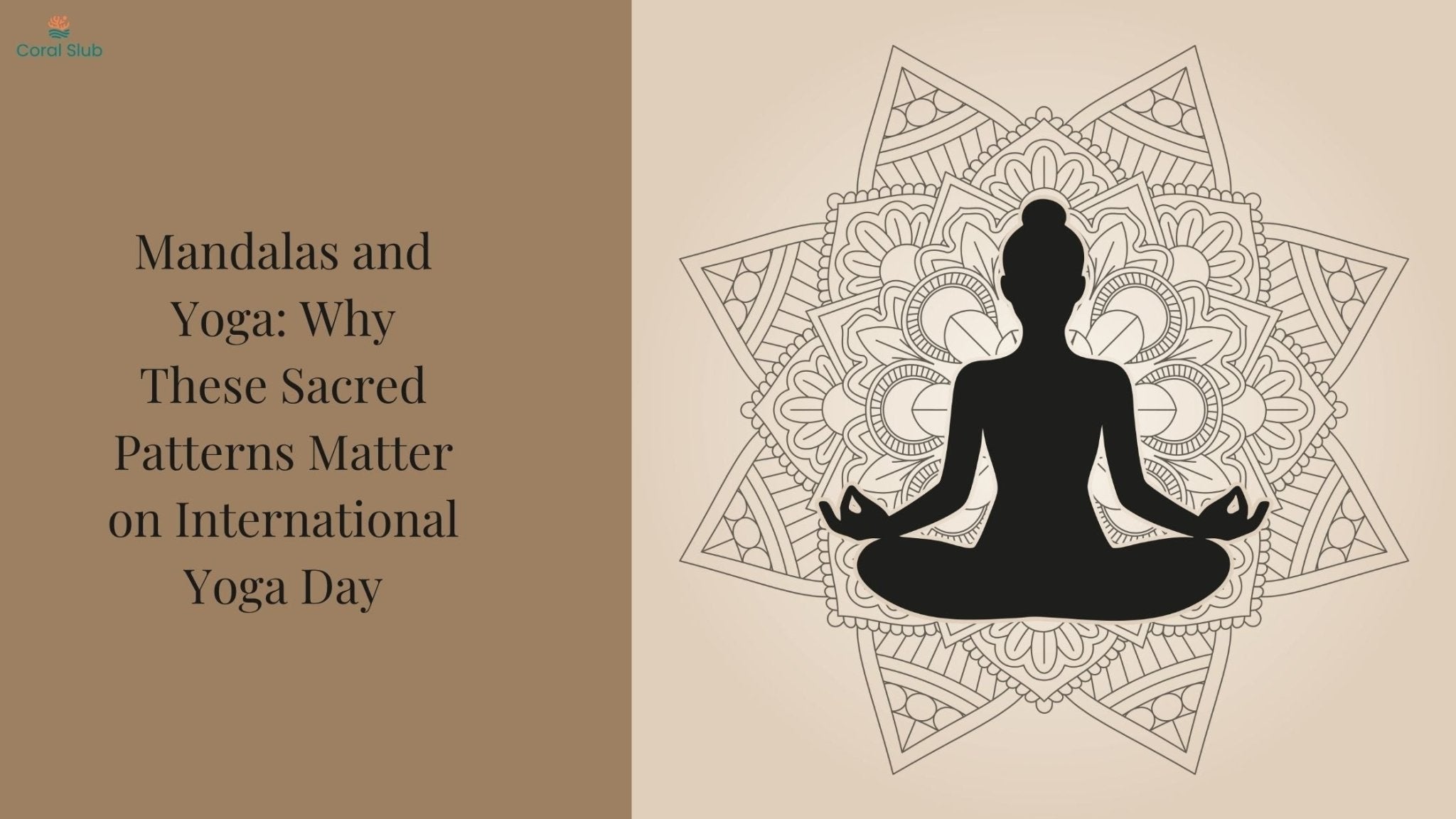
Every year, International Yoga Day reminds us that yoga is much more than physical exercise.
While many people associate yoga with postures, stretches, and breathing techniques, its true purpose is to create harmony between the body, mind, and spirit. At its heart, yoga is a journey inward, a practice of awareness, balance, and self-discovery.
This is where mandalas become especially meaningful.At first glance, a mandala may appear to be a beautiful geometric pattern. But for centuries, these intricate circular designs have been used as tools for meditation, concentration, and spiritual growth. Much like yoga itself, mandalas invite us to slow down, focus our attention, and reconnect with our inner selves.
It is no coincidence that mandalas frequently appear in yoga studios, meditation spaces, wellness retreats, and spiritual practices around the world. Both yoga and mandalas share the same goal: helping us find balance within ourselves while fostering a deeper connection with the world around us.
As International Yoga Day encourages people to embrace holistic well-being, understanding the role of mandalas can offer a deeper appreciation of yoga's spiritual roots.
What Is a Mandala?
Understanding the Meaning of Mandalas

The word mandala comes from the ancient Sanskrit language and is commonly translated as "circle."However, its meaning extends far beyond a simple geometric shape. In Hinduism and Buddhism, mandalas represent the universe, wholeness, unity, and the interconnected nature of life. Their circular form symbolises eternity, balance, and the continuous cycle of existence.
Traditionally, mandalas are created using repeating patterns that radiate outward from a central point. This centre represents the self, while the surrounding layers symbolise growth, awareness, and connection to the larger universe.
The structure of a mandala mirrors many of the principles found in yoga, where personal transformation begins from within and expands outward into every aspect of life.
The Shared Philosophy of Yoga and Mandalas
Both Focus on Unity and Connection

One of the central ideas in yoga is union.The Sanskrit word Yoga comes from Yuj, meaning "to unite" or "to join." Yoga seeks to unite the mind, body, and spirit while creating harmony between the individual and the universe.
Mandalas communicate this same philosophy visually.Their symmetrical patterns demonstrate how many individual elements come together to form a balanced whole. Every shape, line, and motif contributes to a larger design, much like every breath, movement, and thought contributes to our overall well-being.
This shared emphasis on unity is one reason mandalas have become closely associated with yoga practices around the world.
Both Encourage Mindfulness

Modern life constantly pulls our attention in different directions.Yoga encourages practitioners to return to the present moment through breath awareness and mindful movement. Similarly, mandalas invite focused attention through observation, colouring, drawing, or meditation.
When looking at a mandala, the eye naturally moves toward the centre and then outward again. This gentle visual journey helps calm mental chatter and encourages a meditative state.
For many people, simply spending a few minutes observing a mandala can feel as grounding as a yoga session.
Why Mandalas Are Used in Meditation
Mandalas Help Quiet the Mind

Meditation can sometimes feel intimidating, especially for beginners.The mind wanders. Thoughts arise constantly. Concentration becomes difficult.
Mandalas provide a visual anchor that helps guide attention. Instead of focusing solely on the breath, practitioners can concentrate on the patterns within the mandala. This creates a focal point that reduces distractions and supports deeper concentration.
For centuries, spiritual traditions have used mandalas as meditation aids because they naturally encourage stillness and presence.
Mandalas Create a Sense of Inner Balance

The symmetry found in mandalas has a calming psychological effect.Research in art therapy and mindfulness practices suggests that repetitive patterns and structured designs can help reduce stress while promoting relaxation and emotional balance.
This may explain why mandalas are often incorporated into wellness spaces, yoga studios, and meditation rooms. Their visual harmony reflects the inner harmony that yoga seeks to cultivate.
The Role of Mandalas on International Yoga Day
A Symbol of Holistic Wellness

International Yoga Day celebrates physical, mental, emotional, and spiritual well-being.Mandalas beautifully represent this holistic approach because they symbolise balance across all dimensions of life. They remind us that wellness is not limited to physical fitness alone. True well-being includes mental clarity, emotional resilience, mindfulness, and self-awareness.
As millions of people participate in Yoga Day activities, mandalas often appear in event branding, meditation sessions, educational workshops, and wellness programmes because they visually capture the essence of yoga itself.
Supporting the Theme of Mindful Living

Every year, Yoga Day highlights the importance of creating healthier lifestyles.Mandalas reinforce this message by encouraging intentional living. Whether someone practises yoga, meditates, colours a mandala, or simply reflects on its symbolism, the experience promotes a slower and more mindful way of engaging with the world.
In an age of constant stimulation, this reminder feels more valuable than ever.
Different Types of Mandalas Used in Yoga and Meditation

Teaching Mandalas
Teaching mandalas are rich in symbolism and often communicate spiritual concepts, philosophies, or lessons.They serve as visual guides that help practitioners understand deeper aspects of spiritual growth and self-awareness.
Healing Mandalas
Healing mandalas are created with the intention of promoting emotional well-being and inner peace.Their patterns are often designed to evoke calmness, balance, and restoration, making them particularly popular in wellness and therapeutic settings.
Sand Mandalas
One of the most fascinating forms of mandala art comes from Tibetan Buddhist traditions.Monks spend days or even weeks creating intricate mandalas using coloured sand. Once completed, the mandala is ceremonially dismantled to symbolise the impermanence of life.
This practice reflects one of yoga's most profound teachings: learning to embrace change and let go of attachment.
Mandala Art as a Yoga Practice

Creativity Can Be a Form of Meditation
Yoga is often described as moving meditation.Mandala creation can offer a similar experience.
Drawing, colouring, or painting mandalas requires concentration, patience, and repetitive movements. Many people find that this process naturally quiets the mind and creates a state of flow similar to meditation.For this reason, mandala art is increasingly used alongside yoga workshops and wellness retreats.
A Beautiful Way to Extend Your Yoga Practice
The benefits of yoga do not have to end when the mat is rolled away.Engaging with mandala art after a yoga session can help extend feelings of calm, focus, and mindfulness. It provides another opportunity to slow down, reflect, and reconnect with yourself.
This makes mandalas a natural complement to yoga rather than a separate practice.
Bringing Mandalas into Your Home

Creating a Space for Reflection
Many people choose to incorporate mandala-inspired décor into their homes because of its calming symbolism.Mandala artwork, cushions, wall hangings, and textiles can help create spaces that feel peaceful and restorative. These designs serve as gentle reminders to pause, breathe, and cultivate balance in daily life.
A thoughtfully placed mandala can transform a simple corner into a meditation or relaxation space.
Mandala Patterns and Positive Energy
Across many spiritual traditions, circular patterns are associated with harmony, unity, and positive energy.While decorative in appearance, mandalas often carry deeper meanings that resonate with those seeking mindfulness and intentional living.
This combination of beauty and symbolism explains why mandala-inspired designs remain so popular in wellness-focused interiors.
Final Thoughts

International Yoga Day is ultimately a celebration of balance, awareness, and connection.Mandalas embody these same principles through visual form. Their circular patterns remind us of unity, their symmetry reflects harmony, and their intricate details encourage mindfulness. Together, yoga and mandalas offer complementary paths toward greater self-awareness and inner peace.
As we celebrate Yoga Day, mandalas serve as more than decorative motifs. They become symbols of the deeper purpose behind the practice, a reminder that wellness begins from within and expands outward into every aspect of our lives.
Perhaps that is why mandalas continue to appear in yoga studios, meditation spaces, and wellness traditions across the world.
Like yoga itself, they invite us to slow down, focus inward, and reconnect with what truly matters.
Explore Mandala-Inspired Home Décor from Coral Slub

Bring the calming beauty of mandalas into your everyday life with Coral Slub's collection of mandala-inspired cushion covers. Designed to add colour, mindfulness, and artistic character to your living spaces, these pieces celebrate one of the world's most timeless symbols of balance and harmony.