
Cart
0
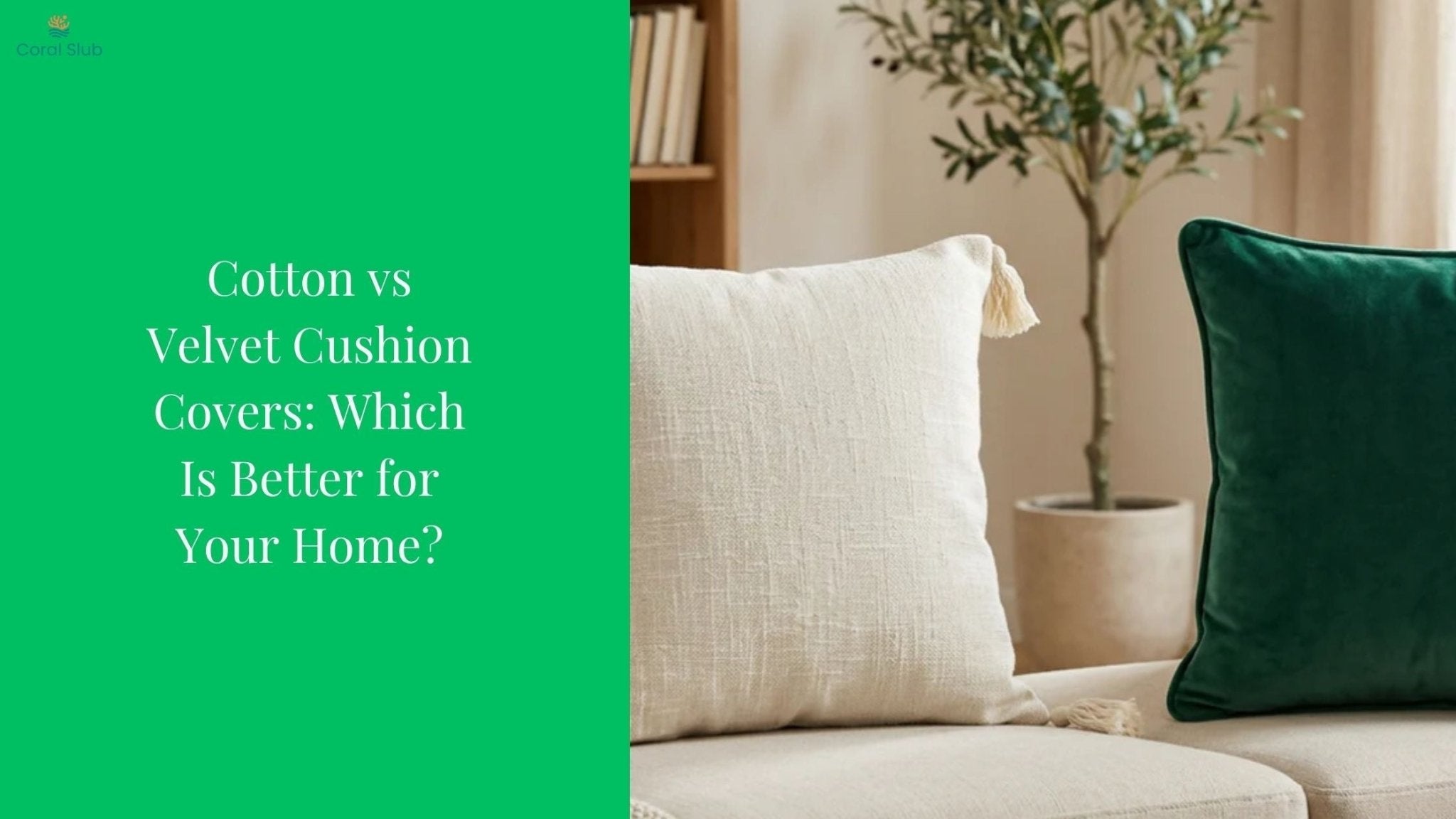
When you choose cushion covers, you are not just choosing a fabric. You are choosing how your home will feel on a daily basis.Some spaces feel easy, breathable, and lived-in. Others feel layered, rich, and styled. This difference often comes down to one detail that is easy to overlook: fabric.
Cotton and velvet are two of the most commonly used materials for cushion covers, yet they serve completely different purposes. One supports everyday comfort. The other shapes visual depth and atmosphere. Understanding this difference is what helps you make the right choice.
Cotton Cushion Covers: Built for Everyday Living

Why Cotton Works in Real Homes
Cotton is not popular because it is basic. It is popular because it works.In Indian homes especially, where weather shifts between heat, humidity, and mild winters, cotton remains the most reliable fabric. It allows air to circulate, which prevents that heavy, sticky feeling that synthetic or dense fabrics often create.
When you sit on a cotton cushion, it does not trap heat. It adapts to your body and the environment. This is what makes it ideal for spaces that are used throughout the day.
The Comfort Factor You Actually Notice
Comfort is not just softness. It is how a fabric behaves over time.Cotton softens with use. It becomes more comfortable after every wash instead of losing quality. It does not cling, it does not overheat, and it feels neutral in every season.
This is why cotton cushion covers are often chosen for sofas that are used daily, not just styled occasionally.
Practicality and Maintenance
This is where cotton becomes difficult to replace.It can be washed frequently without special care. It dries quickly. It does not require delicate handling. In homes where cushions are used, moved, and cleaned regularly, this matters more than aesthetics.Cotton fits into real life without adding effort.
Where Cotton Falls Short
Cotton is not meant to create drama.It does not reflect light, it does not create visual depth, and it does not stand out in a room unless supported by colour or pattern. On its own, it can sometimes feel too simple in spaces that need layering.
Velvet Cushion Covers: Designed for Impact

Why Velvet Changes the Mood of a Room
Velvet is not about practicality. It is about presence.The texture of velvet absorbs and reflects light in a way that creates depth. Even a single velvet cushion can make a sofa feel more styled and intentional.
This is why designers use velvet when they want a space to feel richer without adding more elements.
The Sensory Experience of Velvet
Velvet offers a completely different tactile experience.It feels plush, dense, and slightly warm to the touch. This makes it especially appealing in colder environments or air-conditioned spaces where fabrics need to add a sense of warmth.
But this same quality can feel heavy in warmer climates, which is something often overlooked.
Where Velvet Works Best
Velvet performs best in spaces that are not constantly used.Formal living rooms, styled corners, or bedrooms benefit from its visual richness. It works where cushions are part of the design, not just daily function.In these settings, velvet elevates the space without needing additional décor.
The Maintenance Reality
Velvet requires more attention.It attracts dust more easily, shows pressure marks, and does not respond well to frequent washing. Cleaning often involves gentle handling or dry cleaning.This does not make velvet impractical, but it does make it intentional. It is a fabric you choose knowing it needs care.
Cotton vs Velvet: What Actually Matters When Choosing

Climate and Comfort
This is the most important factor, especially in India.Cotton works across seasons. It stays breathable in summer and comfortable in mild winters. Velvet, on the other hand, performs better in cooler environments and can feel heavy in humid conditions.If your space is naturally warm, cotton will always feel better.
Daily Use vs Occasional Styling
Think about how your sofa is used.If it is a space where people sit, relax, and spend time daily, cotton is the more practical choice. It handles wear without losing comfort.
If the space is more curated and less used, velvet can enhance its visual appeal.
Maintenance and Lifestyle
Your lifestyle matters as much as your design preference.Homes with children, pets, or frequent use benefit from cotton because of its ease of cleaning. Velvet suits homes where maintenance is manageable and cushions are not constantly handled.
Visual Impact vs Subtle Styling
Cotton blends in. It supports the space.Velvet stands out. It defines the space.If your room already has strong elements like artwork or furniture, cotton keeps things balanced. If your room feels flat, velvet can add the depth it is missing.
What Designers Actually Do

Most designers do not choose between cotton and velvet.They combine both.Cotton forms the base layer, ensuring comfort and practicality. Velvet is introduced in smaller quantities to create contrast and visual interest.This layering approach allows a space to feel both functional and elevated at the same time.
How to Decide for Your Home
If your priority is comfort, ease, and everyday use, cotton is the better choice.If your priority is mood, richness, and styling, velvet works better.If you want a home that feels both lived-in and styled, use cotton as your foundation and add velvet selectively.
Final Thoughts

The choice between cotton and velvet is not about which fabric is superior.It is about what your space needs.Cotton adapts to life.Velvet enhances experience.
One supports how you live.The other shapes how your home feels.And when used thoughtfully, both can exist in the same space without competing.If you are looking to bring this balance into your home, check out Coral Slub’s cotton and velvet cushion cover collection, thoughtfully designed to combine everyday comfort with elevated aesthetics.