Cart
0
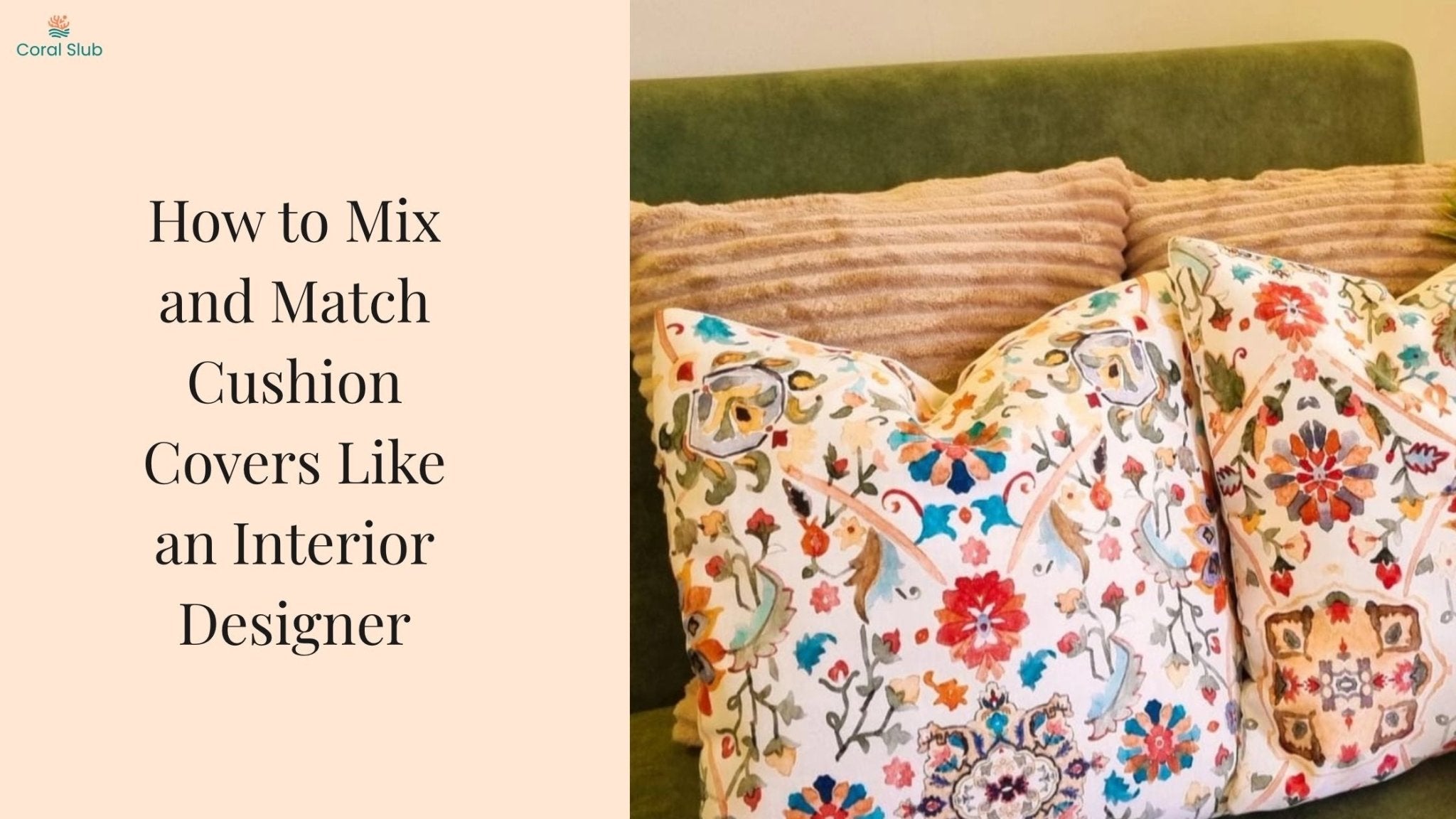
A sofa rarely looks unfinished because of the sofa itself. More often, it is the cushion styling that feels off.
Too many patterns can look chaotic. Too many solids can feel flat. The difference between a well-styled sofa and an average one often comes down to how cushion covers are combined.
Interior designers follow a few consistent principles. Once you understand them, styling becomes intuitive rather than trial and error.
Start with a Clear Colour Direction
Choose a Base Palette First

Before adding cushion covers, look at your existing space. Your sofa colour, curtains, rug, and wall tones should guide your choices.
A defined palette prevents random combinations that feel disconnected.
Limit to Two or Three Core Colours

A controlled colour palette creates cohesion. Neutral shades can act as a base, while one or two accent colours add character.
This balance ensures the sofa feels styled without becoming overwhelming.
Mix Patterns with Intention
Combine Different Pattern Scales

One of the most common mistakes is using patterns of the same size.
A large statement print works best when paired with smaller, more subtle patterns. This creates hierarchy and makes the arrangement visually interesting.
Break Patterns with Solids

Solid cushion covers act as visual pauses. They allow patterned designs to stand out without competing for attention.
Without this balance, the sofa can quickly feel cluttered.
Use Texture to Add Depth
Go Beyond Just Colour

Texture is what makes a setup feel layered and complete.
Even within the same colour palette, combining smooth cotton fabrics with slightly textured weaves creates dimension. It adds richness without adding visual noise.
Natural fabrics work particularly well because they feel softer and more relaxed in everyday settings.
Follow the Rule of Odd Numbers
Why Designers Prefer Five Cushions

Odd-number arrangements feel more natural to the eye.
A set of five works especially well. Two cushions on each side with one in the centre creates balance without looking too structured.
This approach also makes it easier to mix patterns and colours without overthinking placement.
Balance the Layout Visually
Distribute Colours Evenly

If one colour appears only on one side of the sofa, it creates imbalance.
Repeating colours across the arrangement helps maintain visual symmetry and makes the setup feel intentional.
Avoid Overcrowding

Adding more cushions does not always improve the look.
Too many cushions reduce comfort and make the sofa feel cluttered. The goal is to enhance the space, not fill it.
Think About Everyday Use
Style Should Still Be Practical

Cushion covers are not just decorative. They are used daily.
Choose fabrics that are breathable, comfortable, and easy to maintain. This ensures your styling holds up over time without becoming difficult to manage.
Arrangements that look good but are impractical rarely last.
Simplify the Process with Coordinated Sets
Why Sets Work Better
If mixing feels overwhelming, starting with coordinated cushion cover sets can simplify the process.
They provide a pre-balanced combination of colours and patterns, making it easier to achieve a cohesive look without experimenting too much.
This is especially useful when you want a quick upgrade without investing time in trial and error.
Final Thoughts

Mixing and matching cushion covers is less about creativity and more about balance.
When colour, pattern, and texture work together, the sofa begins to feel complete. Small adjustments can change how an entire room looks and feels.
The key is not to overcomplicate it. Start with a clear palette, introduce variation thoughtfully, and keep the arrangement practical.
When done right, even a simple sofa can feel intentionally styled and effortlessly put together.