
Cart
0
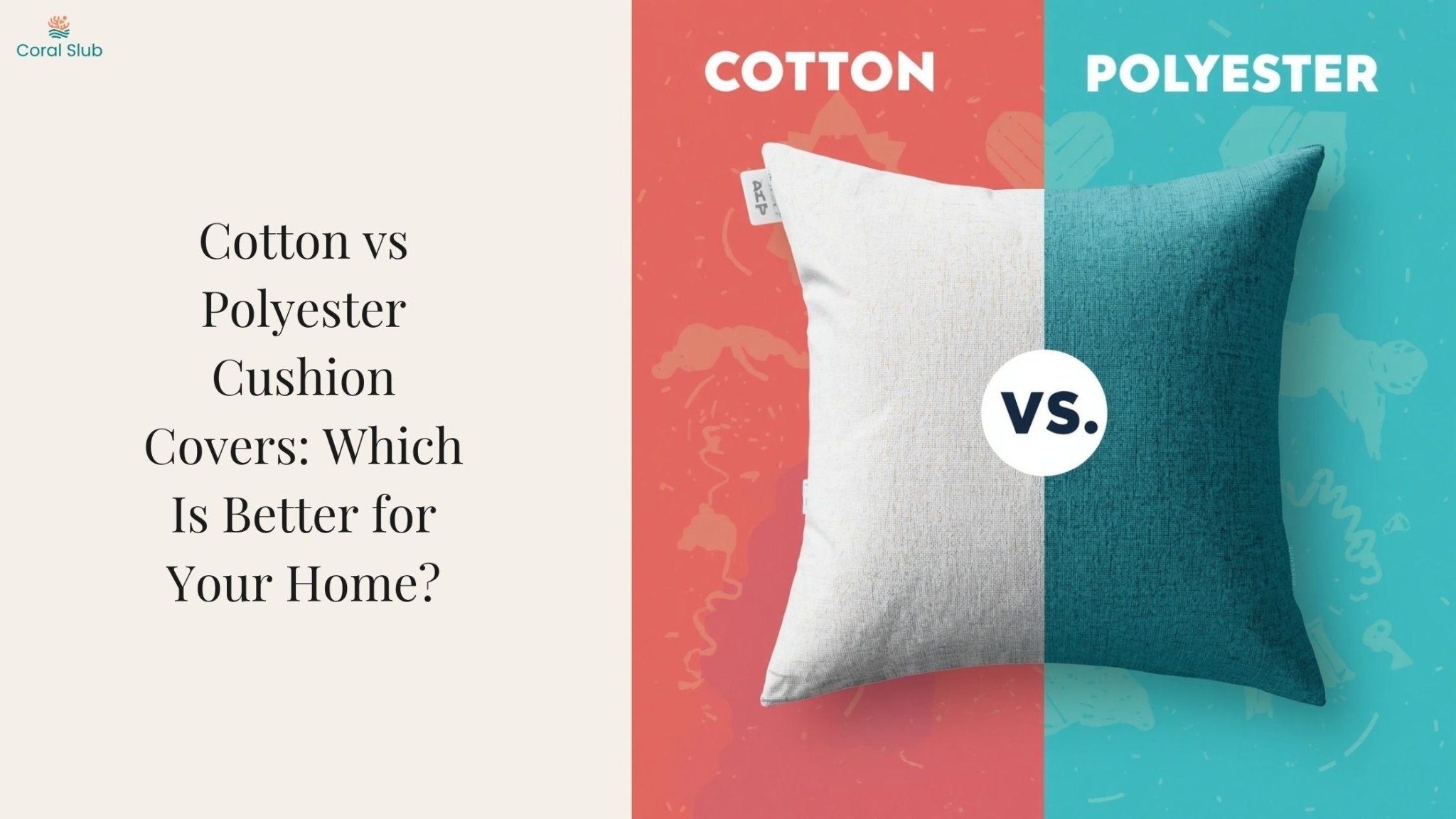
When buying cushion covers, most people focus on design and colour. Fabric is often an afterthought.
However, fabric is what determines how your cushions feel, how long they last, and how easy they are to maintain. The two most common options, cotton and polyester, offer very different experiences. Also, which cushion size does one need ?
Understanding this difference is essential if you want your home to feel both comfortable and practical.
Cotton Cushion Covers: Comfort, Breathability, and Everyday Living
Why Cotton Feels Better in Daily Use

Cotton is a natural fibre, and that changes everything about how it behaves.
It allows air to circulate freely, which keeps the surface cool and comfortable even with prolonged use. This makes cotton cushion covers especially suitable for Indian homes where heat and humidity are constant factors.
Unlike synthetic fabrics, cotton does not trap heat. It adapts to the environment, which is why it feels comfortable across seasons.
How Cotton Enhances the Look of Your Space

Cotton has a natural texture that adds softness to a room.
It does not look overly polished or artificial. Instead, it creates a relaxed, lived-in aesthetic that works well in both modern and traditional homes.
This makes cotton ideal for spaces where you want comfort and visual warmth to coexist.
The Trade-Off with Cotton

Cotton requires a bit more care.
It can wrinkle and may need proper washing practices to maintain its shape and colour. However, with regular use and care, cotton tends to age gracefully, often becoming softer over time rather than deteriorating.
Polyester Cushion Covers: Durability, Structure, and Low Maintenance
Why Polyester Is Easier to Maintain

Polyester is a synthetic fabric designed for convenience.
It resists wrinkles, retains its shape, and does not shrink easily. This makes it a low-maintenance option for households where ease of care is a priority.
It is also more resistant to stains and fading, which can be useful in high-use environments.
How Polyester Performs Over Time

Polyester is structurally strong.
It can withstand frequent use without losing its form, which makes it suitable for decorative cushions or areas that experience wear and tear.
Its uniform finish also gives it a more polished and consistent appearance.
Where Polyester Falls Short

Despite its durability, polyester lacks breathability.
It tends to trap heat, which can make it feel less comfortable in warm climates. Over time, it may not offer the same softness or tactile comfort as cotton.
Visually, it can sometimes feel less natural, especially in spaces that aim for a softer or more organic look.
Cotton vs Polyester Cushion Covers: Key Differences That Matter
Comfort and Breathability

Cotton clearly performs better in terms of comfort. It allows airflow and feels softer against the skin, making it ideal for everyday use.
Polyester, while durable, does not offer the same level of comfort, especially in warmer environments.
Maintenance and Ease of Care

Polyester has the advantage when it comes to maintenance.
It is easier to wash, less prone to wrinkles, and more resistant to stains. Cotton, on the other hand, requires slightly more attention but rewards you with better comfort.
Durability and Longevity

Both fabrics are durable in different ways.
Polyester maintains its structure for longer, while cotton maintains its comfort and improves in feel over time when cared for properly.
Aesthetic and Feel

Cotton offers a more natural, textured, and premium feel.
Polyester appears smoother and more uniform, which can work in certain settings but may lack the depth and warmth of natural fabric.
Which Cushion Cover Fabric Should You Choose?

Choose Cotton If You Prioritise Comfort
If your cushions are used daily, cotton is the better choice.
It improves how your sofa feels, makes your space more inviting, and works well in climates where breathability matters.
Choose Polyester If You Prioritise Convenience
If you are looking for something easy to maintain and more resistant to wear, polyester can be a practical option.
It works well for decorative setups or spaces where functionality is the primary concern.
A Balanced Approach for Modern Homes
Many homes benefit from using both fabrics strategically.
Cotton can be used for primary seating areas where comfort is important. Polyester can be used for occasional or decorative cushions where maintenance matters more.
Final Thoughts

The difference between cotton and polyester cushion covers goes beyond fabric. It shapes how your home feels every day.
Cotton brings comfort, breathability, and a sense of ease.
Polyester brings durability, structure, and convenience.
The right choice depends on your lifestyle, but for most homes, especially in warmer climates, cotton offers a more balanced and comfortable experience.
Choosing the right fabric is not just a design decision. It is a living decision.