
Cart
0
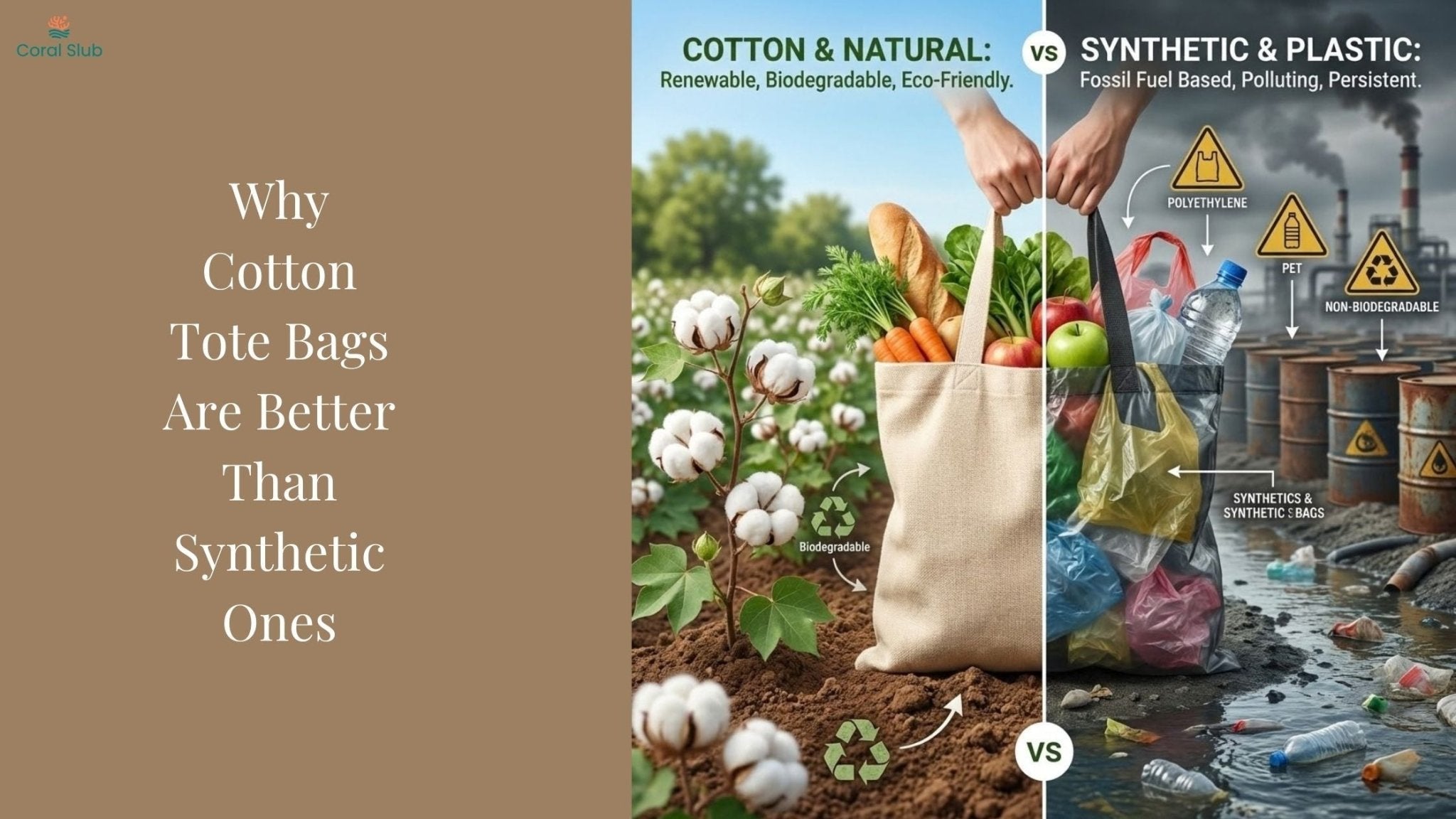
As reusable bags become part of everyday life, many people are faced with a simple but important choice. Should you buy a cotton tote bag or a synthetic one? While both are widely available, they perform very differently in daily use, comfort, and long-term impact.
If you are searching for this topic, you are likely trying to avoid bags that feel uncomfortable, wear out quickly, or do not align with a more sustainable lifestyle. Understanding the difference helps you choose a bag that actually works for everyday needs.
What Problem Does This Comparison Solve?
Choosing a bag that lasts and feels good to use

Many synthetic bags look sturdy at first but quickly become stiff, uncomfortable, or unpleasant to carry. Others tear easily or trap heat and moisture. Cotton tote bags solve these problems by offering breathability, flexibility, and durability that improves with use.
This guide explains why cotton bags are a better long-term choice for most everyday situations.
What Are Cotton Tote Bags and Synthetic Bags Made Of?
Understanding the material difference

Cotton tote bags are made from natural cotton fibres. These fibres are breathable, soft, and strong. They adapt well to daily use and feel comfortable against the body.
Synthetic bags are usually made from polyester, nylon, or plastic-based fibres. These materials are designed for mass production and low cost, not long-term comfort or environmental balance.
This difference in material directly affects how the bag performs.
Why Cotton Tote Bags Are More Comfortable for Daily Use
Breathability and flexibility matter

Cotton bags allow air to pass through the fabric. This makes them comfortable to carry, especially in warm weather. They sit naturally on the shoulder and do not feel stiff or abrasive.
Synthetic bags often trap heat and moisture. Over time, this can make them uncomfortable to use, particularly when carrying them for longer durations.
If you prefer bags that feel natural and easy to carry, cotton performs noticeably better.
Durability: Which Bag Actually Lasts Longer?
How cotton ages versus synthetic fabrics

Cotton bags are durable in a practical way. With regular use, they soften rather than weaken. When properly cared for, they can last for years without losing functionality.
Synthetic bags may resist water or stains initially, but they often degrade faster. Cracking, peeling, or stiffness is common after repeated use or washing.
Much like good quality bedsheets, cotton bags tend to improve with time rather than deteriorate.
Why Cotton Bags Are a Better Choice for Sustainability
Reducing environmental impact

Cotton is biodegradable and renewable. While it still requires resources to produce, it does not leave behind microplastics or long-lasting waste.
Synthetic bags are derived from petroleum-based materials. They shed microplastics over time and contribute to long-term environmental pollution.
For those trying to make mindful lifestyle choices, cotton bags align better with sustainable living values.
Aesthetic and Lifestyle Appeal
Why cotton feels more persona
Fruit Punch Botanic Print Tote Bag
Cotton tote bags often feature prints, textures, and finishes that feel handcrafted and expressive. They blend easily into daily life, whether used for shopping, work, or casual outings.
Synthetic bags usually prioritise function over feel. Their appearance tends to be uniform and industrial, offering limited visual warmth.
Just as cushion covers and table runners made from natural fabrics bring personality into a home, cotton bags add warmth and individuality to everyday accessories.
How to Choose the Right Cotton Bag
A simple checklist for buyers

When choosing a good cotton tote bag, look for fabric thickness that suits your use, reinforced stitching for durability, and comfortable handle length. If the bag is meant for daily errands or office use, breathable cotton works best.
Avoid extremely thin cotton if you plan to carry weight regularly. Balance comfort with structure.
Final Thoughts
Cotton bags are better than synthetic ones because they combine comfort, durability, and sustainability in a way that synthetic materials cannot match. They feel better to carry, age gracefully, and support a more conscious way of living.
Choosing cotton is not just about avoiding plastic. It is about choosing materials that work with your lifestyle rather than against it. When everyday objects feel good to use, they naturally become part of a more thoughtful routine.