Cart
0
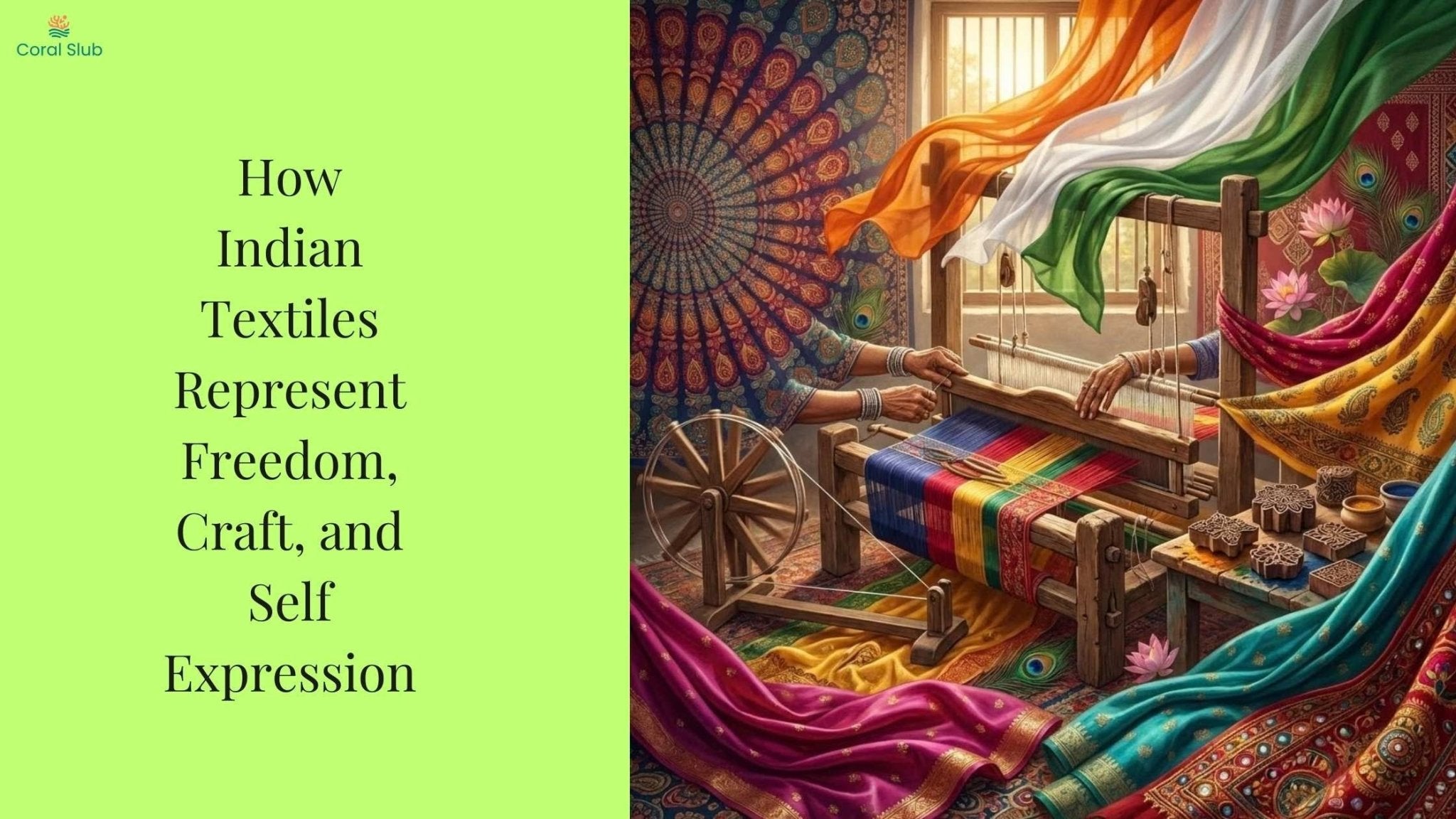
Indian textiles are more than fabrics used for clothing or home décor. They are carriers of history, identity, and personal voice. For centuries, textiles in India have reflected freedom, craftsmanship, and self expression, long before these words became modern ideals.
If you are searching for this topic, you are likely trying to understand why Indian textiles feel emotionally rich and culturally powerful, not just decorative. The answer lies in how fabric in India has always been connected to people, place, and purpose.
Why Textiles Hold Deep Meaning in Indian Culture
Fabric as a language, not just a material
 In India, textiles have never been silent. They communicate region, occupation, belief, and even emotion. A weave, a motif, or a colour choice often tells a story about where the fabric comes from and who made it.
This deep connection is why textiles continue to feel relevant even in modern homes. Whether used in cushion covers, bedsheets, or table runners, Indian fabrics bring layered meaning into everyday living.
Indian Textiles and the Idea of Freedom
From colonial resistance to everyday choice

During the freedom movement, textiles became symbols of resistance. Hand spun and hand woven fabrics represented independence from colonial systems and control. Wearing Indian textiles was not just about clothing, it was a declaration of self rule and dignity.
Today, freedom in textiles shows up differently. It is the freedom to choose handcrafted over mass produced, to support local artisans, and to bring individuality into personal spaces. Choosing Indian textiles remains an act of conscious expression.
Craftsmanship as the Soul of Indian Textiles
Why the human hand still matters

Indian textiles are deeply rooted in craft traditions passed down through generations. Weaving, dyeing, printing, and embroidery are skills learned through observation and practice, not machines alone.
This craftsmanship gives textiles character. Slight variations in weave or print are not flaws, they are signatures of the maker. This is why handcrafted textiles feel alive, whether they appear in a sari, a cushion cover, or a soft bedsheet used daily.
Self Expression Through Colour, Motif, and Texture
How textiles reflect personal identity

Indian textiles offer immense freedom of expression. Bold colours, subtle neutrals, intricate motifs, or minimal patterns all exist within the same cultural framework.
In homes, this expression becomes personal. Some people gravitate toward vibrant prints that energise a space, while others prefer calming textures that create balance. Textiles allow homes to reflect moods, memories, and values without structural change.
This adaptability makes textiles one of the most powerful tools for self expression in interior styling.
Regional Diversity and Individual Voice
One country, many textile identities

India’s textile heritage is not uniform. Each region brings its own techniques, materials, and visual language. This diversity allows individuals to choose what resonates with them personally rather than follow a single aesthetic.
Whether it is handwoven cottons, embroidered surfaces, or printed fabrics, these choices allow people to curate spaces that feel authentic rather than generic.
Why Indian Textiles Still Matter in Modern Homes
Solving the problem of sameness

Many modern homes struggle with looking similar. Neutral palettes and mass produced décor often lack warmth and individuality. Indian textiles solve this problem naturally.
By introducing handcrafted fabrics through soft furnishings like cushion covers, breathable bedsheets, or thoughtfully styled table runners, homes gain personality without clutter or renovation.
Textiles make spaces feel lived in, layered, and emotionally grounded.
The Future of Indian Textiles
Tradition adapting, not disappearing

Jhalak White Chikankari Cushion Cover, 18" x 18", Pack of 1
Indian textiles are not frozen in the past. They continue to evolve, adapting to modern lifestyles while retaining their core values of craft and expression.
As sustainability, slow living, and mindful consumption become priorities, Indian textiles offer solutions rooted in centuries of wisdom. They represent freedom of choice, respect for craftsmanship, and the confidence to express individuality.
Final Thoughts

Indian textiles represent freedom not just in history, but in everyday life. They celebrate the freedom to choose, to create, and to express. They honour the hands that make them and the people who use them.
In a world that often moves toward uniformity, Indian textiles stand as reminders that individuality, craft, and cultural pride can coexist beautifully in modern living.