Cart
0
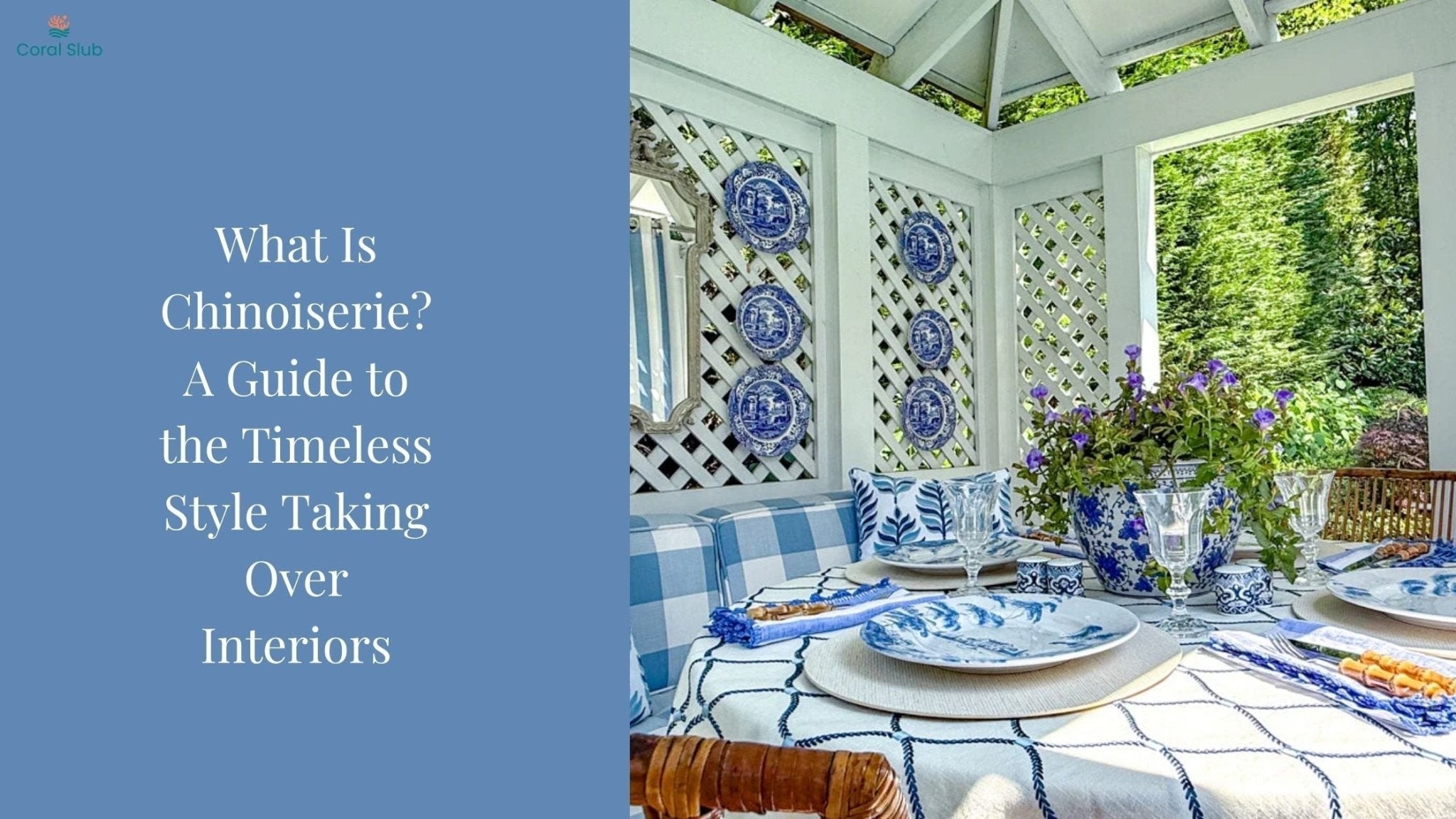
Certain design styles disappear with trends.Others evolve, adapt, and find new relevance with every generation. Chinoiserie belongs firmly in the second category.
From grand European palaces to contemporary homes, this decorative style has captivated designers for centuries. Recognisable through blue-and-white porcelain, elegant floral motifs, lacquered surfaces, bamboo-inspired details, and intricate landscapes, Chinoiserie brings together artistry, storytelling, and craftsmanship in a way few design styles can.
Today, Chinoiserie is experiencing a renewed appreciation as homeowners seek interiors that feel layered, collected, and rich in character. Whether it appears through a porcelain vase, a patterned wallpaper, a decorative cushion, or a statement table setting, the style continues to offer a sense of timeless elegance.
What Is Chinoiserie?

Understanding the Meaning of Chinoiserie
The word Chinoiserie comes from the French word chinois, meaning "Chinese." It refers to a European decorative style inspired by Chinese, Japanese, and broader East Asian artistic traditions. While the term became popular during the 18th century, the style itself began emerging much earlier as trade between Europe and Asia expanded.
Merchants brought porcelain, silk, lacquerware, and other luxury goods from Asia to Europe, where they quickly became symbols of sophistication and status. European artists and designers began creating their own interpretations of these influences, resulting in what we now know as Chinoiserie.
Chinoiserie Was Inspired by Asia, Not a Direct Copy
One of the most important things to understand about Chinoiserie is that it was not an authentic reproduction of East Asian artistic traditions.
Instead, it was a European interpretation of Asian aesthetics. Designers incorporated elements they admired, such as pagodas, exotic gardens, dragons, and porcelain, often blending them with local artistic styles. As a result, Chinoiserie became a unique design language that reflected both admiration and imagination.
The History of Chinoiserie

How Global Trade Shaped Chinoiserie
The rise of Chinoiserie is closely tied to global trade routes.As European nations expanded maritime trade during the 17th and 18th centuries, luxury goods from China, Japan, and other parts of Asia became increasingly accessible. Porcelain, silk textiles, lacquered furniture, and decorative objects were highly prized by aristocratic households.
These imports influenced architecture, furniture design, interior decoration, and tableware across Europe.
How Different Countries Embraced Chinoiserie
France incorporated Chinoiserie into its elaborate Rococo interiors, particularly in royal residences such as Versailles. England embraced the style through Chippendale furniture and decorative garden structures like pagodas. In the Netherlands, artisans created Delftware as a local response to imported porcelain, while Germany developed Meissen porcelain, which became one of Europe's most celebrated ceramic traditions.
Although each country interpreted the style differently, they shared a fascination with Asian-inspired design.
The Signature Elements of Chinoiserie Style
Blue-and-White Porcelain

If there is one element most closely associated with Chinoiserie, it is blue-and-white porcelain.Inspired by Chinese ceramic traditions, these pieces became symbols of refinement throughout Europe. Even today, porcelain vases, ginger jars, decorative plates, and tableware remain some of the most recognisable expressions of the style.
Their enduring appeal lies in their ability to feel both traditional and contemporary at the same time.
Pagodas and Architectural Motifs

Pagodas are another defining feature of Chinoiserie.Inspired by East Asian temple architecture, these tiered roof structures frequently appeared in paintings, wallpapers, ceramics, lanterns, and garden pavilions. They added a sense of fantasy and elegance that became central to the Chinoiserie aesthetic.
Floral and Botanical Patterns

Chinoiserie interiors often feature lush gardens, flowering branches, birds, and nature-inspired motifs.
Cherry blossoms, peonies, orchids, and phoenixes are common decorative elements. These motifs are not merely ornamental; many carry symbolic meanings related to renewal, prosperity, beauty, and longevity.
Bamboo and Faux-Bamboo Details

Bamboo became one of the most influential materials associated with the style.Representing resilience and strength, bamboo-inspired designs appeared in furniture, mirrors, frames, and decorative accessories. Even today, bamboo details remain a popular way to introduce subtle Chinoiserie influences into contemporary interiors.
Lacquered Surfaces

Highly polished lacquered furniture and decorative objects became synonymous with luxury.European artisans admired the depth and shine of Asian lacquerwork and sought to recreate its appearance in furniture, screens, and decorative accents. The glossy finish continues to be associated with sophisticated interiors today.
Why Chinoiserie Is Popular Again
A Growing Appreciation for Decorative Storytelling

Modern interiors are moving away from overly minimalist spaces and embracing more layered, personality-driven design.
Homeowners increasingly want their homes to tell a story. Chinoiserie offers exactly that. Its rich history, artistic motifs, and handcrafted feel bring depth and character to spaces that might otherwise feel generic.Rather than following short-lived trends, people are investing in pieces with cultural and historical significance.
Chinoiserie Blends Beautifully with Modern Interiors

One reason Chinoiserie remains relevant is its versatility.
A single porcelain vase can work in a contemporary living room. A blue-and-white ginger jar can complement coastal décor. Botanical wallpapers can feel just as at home in a traditional setting as they do in a modern apartment.
Today's designers often combine Chinoiserie elements with Scandinavian simplicity, coastal elegance, Japandi aesthetics, or contemporary furniture to create spaces that feel balanced rather than themed.
How to Incorporate Chinoiserie into Your Home

Start with One Statement Piece
You do not need an entire room filled with Chinoiserie to appreciate the style.A decorative porcelain vase, an elegant table lamp, or a patterned cushion can introduce the aesthetic without overwhelming the space. Many designers recommend starting with one statement piece and building around it gradually.
Layer Patterns Thoughtfully
Chinoiserie is known for its intricate motifs, but balance remains important.Pairing detailed floral patterns with solid colours and natural textures prevents the room from feeling visually heavy. The contrast often makes decorative elements stand out even more beautifully.
Mix Traditional and Contemporary Elements
Some of the most successful Chinoiserie-inspired interiors combine old and new.A modern sofa paired with botanical cushions, contemporary glassware alongside blue-and-white ceramics, or minimalist furniture balanced with a decorative wallpaper can create a fresh and timeless look.
Chinoiserie and Home Textiles
Why Chinoiserie Works Beautifully in Soft Furnishings

Textiles provide one of the easiest ways to introduce Chinoiserie influences into a home.Botanical prints, embroidered motifs, nature-inspired patterns, and elegant colour palettes translate beautifully into cushion covers, curtains, table linens, and bedding. These elements add visual interest while remaining practical and approachable.
Unlike large furniture investments, textiles allow homeowners to experiment with the style more freely.
Final Thoughts

Chinoiserie has endured for more than three centuries because it offers something many design trends cannot: A sense of wonder.
It combines craftsmanship, history, artistry, and storytelling into a visual language that continues to inspire designers around the world. From blue-and-white porcelain and bamboo details to floral motifs and lacquered finishes, every element contributes to a style that feels both elegant and timeless.
And perhaps that is why Chinoiserie remains relevant today. In a world of fast-moving trends, it reminds us that great design is not only about aesthetics. It is also about the stories, influences, and cultural exchanges that shape the objects we bring into our homes.