
Cart
0
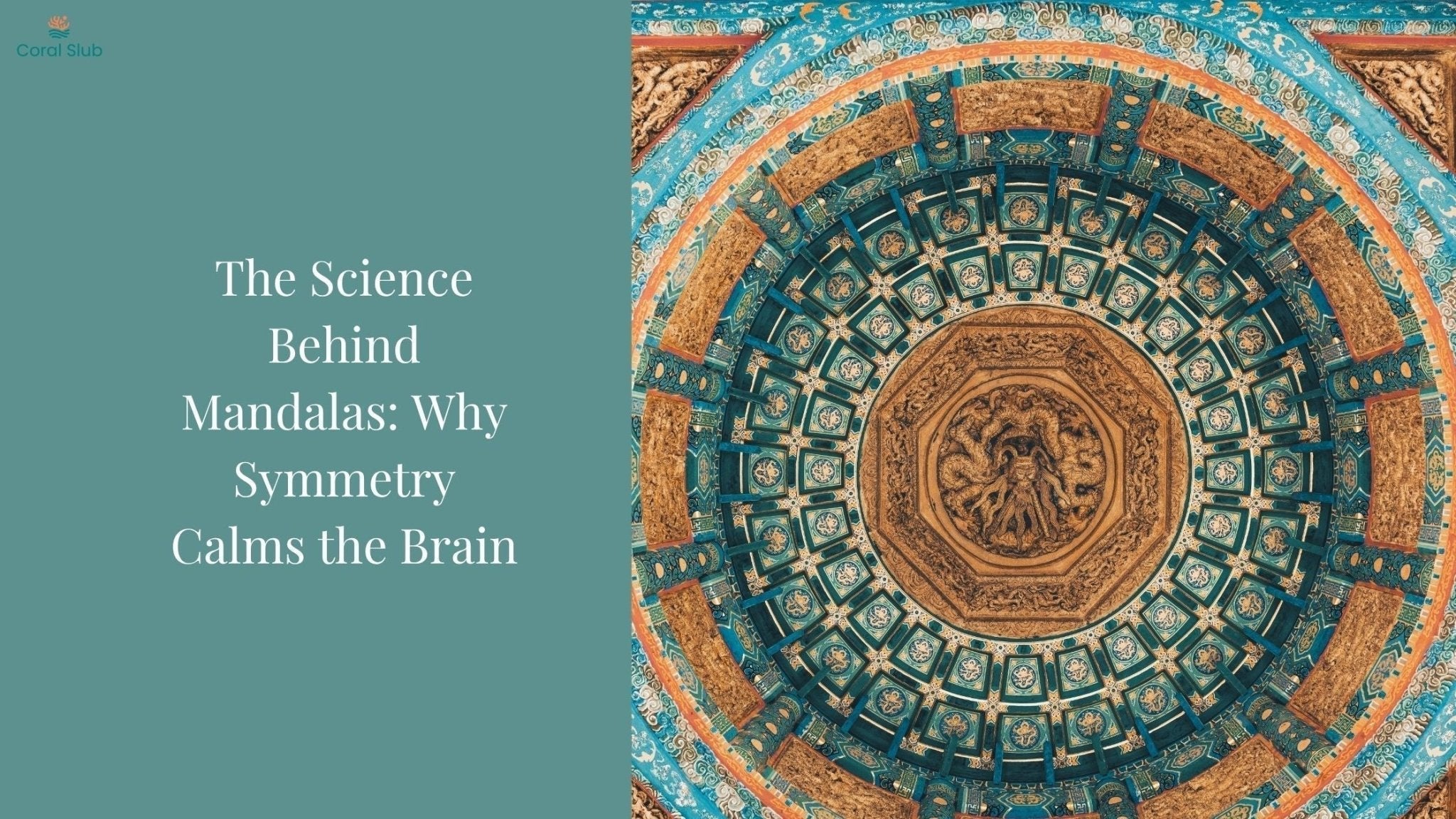
Have you ever found yourself staring at a mandala without even realising it?
Your eyes slowly trace its intricate patterns. Your breathing becomes a little slower. Your thoughts seem less scattered. For a brief moment, the constant noise of everyday life fades into the background.
This isn't simply because mandalas are beautiful.There is growing scientific evidence suggesting that the human brain is naturally drawn to symmetry, repetition, and organised patterns. These visual characteristics influence the way we process information, regulate emotions, and even respond to stress.
For thousands of years, mandalas have been used in Hinduism, Buddhism, and various spiritual traditions as tools for meditation, contemplation, and inner balance. Ancient practitioners may not have understood neuroscience, but they understood something equally important: certain patterns have the power to quiet the mind.
Today, researchers in psychology, neuroscience, and art therapy are beginning to uncover why these ancient circular designs continue to have such a profound effect on our mental well-being.
What Is a Mandala?

More Than a Beautiful Circular Design
The word Mandala comes from the Sanskrit language and translates to "circle."
In spiritual traditions, however, a mandala represents far more than its shape. It symbolises wholeness, unity, balance, and the interconnectedness of all life. Traditionally, mandalas are created with a central focal point surrounded by carefully repeated geometric patterns that expand outward in perfect harmony.
Every line, curve, and motif is intentionally arranged to create visual balance.
This sense of order is one of the reasons mandalas have become closely associated with meditation, mindfulness, and emotional well-being.
Why the Human Brain Loves Symmetry

Our Brains Are Designed to Recognise Patterns
Long before humans built cities or created works of art, survival depended on recognising patterns.
Our ancestors needed to quickly distinguish friend from foe, edible plants from poisonous ones, and safe environments from dangerous ones. As a result, the human brain evolved to become exceptionally good at identifying order within complexity.
Today, that same ability influences how we experience design, architecture, nature, and art.
Symmetrical patterns are easier for the brain to process because they require less cognitive effort. When information is organised and predictable, the brain spends less energy trying to interpret what it sees. Instead, it experiences a sense of visual ease.
This phenomenon is known in psychology as processing fluency. Images that are easier to process are often perceived as more attractive, trustworthy, and calming.Mandalas naturally take advantage of this principle.
Symmetry Signals Stability
Symmetry is everywhere in nature. Butterflies, flowers, snowflakes, leaves, shells, and even the human face display varying degrees of symmetry. Throughout evolution, symmetrical forms have often been associated with health, balance, and stability.
Because our brains encounter these balanced forms repeatedly in nature, they tend to respond positively to symmetrical designs.
When we look at a mandala, the brain recognises this familiar visual order. Instead of searching for irregularities or unpredictability, it settles into a more relaxed state.
How Mandalas Help Reduce Stress

They Give the Mind One Thing to Focus On
One of the biggest causes of mental fatigue is constant distraction. Modern life demands that we divide our attention between emails, notifications, conversations, responsibilities, and endless streams of information. The brain rarely has an opportunity to focus on one thing for an extended period.
Mandalas gently interrupt this cycle.Whether you are colouring a mandala, drawing one, or simply observing its intricate details, your attention naturally becomes concentrated on a single visual object. This focused attention reduces mental clutter and encourages mindfulness.
In many ways, viewing a mandala functions similarly to following your breath during meditation.
Repetitive Patterns Encourage Relaxation
The repeated shapes within a mandala create rhythm. Psychologists have long observed that repetitive movements and repetitive visual patterns can help regulate the nervous system. Similar calming effects can be found in knitting, gardening, weaving, pottery, and even walking.
The repetitive geometry of mandalas creates a comparable experience for the eyes.
Instead of rapidly jumping from one visual stimulus to another, the brain follows a predictable path through the design. This gentle rhythm helps reduce overstimulation and supports emotional regulation.
The Psychology of Circular Shapes

Why Circles Feel Safe
Unlike sharp angles or irregular forms, circles have no beginning and no end.
Research in environmental psychology suggests that people often associate curved forms with safety, comfort, and softness. Angular objects, by contrast, are more likely to trigger alertness because the brain subconsciously associates sharp edges with potential danger.
Mandalas combine circular forms with symmetrical organisation, creating a visual experience that feels both secure and balanced.
This may explain why circular designs have appeared in sacred architecture, meditation spaces, stained glass windows, and spiritual symbols across cultures for centuries.
Mandalas and Mindfulness

Staying Present Through Visual Meditation
Mindfulness simply means paying attention to the present moment without judgement.For many beginners, however, sitting quietly with closed eyes can feel surprisingly difficult.
Mandalas offer an alternative.
Instead of focusing only on the breath, practitioners focus on the visual structure of the mandala. As the eyes move from the centre outward and back again, distracting thoughts gradually lose their intensity.
This process is sometimes called visual meditation, and it has become increasingly popular in wellness programmes and therapeutic settings.
Mandalas and Art Therapy
Why Therapists Often Use Mandalas
Mandalas have become valuable tools in art therapy because they provide structure without limiting creativity.
Unlike drawing on a blank page, working within a circular framework often feels less intimidating. The boundary of the circle creates a sense of containment, while the repeating patterns encourage concentration and emotional expression.
Many therapists report that clients experience reduced anxiety and greater emotional awareness after engaging in mandala colouring or drawing.
The activity combines creativity with mindfulness, allowing people to process emotions in a calm and non-verbal way.
The Role of Colour in Mandalas
Colour Influences Emotion

Colour plays an important role in how mandalas affect the brain.Cool colours such as blue and green are often associated with calmness and restoration, while warmer colours like yellow and orange may promote optimism and energy.
When combined with symmetrical patterns, colour enhances the emotional experience of viewing or creating a mandala.This is one reason many meditation practitioners choose mandalas with colours that reflect the emotional state they wish to cultivate.
Why Mandalas Feel So Timeless
Ancient Wisdom Meets Modern Science

Long before neuroscience existed, ancient cultures intuitively understood the calming power of symmetrical patterns.Mandalas appeared in temples, monasteries, manuscripts, architecture, and meditation practices because they supported contemplation and spiritual reflection.
Modern science is now providing explanations for experiences that practitioners have understood for centuries.The brain appreciates symmetry because it simplifies visual processing.
The nervous system responds positively to repetitive patterns because they encourage rhythm and predictability.Mindfulness becomes easier when attention has a stable focal point.Together, these factors help explain why mandalas continue to resonate across cultures and generations.
Bringing Mandalas Into Your Home
Surround Yourself with Visual Calm

The calming influence of mandalas doesn't have to remain limited to meditation sessions.
Incorporating mandala-inspired décor into your living space can create subtle visual reminders to slow down and reconnect with the present moment. Embroidered cushion covers, wall art, table linens, and handcrafted textiles featuring mandala motifs introduce both artistic beauty and symbolic meaning into the home.
Unlike trend-driven décor, mandalas offer timeless appeal because their patterns are rooted in balance rather than fashion.
Whether placed in a living room, bedroom, reading corner, or meditation space, they contribute to an environment that feels peaceful, welcoming, and intentional.
Can Looking at Mandalas Really Reduce Stress?
Science Suggests They Can Help

While mandalas are not a substitute for professional mental health treatment, research on mindfulness, art therapy, and visual perception suggests that engaging with structured, symmetrical patterns can support relaxation, improve focus, and reduce perceived stress. These effects are most noticeable when mandalas are used as part of a broader mindfulness practice, such as meditation, slow breathing, or creative expression.
The benefits come not from the pattern alone, but from the way it encourages the mind to pause, observe, and remain present.
Final Thoughts

The enduring appeal of mandalas is no accident.Their symmetry, repetition, and circular form align beautifully with the way our brains naturally process visual information. What ancient spiritual traditions discovered through experience is now being supported by modern psychology and neuroscience: balanced patterns can help create balanced minds.
In an increasingly fast-paced world, mandalas offer something surprisingly simple yet deeply valuable.
They invite us to slow down.To focus.To breathe.To notice beauty in repetition rather than distraction.
Whether you meditate with mandalas, create them through art, or simply incorporate them into your home décor, their quiet geometry serves as a gentle reminder that balance often begins with the smallest moments of mindful attention.
Discover Mandala-Inspired Home Décor from Coral Slub
At Coral Slub, our Mandala Cushion Covers celebrate one of India's most meaningful artistic traditions. Inspired by sacred geometry and handcrafted with intricate detailing, these cushions are designed to bring warmth, balance, and timeless elegance into your living spaces. Whether styled in a contemporary living room or a peaceful reading nook, they offer a beautiful way to surround yourself with patterns that inspire calm and mindful living.
Frequently Asked Questions
Are mandalas scientifically proven to reduce stress?
Research suggests that colouring, drawing, or focusing on symmetrical patterns like mandalas can promote mindfulness and reduce perceived stress. While they are not a medical treatment, they can be a helpful relaxation tool.
Why does symmetry make us feel calm?
The brain processes symmetrical images more efficiently than irregular ones. Because they require less mental effort to interpret, symmetrical designs often feel more balanced, pleasing, and relaxing.
Can mandalas improve focus?
Yes. Mandalas encourage sustained visual attention, which can reduce distractions and improve concentration during meditation, creative activities, or quiet reflection.
Why are mandalas used in yoga and meditation?
Mandalas act as visual focal points that support mindfulness. Their circular patterns help practitioners stay present, making them valuable tools for meditation and contemplative practices.
How can I incorporate mandalas into my home?
Mandalas can be introduced through cushion covers, wall art, table linens, rugs, or decorative accessories. These elements add both visual harmony and symbolic meaning while creating a calm and welcoming atmosphere.