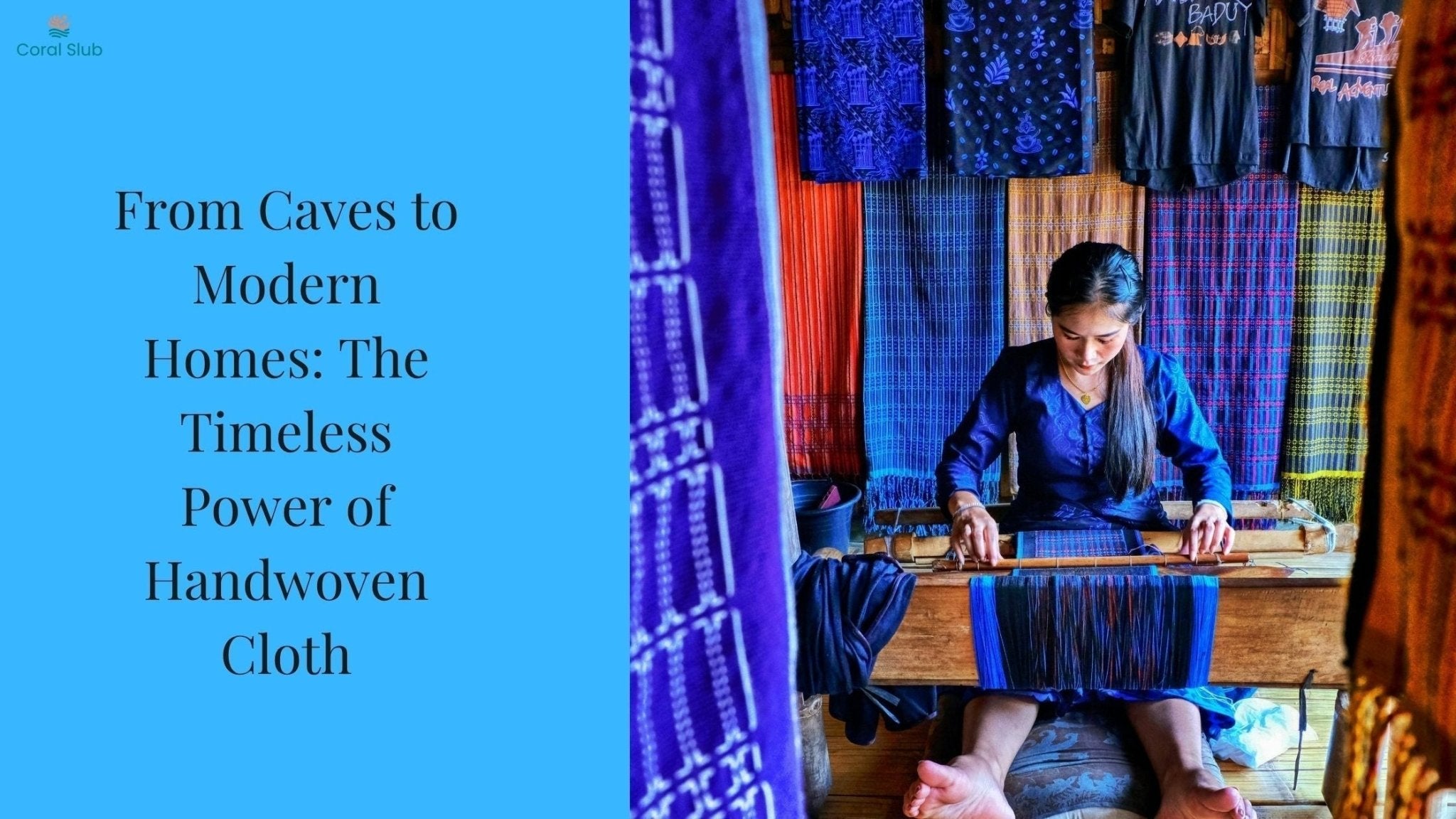
We often think of handmade cloth as decoration. Something cultural. Something artisanal. A craft associated with weaving, embroidery, dyeing, or home décor. But archaeology tells a much deeper story.
Textiles may actually represent one of humanity’s oldest instincts.Long before cities, kingdoms, or written language fully developed, humans were already twisting fibres into thread, weaving plant materials into fabric, and creating cloth not just for survival, but for identity, ritual, and expression.And perhaps what is most fascinating is this:
Some of the oldest textiles ever discovered survived not in museums or royal collections, but inside caves, deserts, tombs, and ancient settlements buried for thousands of years.From Ice Age Europe to the Indus Valley civilisation, these fragments of cloth reveal something profound about human beings. Even at our earliest stages, we were not only trying to survive.We were trying to create.
Why Ancient Textiles Matter More Than We Realise
Unlike pottery or stone, textiles rarely survive.Fabric decomposes quickly, especially in humid climates. This means every ancient textile discovery is extraordinarily rare. When archaeologists uncover preserved fibres or woven fragments, they are not simply finding clothing.
They are uncovering evidence of human intelligence, trade, technology, social structure, and creativity.Textiles tell us how people lived, what they valued, what materials they understood, and how connected different civilisations already were.
In many ways, cloth became one of humanity’s first technologies.
1. The Flax Fibres From Dzudzuana Cave, Georgia
The World’s Oldest Known Textile Fibres
One of the oldest textile-related discoveries in the world came from Dzudzuana Cave in present-day Georgia.
Archaeologists uncovered twisted flax fibres believed to be around 30,000 years old, dating back to the Upper Paleolithic Ice Age period.What makes this discovery extraordinary is that these fibres were not random plant remains. Many had been deliberately twisted, spun, and even dyed using natural pigments.
This means humans during the Ice Age were already manipulating fibres intentionally long before formal weaving technologies developed.
What These Fibres Reveal About Early Humans
The discovery changes how we imagine prehistoric people.These were not merely survival-focused communities. They understood materials, experimented with colour, and created structured fibres with purpose. Even in one of the harshest climates in human history, there was already evidence of craft and aesthetic thinking.
The impulse to create cloth appears to have emerged incredibly early in human evolution.
2. The Ancient Linen of Egypt
Textiles Preserved by the Desert
Some of the oldest surviving woven fabrics come from ancient Egypt, where dry desert conditions preserved linen remarkably well.
Fragments of woven flax textiles dating back over 5,000 years have been discovered in tombs and burial sites. Egyptian linen was not simply practical fabric. It carried religious, social, and symbolic significance. The fineness of the weave often reflected status and wealth.
Why Linen Became So Important
Egyptians mastered flax cultivation and linen production at an advanced level for their time.Textiles were used for clothing, burial wrappings, temple rituals, and trade. The level of sophistication in Egyptian weaving shows that textile production had already become a highly organised craft industry thousands of years ago.
3. The Cotton Textiles of the Indus Valley Civilisation
One of the Earliest Cotton Cultures in the World
The Indus Valley Civilisation, which flourished around 2500 BCE across parts of modern-day India and Pakistan, is believed to be one of the earliest societies to cultivate and weave cotton.
Fragments of cotton fibres discovered at Mohenjo-daro and Harappa suggest that the civilisation had already developed spinning and weaving techniques long before cotton became globally widespread.
This is significant because cotton later became one of India’s greatest contributions to global textile history.
What Indus Valley Textiles Tell Us
The Indus Valley was highly advanced in urban planning, trade, and craftsmanship.The existence of cotton textiles suggests organised agriculture, dyeing knowledge, and specialised labour systems. It also points toward trade networks, since cotton fabrics from India later travelled extensively through ancient maritime routes.
Even thousands of years ago, textiles were already shaping economies and cultural exchange.
4. The Tarim Basin Wool Textiles, China
Textiles Along Early Silk Road Routes
In the Tarim Basin region of western China, archaeologists uncovered exceptionally preserved wool textiles dating back nearly 3,000 to 4,000 years.These textiles are especially important because they reveal how weaving techniques, dyeing methods, and textile traditions moved across Central Asia through early trade networks that would later become part of the Silk Road.
Patterns found in these textiles show surprising similarities to weaving traditions from distant regions, suggesting cultural exchange far earlier than previously assumed.
Cloth as Evidence of Migration and Trade
Textiles often travelled more easily than architecture or language.Because fabrics move with people, trade, and migration, they become evidence of cultural interaction. The Tarim textiles show that ancient societies were already interconnected through exchange networks long before modern globalisation existed.
5. The Andean Textiles of Ancient Peru
Some of the Most Sophisticated Ancient Weaving Ever Found
Ancient Andean civilisations in Peru produced extraordinarily advanced textiles thousands of years ago.Some surviving woven fragments date back over 4,000 years and display remarkable complexity in colour, pattern, and weaving precision.For many Andean cultures, textiles held more value than gold.
Why These Textiles Were So Important
Textiles functioned as identity markers, ceremonial objects, and symbols of status.The sophistication of these fabrics demonstrates that weaving was not considered secondary labour. It was a respected artistic and cultural practice deeply connected to social life.
What Ancient Textiles Reveal About Humanity
Cloth Was Never Only Functional
Looking across these discoveries, one thing becomes clear: Humans did not create textiles solely for warmth or survival. Very early on, cloth became connected to beauty, symbolism, identity, spirituality, and storytelling. People dyed fibres, created patterns, developed weaving techniques, and invested enormous time into textile creation long before industrial technology existed.
The desire to make cloth beautiful appears almost universal across civilisations.Textiles Connected Civilisations Long Before the Modern World.Textiles were among the earliest globally traded objects. Cotton from India, silk from China, linen from Egypt, wool from Central Asia. Cloth moved across deserts, ports, and trade routes carrying techniques, motifs, and cultural ideas between societies.
This is one reason textile history often overlaps with human history itself.
Why Handmade Cloth Still Resonates Today
Even today, handcrafted textiles feel emotionally different from mass-produced fabrics.
Perhaps because, consciously or not, we recognise the human labour inside them. The stitching, weaving, irregularities, and texture remind us that cloth has always carried the presence of human hands.And maybe that is why handmade textiles continue to feel timeless.Because they connect us to something incredibly old:The instinct not just to survive, but to create beauty from fibre, thread, and cloth.
Final Thoughts
The oldest textiles ever discovered reveal something profound about humanity. Long before skyscrapers, digital technology, or written history, humans were already weaving, dyeing, spinning, and creating cloth with intention. Across caves, deserts, ancient cities, and burial grounds, textiles became evidence of imagination, identity, and connection.
And perhaps that changes the way we look at fabric today.
A woven textile is not just decoration,
Not just an utility,
Not just a mere craft.
It is part of one of humanity’s oldest creative impulses, carried forward across thousands of years, thread by thread.