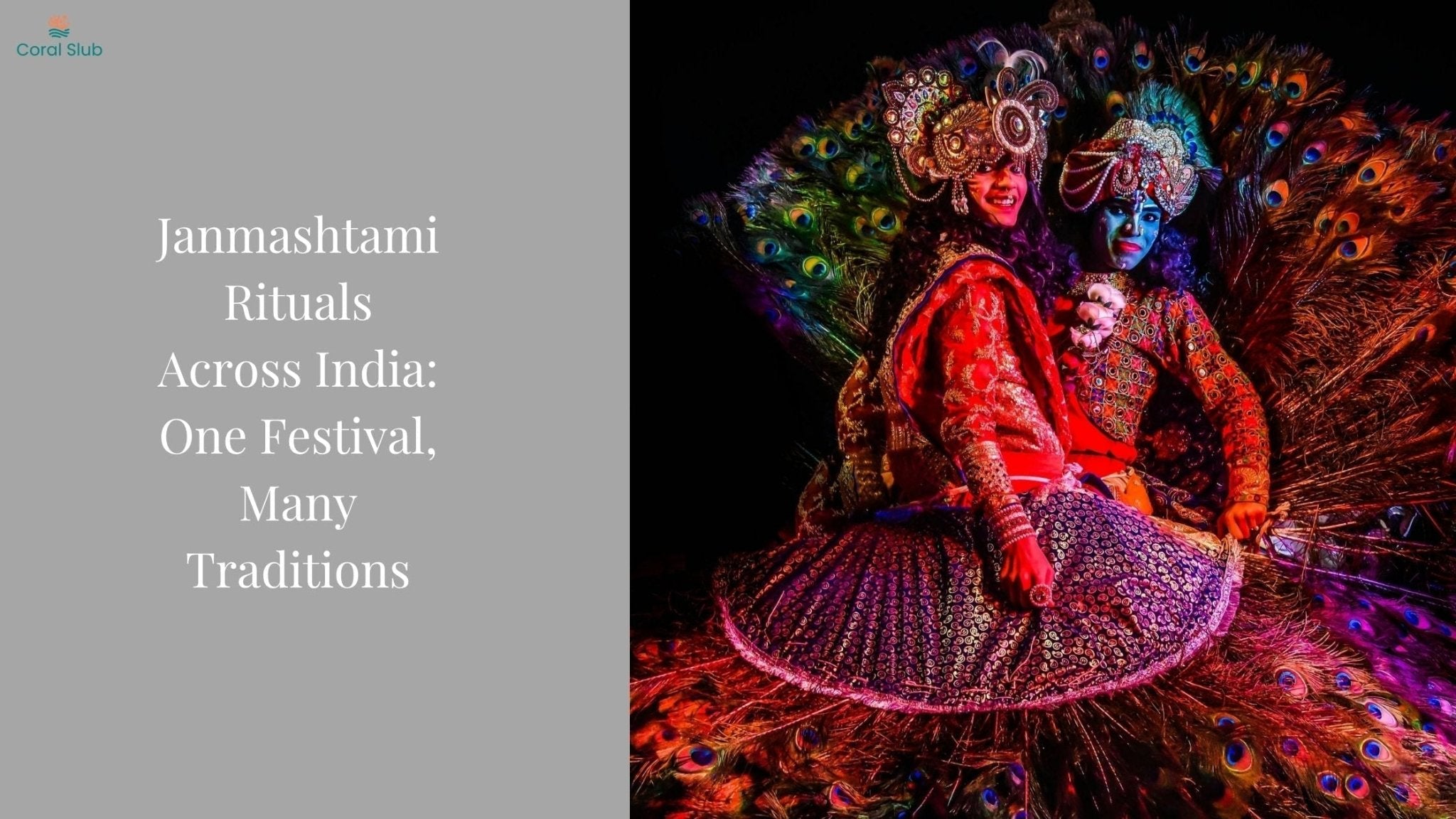
Krishna Janmashtami celebrates the birth of Lord Krishna, but across India, the festival takes on a fascinating variety of forms.
The central story remains the same: devotees commemorate Krishna's birth on Ashtami Tithi of Krishna Paksha in the month of Bhadrapada, with many traditions observing the moment of his birth at midnight. Yet the rituals, foods, music, decorations and community celebrations surrounding that moment differ significantly from one region to another.
In one part of India, young men form human pyramids to reach a pot of curd. In another, homes create elaborate cradles for Bal Gopal. Elsewhere, devotees recreate episodes from Krishna's childhood through dance, theatre and music.This regional diversity is what makes Janmashtami particularly beautiful.
One Krishna. Many traditions. One shared celebration of devotion.
1. Janmashtami in Uttar Pradesh
Mathura and Vrindavan: The Heartland of Krishna's Birth
If there is one region where Janmashtami carries an especially strong spiritual and cultural presence, it is Uttar Pradesh, particularly Mathura and Vrindavan.
Mathura is traditionally regarded as the birthplace of Lord Krishna, while Vrindavan is closely associated with his childhood and youthful pastimes.During Janmashtami, temples and streets across the region come alive with devotional music, flowers, lights and elaborate decorations.
Midnight Birth Celebration
One of the central rituals is the celebration of Krishna's birth at midnight.Devotees gather for prayers, devotional singing and aarti, followed by the symbolic welcoming of the newborn Krishna.
Jhanki and Krishna Leela
Temples and communities often create jhankis, or tableaux depicting episodes from Krishna's life.
Scenes may portray Krishna's childhood, his relationship with Yashoda, his playful activities in Gokul or stories associated with Vrindavan.Raas Leela and Krishna-themed performances also form an important part of the region's cultural expression.
2. Janmashtami in Maharashtra
From Midnight Worship to Dahi Handi
Maharashtra gives Janmashtami a distinctly energetic and community-driven character through Dahi Handi.The tradition is associated with Krishna's childhood love of butter and curd. Groups of young participants, known as Govindas, form human pyramids to reach and break a pot suspended high above the ground.
The Spirit of Dahi Handi
What began as a playful representation of Krishna's childhood has developed into a major public celebration in Maharashtra.Music, dancing, neighbourhood gatherings and decorated streets add to the excitement.
While Janmashtami is associated with Krishna's birth, Dahi Handi is particularly linked with his Bal Gopal persona: the mischievous child who loved butter and curd.
A Different Kind of Festive Energy
Unlike the quieter midnight rituals inside homes, Dahi Handi brings Janmashtami into public spaces.It is a celebration of teamwork, community participation and Krishna's playful nature.
3. Janmashtami in Gujarat
Dwarka and the Devotion to Dwarkadhish
Gujarat has a special connection with Krishna through Dwarka, traditionally regarded as the kingdom established by Krishna.The Dwarkadhish Temple becomes an important centre of devotion during Janmashtami.
Temple Celebrations
Devotees gather for prayers, bhajans and special rituals associated with Krishna's birth.The temple environment becomes especially festive, with devotional music and decorations creating a celebratory atmosphere.
Krishna Beyond Childhood
While Mathura and Vrindavan often highlight Krishna's childhood and youthful stories, Gujarat's traditions can also emphasise Krishna as Dwarkadhish: the king of Dwarka.This provides another perspective on the many forms through which Krishna is worshipped across India.
4. Janmashtami in West Bengal
Jhulan and Vaishnava Traditions
West Bengal's Krishna traditions are strongly connected with the Vaishnava Bhakti tradition, particularly through the legacy of Chaitanya Mahaprabhu.Janmashtami celebrations can include devotional singing, temple rituals, readings and cultural performances.
Jhulan Yatra
The tradition of Jhulan Yatra, or the swing festival, is particularly associated with Radha and Krishna.Elaborately decorated swings become part of temple celebrations, with flowers and colourful decorations creating a beautiful devotional setting.
Music and Devotion
Kirtan and devotional singing are important expressions of Krishna bhakti in Bengal.The celebration therefore becomes as much about music and spiritual expression as it is about ritual.
5. Janmashtami in Odisha
Krishna Through Temple Culture and Devotion
Odisha has a rich temple tradition, and Krishna worship is closely connected with the state's broader Vaishnava culture.Janmashtami is observed through temple rituals, devotional singing and fasting.
Cultural Storytelling
Krishna's life and stories are also expressed through Odisha's rich traditions of dance, music and visual arts.This makes the festival an interesting intersection of religion and Indian performing arts.The state's artistic traditions provide another way of narrating Krishna's life beyond conventional rituals.
6. Janmashtami in Karnataka
Mosaru Kudike and Krishna's Playful Spirit
In parts of Karnataka, Krishna Janmashtami is associated with Mosaru Kudike, a celebration involving pots of curd and community participation.Like Maharashtra's Dahi Handi, the tradition reflects Krishna's childhood association with butter and curd.
Gokulashtami
Janmashtami is also commonly referred to as Gokulashtami in Karnataka.Families may observe fasting, perform puja and prepare traditional food offerings.Some homes create tiny footprints leading from the entrance towards the puja room.
Krishna's Little Footprints
These footprints symbolically represent baby Krishna entering the home.For families, this can be one of the most charming Janmashtami rituals because it turns the entire house into part of the celebration.
7. Janmashtami in Tamil Nadu
Welcoming Krishna Through Tiny Footprints
In Tamil Nadu, Krishna Janmashtami is commonly known as Gokulashtami or Krishna Jayanthi.One of the most recognisable traditions is drawing small Krishna footprints on the floor.
From the Door to the Puja Room
The tiny footprints are often created using a rice-flour mixture.They begin at the entrance and continue towards the prayer area, symbolically suggesting that little Krishna has entered the home.This simple ritual beautifully connects spirituality with home décor.
Traditional Offerings
Families prepare special festive foods and sweets associated with Krishna, with offerings often including items made from rice, butter, milk and other traditional ingredients.The celebration becomes an intimate family ritual rather than only a public festival.
8. Janmashtami in Andhra Pradesh and Telangana
Krishna Through Devotion and Temple Celebrations
In Andhra Pradesh and Telangana, Janmashtami is observed through prayers, fasting, devotional singing and temple rituals.Families may decorate their homes and create special puja spaces for Krishna.
A Festival of Family Worship
For many households, the focus is on welcoming Krishna as Bal Gopal.A small Krishna idol may be placed in a decorated space, with flowers, lamps and traditional offerings creating a festive setting.The home becomes an intimate devotional environment where family members can participate in prayers and rituals.
9. Janmashtami in Manipur
Krishna Devotion Through Dance and Performance
Manipur has a particularly strong Vaishnava tradition, and Krishna devotion is deeply connected with its performing arts.The state's celebrated Ras Lila tradition is an important cultural expression of the relationship between Krishna and the gopis.
Dance as Devotion
Here, Krishna's stories are not simply narrated.They are performed through movement, music and dance.The result is a form of worship where artistic expression becomes part of spiritual practice.Janmashtami therefore provides an opportunity to experience how India's classical and regional performing arts can preserve religious stories across generations.
10. Janmashtami in Rajasthan
Krishna in the Land of Bhakti
Rajasthan has a strong tradition of Krishna devotion, particularly through its temple culture and Bhakti traditions.Temples and homes may observe Janmashtami with devotional singing, fasting, prayers and midnight celebrations.
Final Thoughts
Janmashtami is one festival, but across India it becomes many different celebrations.There is the energy of Dahi Handi in Maharashtra, the midnight devotion of Mathura and Vrindavan, the grandeur of Dwarka in Gujarat, the devotional music of Bengal, the footprints of Bal Gopal in South Indian homes and the graceful storytelling of Ras Lila in Manipur.
Each ritual tells a different part of Krishna's story.And perhaps that is the most beautiful thing about Janmashtami.Krishna does not belong to one place or one tradition. He lives in India's homes, temples, songs, paintings, dances, textiles and everyday rituals.
From a tiny pair of footprints at the entrance to a beautifully decorated jhula in the living room, every detail becomes a way of saying: "Welcome home, Kanha."
Bring the Spirit of Janmashtami Into Your Home with Coral Slub
Indian Textiles for a Festive Home
The beauty of Janmashtami lies in the details like the flowers around the jhula, a colourful rangoli at the entrance, soft lighting in the prayer space and a home prepared for family and devotion.
At Coral Slub, colourful cotton cushion covers, embroidered designs, block-printed textiles and table runners can become part of this festive story.
Use vibrant cushions around the Krishna jhula, style a handcrafted runner on the festive dining table or introduce traditional Indian patterns through textiles around your living space.
Because when Indian craftsmanship becomes part of a festival, décor becomes more than decoration, it becomes part of the ritual and the memory.