A home can be beautiful because of the way it looks. But sometimes, its beauty comes from something deeper.
A familiar corner where a diya is lit every evening. A small mandir that becomes the quietest place in the house. Flowers arranged before a deity. A handcrafted textile that has been passed down through generations. A cushion beside a prayer space where someone sits every morning.
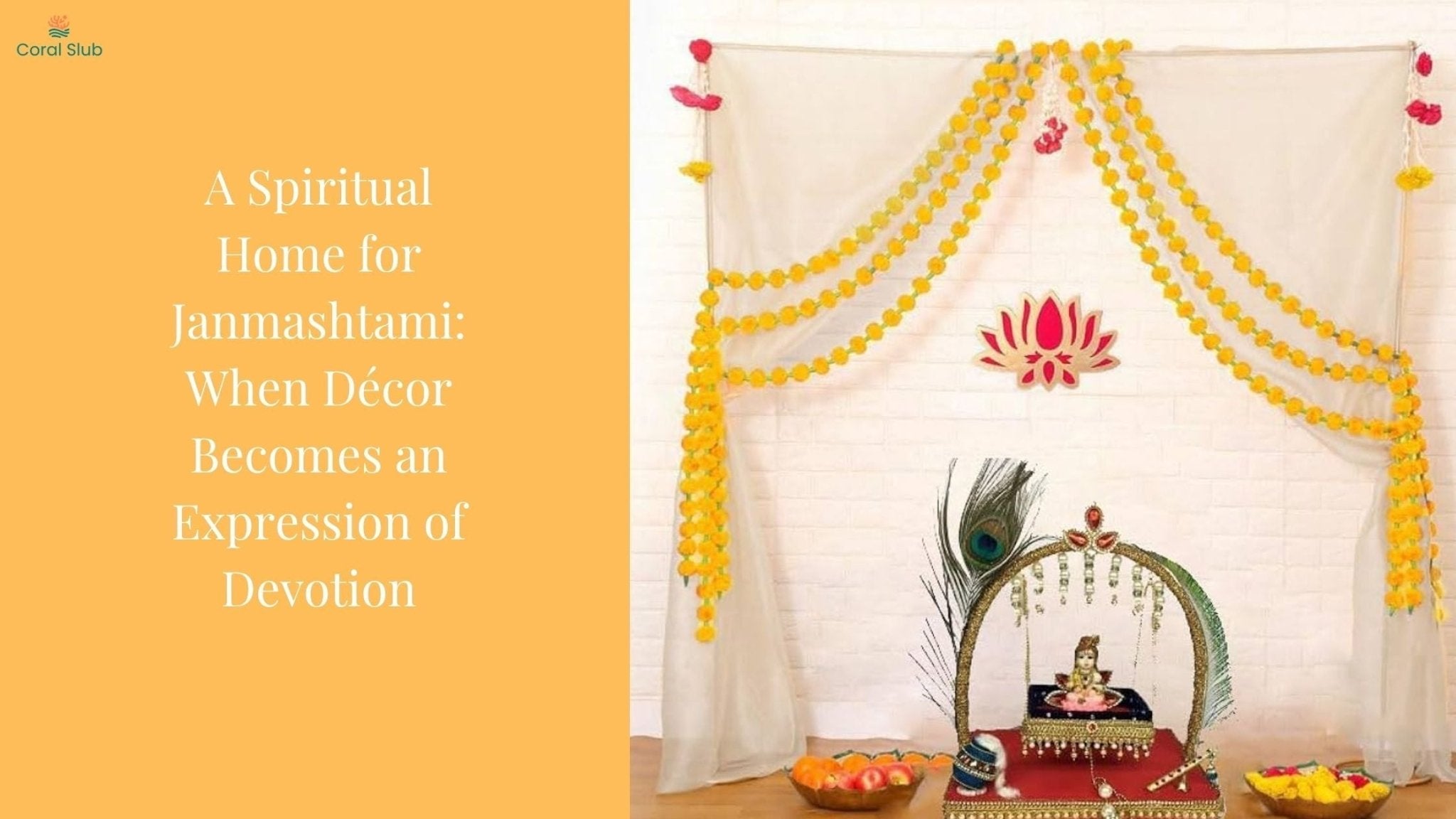
These details turn a house into something more personal.During Janmashtami, this idea becomes especially meaningful. The festival celebrates the birth of Lord Krishna, but at home, the celebration often becomes an intimate expression of devotion. The decorated jhula, flowers, lights, bhog and Krishna idol are not simply festive decorations. Together, they create a space dedicated to welcoming Krishna.
This is where spiritual home décor becomes more than an aesthetic choice.It becomes a way of creating an environment that reflects faith, memory and devotion.
What Does a Spiritual Home Mean?
Creating Spaces That Feel Meaningful
A spiritual home does not need to look like a temple.It does not require elaborate décor, expensive objects or a completely traditional interior.Instead, it is about creating small spaces that encourage peace, reflection and connection.
For one family, that may be a dedicated mandir. For another, it could be a beautifully arranged Krishna jhula in the living room during Janmashtami. Someone else may create a small corner with flowers, a diya and a meaningful idol.The intention behind the space is what gives it significance.
Décor Can Carry Emotion
A handcrafted cushion, a floral textile or a traditional motif can become part of a spiritual setting because it carries associations with culture and memory.
This is particularly relevant during festivals.The objects surrounding the celebration become part of the memories created around it. The same cushion that sits beside the Krishna jhula one Janmashtami may return to the same corner year after year.Eventually, décor becomes part of family tradition.
The Krishna Jhula as the Heart of Janmashtami Décor
Creating a Space to Welcome Bal Gopal
One of the most beautiful Janmashtami traditions is preparing a jhula or cradle for Bal Gopal, the child form of Krishna.
The cradle transforms an ordinary corner of the home into the centre of the celebration.Fresh flowers, soft fabrics, delicate lights and traditional decorative elements can be arranged around it without making the setting feel crowded.
Let the Jhula Remain the Focal Point
The most meaningful Janmashtami décor does not need to compete for attention.Instead, the Krishna idol and jhula can remain the visual and spiritual centre, while the surrounding décor supports the atmosphere.A neutral backdrop, natural flowers, warm lighting and thoughtfully selected textiles can create a setting that feels festive without becoming overwhelming.
Mandala and the Idea of a Sacred Centre
Bringing Balance into a Spiritual Space
The mandala offers an interesting visual language for spiritual home décor.Its circular structure and symmetrical composition naturally draw attention towards a centre. This makes mandala-inspired patterns particularly suited to spaces where the idea of focus and contemplation is important.For Janmashtami, a mandala-inspired cushion, textile or artwork can complement the Krishna space while introducing a sense of balance and symmetry.
Why Circular Patterns Feel Calming
Circular patterns encourage the eye to move around the design while repeatedly returning to its centre.
In a home, this can create a sense of visual order.Placed thoughtfully near a prayer space, mandala-inspired décor can therefore become more than a decorative pattern. It can reinforce the idea of creating a calm and intentional environment.
Flowers: The Simplest Form of Festive Devotion
Let Nature Become Part of the Décor
Flowers have always played an important role in Indian celebrations.During Janmashtami, fresh flowers can be used around the Krishna idol, jhula and mandir to create a natural festive atmosphere.Marigolds, roses, jasmine and other seasonal flowers can introduce colour and fragrance without requiring elaborate decoration.
Imperfection Makes It Personal
A spiritual home does not need a professionally styled floral arrangement.A small bowl of flowers collected from the garden, a simple garland or a handful of blossoms arranged around the jhula can feel far more intimate.The beauty lies in the act of preparing the space.
The Role of Colour in Krishna-Inspired Décor
Blue, Yellow, Green and the Colours of Celebration
Krishna is traditionally represented through distinctive visual associations, particularly his blue complexion and yellow garments.
These associations can inspire a Janmashtami colour palette without turning the home into a themed installation.Soft blues, mustard yellows, natural greens, ivory and touches of red can work beautifully with handcrafted Indian textiles.
Let Colour Tell the Story
Instead of using every colour at once, choose two or three complementary shades.A blue cushion paired with a warm yellow textile can create a subtle Krishna-inspired corner. Green foliage and fresh flowers can provide a natural transition between the colours.
This approach keeps the space elegant while allowing the symbolism to remain visible.
Handcrafted Textiles and the Spiritual Home
Why Handmade Pieces Feel Different
There is something inherently personal about handmade textiles.A block-printed fabric carries the impression of the artisan's wooden block. An embroidered textile preserves hours of needlework. A handwoven fabric reflects the rhythm of the loom.These details introduce a human quality into the home.
Bringing Indian Craftsmanship into Janmashtami
A handcrafted table runner can frame the festive dining table. A printed cushion can add warmth around the prayer area. A cotton textile can be placed beneath a decorative arrangement or used to create a soft backdrop for the jhula.
The purpose is not to make every object religious.It is to allow Indian craftsmanship and spiritual celebration to exist naturally within the same home.
Creating a Devotional Living Room
When the Festival Moves Beyond the Mandir
Not every home has a large dedicated prayer room.The living room often becomes the place where families gather during Janmashtami.This is where the spiritual and everyday parts of the home can meet.
A small Krishna jhula can be placed against a calm wall, surrounded by flowers and warm lights. Cushions can make the surrounding seating comfortable for family members participating in bhajans or the midnight celebration.
Keep the Setting Intentional
A spiritual corner benefits from visual breathing room.Instead of filling every surface with decorative objects, allow a few meaningful pieces to stand out.The result can feel more peaceful and devotional than a heavily decorated arrangement.
The Dining Table as Part of the Celebration
From Bhog to Family Gatherings
Food is an important part of Indian festivals, and Janmashtami is no exception.The dining table can become another expression of the celebration through traditional serving pieces, flowers, handcrafted textiles and simple festive details.
A printed or quilted table runner can create a visual foundation for the setting without taking attention away from the food and the people gathered around it.
Make the Table Feel Festive, Not Formal
Janmashtami is ultimately about celebration and togetherness.A beautiful table does not need to look like a formal banquet. Natural cotton textiles, fresh flowers, simple crockery and warm lighting can create an inviting setting that feels connected to the festival.
Creating a Home That Reflects Devotion Every Day
Janmashtami Does Not Have to End at Midnight
The most meaningful part of spiritual décor is that it can remain long after the festival is over.A Krishna idol can continue to occupy the home mandir. A handcrafted cushion can remain on the sofa. A floral textile can continue to be used during everyday family meals.The festival introduces these objects into the home, but their meaning can continue to evolve.
From Festival Decoration to Family Tradition
When the same objects return every year, they begin to carry memories.The cushion beside the jhula becomes associated with a particular Janmashtami. The table runner becomes part of annual family meals. The flowers remind someone of childhood celebrations.This is how décor becomes part of a home's narrative.
Final Thoughts
Janmashtami gives the home a different kind of significance.For one night, an ordinary corner can become the place where a family welcomes Krishna. A cradle becomes a symbol of his arrival. Flowers become offerings. A diya becomes a source of warmth. A familiar textile becomes part of a sacred memory.
This is the beauty of spiritual home décor.It is not about making a home look religious.It is about creating spaces that hold meaning.As homes become increasingly influenced by changing trends, there is something powerful about retaining objects, colours, motifs and crafts that connect us to where we come from.
This Janmashtami, decorate not simply for the festival, but for the feeling you want the festival to leave behind.Let your home become a place where devotion has a space to live.
Bring Devotion and Indian Craftsmanship Home with Coral Slub
Where Heritage Becomes Part of Everyday Living
At Coral Slub, handcrafted textiles are designed to bring the richness of Indian craftsmanship into contemporary homes. Mandala-inspired cushion covers, floral prints, colourful cotton textiles and thoughtfully designed table runners can become natural elements of a Janmashtami setting.
Rather than treating festive décor as something temporary, these pieces can continue to live in the home long after the celebration. A cushion can remain part of the living room, a table runner can return for family gatherings, and a handcrafted textile can become part of the everyday visual story of the home.Because a meaningful home is not decorated only for festivals. It is built around the stories, traditions and memories we choose to keep.