Cart
0
The Met Gala has always been fashion’s most theatrical night. But the 2026 edition felt different.
This year’s theme, “Fashion Is Art”, pushed designers and celebrities beyond clothing and into storytelling. Fashion was no longer expected to simply look beautiful. It was expected to behave like art itself. Sculptural, emotional, historical, and deeply expressive.
And within that conversation, Indian craftsmanship emerged as one of the most powerful narratives of the evening.
What stood out was not just the visual drama of the garments, but the depth behind them. These looks carried centuries of weaving traditions, embroidery techniques, hand painting practices, and regional crafts that have existed long before fashion weeks and red carpets.
From Kalamkari and Kanjeevaram to Zardozi and Shola art, Indian crafts transformed the Met steps into something larger than couture. They turned it into a global showcase of heritage.
Why Indian Craftsmanship Felt Perfect for the 2026 Met Gala Theme
The 2026 Met Gala theme invited fashion to function like a museum exhibit.
That naturally aligned with Indian craftsmanship because Indian textiles and embroidery traditions have always existed at the intersection of fashion and art. Many Indian crafts are not merely decorative techniques. They are narrative forms. They tell stories through motifs, symbolism, colour, and labour-intensive handwork.
This is why Indian looks stood out so strongly on the carpet. They did not need exaggerated spectacle to communicate artistry. The craftsmanship itself carried the emotion.
Karan Johar’s Raja Ravi Varma-Inspired Met Gala Debut
Fashion as a Moving Painting
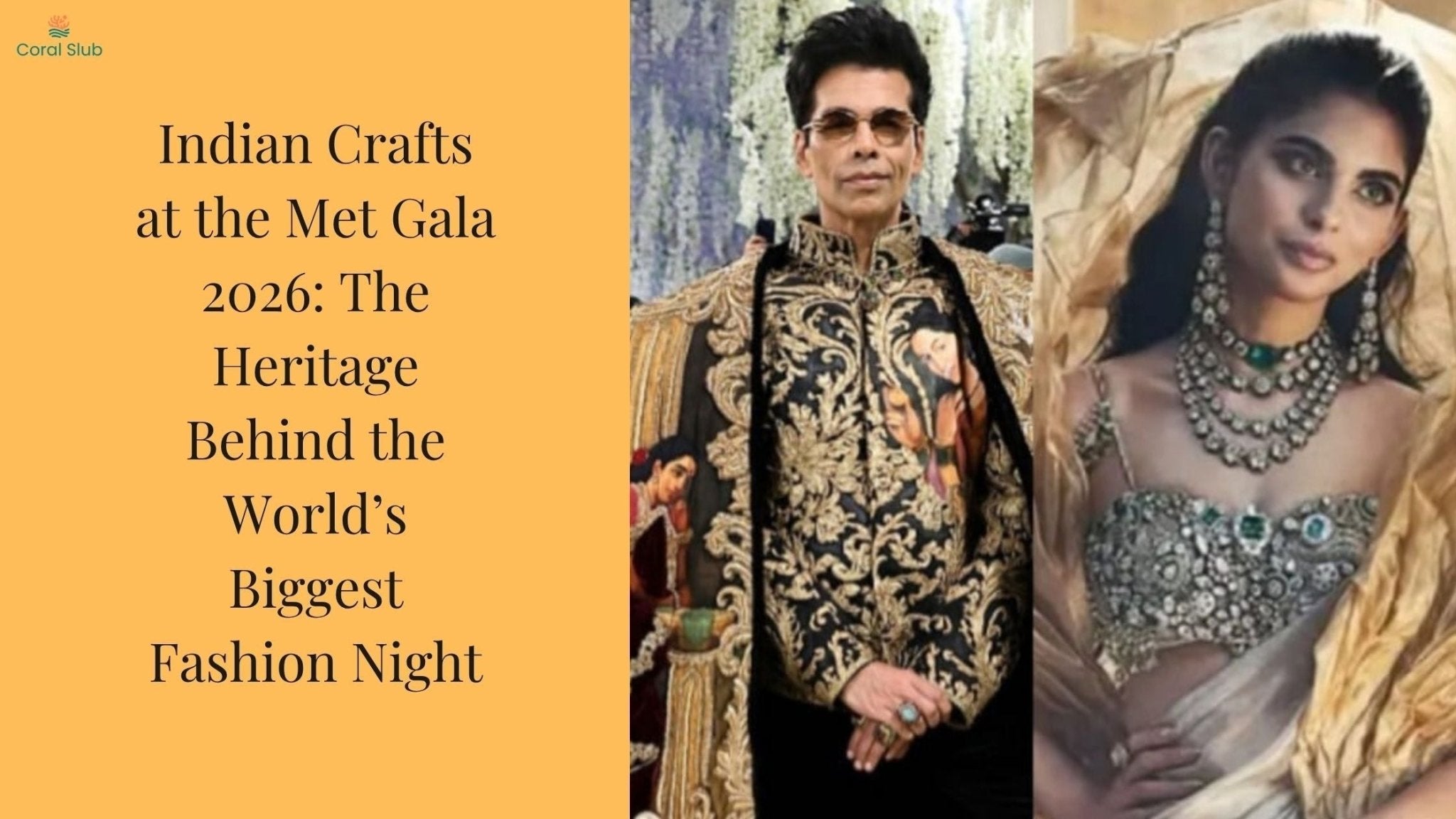
One of the most talked-about Indian appearances of the night came through Karan Johar’s Met Gala debut in a custom Manish Malhotra ensemble inspired by the legendary Indian painter Raja Ravi Varma.
The look was designed around the idea of turning classical Indian art into wearable couture. Instead of referencing fashion history, the garment referenced Indian visual culture itself.
The ensemble drew inspiration from some of Raja Ravi Varma’s most iconic paintings, including Hamsa Damayanti, Kadambari, and Arjuna and Subhadra.
The result felt less like a suit and more like a moving canvas.
The Craftsmanship Behind the Look
The garment reportedly took over 5,600 hours to create and involved nearly 80 artisans.
Several Indian crafts came together within a single narrative:
-
Zardozi embroidery created architectural richness through metallic threadwork
-
Hand painting techniques translated Ravi Varma’s imagery directly onto fabric
-
Three-dimensional sculptural elements added depth and movement
-
Lotus motifs and swan imagery referenced classical Indian symbolism
What made the look especially significant was its refusal to simplify Indian culture into a single craft. Instead, it layered multiple art forms together, much like Indian history itself.
Why the Raja Ravi Varma Inspiration Mattered
Raja Ravi Varma is often credited with redefining how India visualised mythology and femininity through art.
By referencing him, Johar and Malhotra were not simply paying tribute to a painter. They were connecting cinema, storytelling, painting, and couture into one cultural conversation.
For a theme centred around “Fashion Is Art,” this became one of the most intelligent interpretations of the night.
Sudha Reddy’s Kalamkari Ensemble
Reviving Machilipatnam Kalamkari on the Global Stage
Sudha Reddy’s appearance in Manish Malhotra brought another ancient Indian craft into global focus: Machilipatnam Kalamkari from Andhra Pradesh.
Kalamkari is one of India’s oldest textile traditions, believed to date back nearly 3,000 years. Traditionally created using natural dyes and intricate block printing or hand painting techniques, it was historically used to narrate mythological stories through fabric.
At the Met Gala, Kalamkari moved from traditional textile art into couture storytelling.
The garment reportedly drew inspiration from the “Tree of Life,” integrating mythological motifs and antique embroidery into a contemporary silhouette.
Diya Mehta’s Celebration of Shola Craft and Kanjeevaram Weaving
Introducing Bengal’s Shola Craft to Global Fashion
Diya Mehta’s look by Mayur Girotra introduced audiences to one of India’s lesser-known artistic traditions: Shola craft from Bengal.
Shola, often called “vegetable ivory,” is made from a lightweight plant material traditionally used in ceremonial decorations and religious art. The craft requires incredibly delicate hand carving and shaping techniques.
Seeing it integrated into Met Gala couture was significant because it expanded the definition of Indian craft beyond embroidery and textiles.
The Legacy of Kanjeevaram Silk
The base fabric of the look was Kanjeevaram silk from Tamil Nadu, one of India’s most celebrated weaving traditions.
Authentic Kanjeevaram weaving involves real gold and silver zari threads and is recognised for its rich texture, durability, and intricate borders.
At the Met Gala, it became sculptural rather than traditional, showing how heritage textiles can evolve without losing identity.
Manish Malhotra’s Broader Tribute to Indian Artisans
Zardozi, Chikankari, Dori and Kasab Work
Beyond dressing celebrities, Manish Malhotra used the Met Gala to highlight regional Indian craftsmanship itself.
His collection incorporated:
-
Zardozi embroidery from Uttar Pradesh
-
Chikankari hand embroidery from Lucknow
-
Dori work from Rajasthan
-
Kasab metallic embroidery techniques
Each craft represented a different region and lineage of artisanship.
The Most Powerful Detail of the Evening
Perhaps the most emotional detail was this:
The names of the artisans were embroidered directly into the garments.
In an industry where craftspeople often remain invisible behind luxury labels, this shifted attention back to the hands responsible for the work.
The garments did not just showcase Indian craft. They acknowledged Indian artisans.
Other Indian Crafts That Deserve Global Attention
While the Met Gala highlighted several important traditions, Indian craftsmanship extends far beyond the techniques seen on the carpet.
Banarasi Weaving
Originating from Varanasi, Banarasi weaving is known for rich brocade work, Mughal-inspired motifs, and detailed zari craftsmanship.
Each textile can take weeks or months to complete, making it one of India’s most labour-intensive weaving traditions.
Ajrakh Block Printing
Practiced in Gujarat and Rajasthan, Ajrakh is one of India’s oldest block-printing techniques.
Using natural dyes and resist printing methods, artisans create geometric patterns with remarkable precision.
Kashmiri Sozni Embroidery
Sozni embroidery from Kashmir is recognised for extremely fine needlework, often done on pashmina shawls.
The embroidery is so detailed that both sides of the fabric appear nearly identical.
Phulkari from Punjab
Phulkari, meaning “flower work,” is characterised by vibrant floral embroidery traditionally created by women in Punjab.
Historically, these textiles carried emotional significance and were often made for weddings and important life moments.
The Larger Shift Happening in Fashion
The presence of Indian craftsmanship at the Met Gala reflects a larger shift within global fashion.
Luxury is no longer defined only by branding or exclusivity. Increasingly, it is being defined by craftsmanship, authenticity, and human skill.
And this shift naturally creates space for Indian artisanship because India has always excelled at handwork, textile storytelling, and layered craftsmanship.
Final Thoughts
What made Indian fashion stand out at the Met Gala 2026 was not excess. It was meaning. Every embroidery technique, painted motif, woven textile, and handcrafted detail carried generations of memory and labour within it. These looks reminded the world that fashion becomes most powerful when it carries culture, not just aesthetics.
And perhaps that is why Indian craftsmanship resonated so strongly on a global stage this year.Because beyond the couture and celebrity, it brought something timeless to the carpet:The story of hands, heritage, and artistry that continue to survive through craft.