
Cart
0
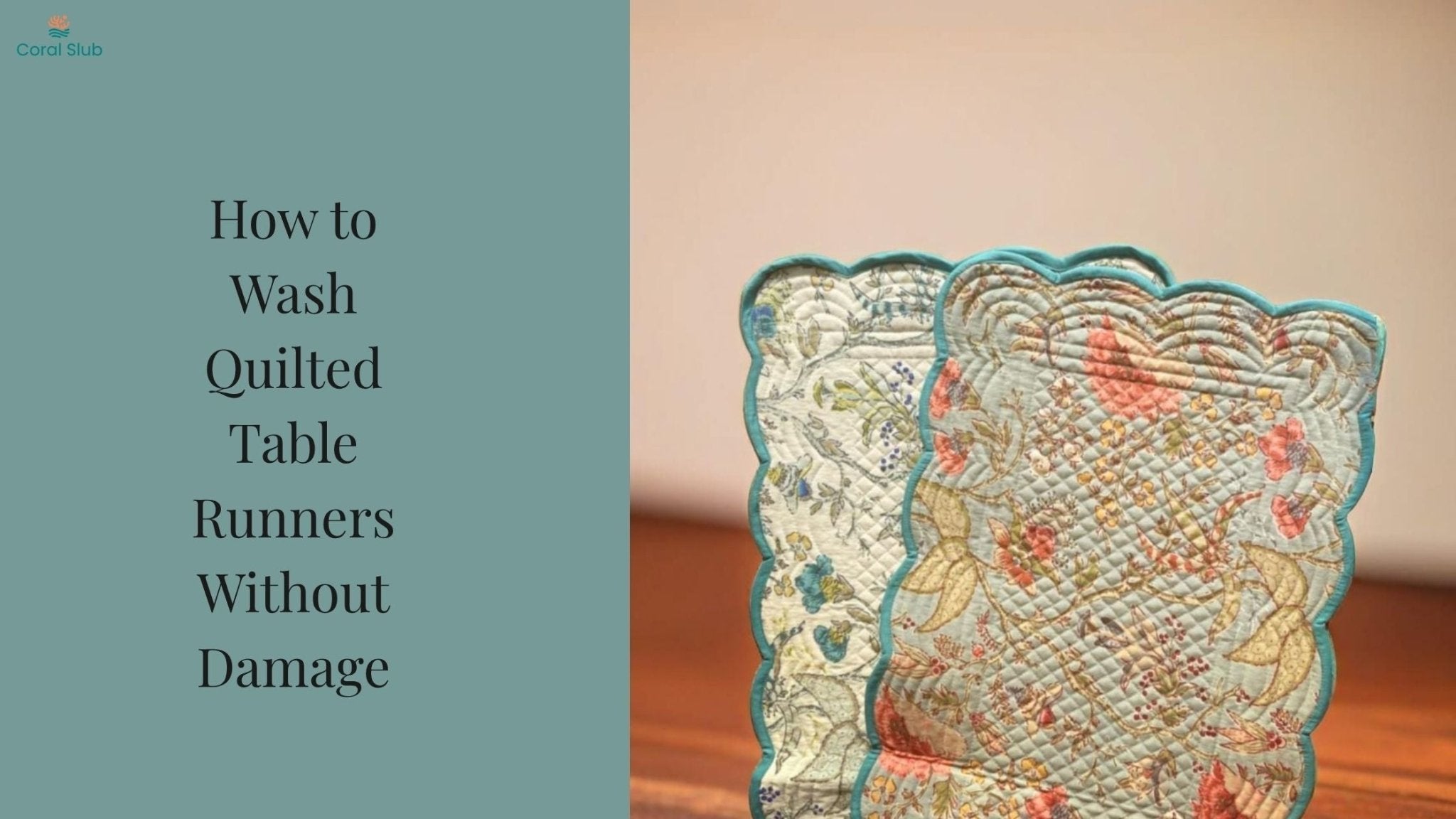
Quilted table runners bring a certain softness to a space. They add texture, detail, and a sense of warmth that flat fabrics often cannot. But that same layered construction that makes them beautiful also makes them delicate to care for. One wrong wash, too much agitation, or harsh detergent can loosen stitching, fade colours, or distort the shape. The goal is not just to clean them. It is to preserve the craftsmanship.
Once you understand how quilted fabrics behave, caring for them becomes simple and consistent.
Why Quilted Table Runners Need Special Care
Understanding the Structure

A quilted table runner is not a single layer of fabric.It is made of three layers. The top fabric, the inner padding or batting, and the backing fabric, all stitched together in a pattern. These stitches are what hold the structure in place.
If handled roughly, the layers can shift. If washed incorrectly, the stitching can weaken. This is why quilted pieces need a gentler approach than regular table linens.
Step 1: Check Before You Wash

Look for Loose Threads or Damage
Before putting your runner in water, take a moment to inspect it.Check for loose threads, weak seams, or small tears. Washing without fixing these can make the damage worse. Trim loose threads carefully and secure any weak stitching if needed.
Test for Colour Fastness
If your runner has deep colours or block prints, it is important to check if the dye bleeds.
Dab a small hidden area with a damp cloth. If colour transfers, you will need to wash it separately in cold water.
Step 2: Choose the Right Washing Method

Hand Washing Is Always Safer
The safest way to wash a quilted table runner is by hand.Fill a basin with cold or lukewarm water and add a mild detergent. Submerge the runner and gently press it instead of scrubbing. Let the water do the work.
Avoid twisting or wringing, as this can distort the quilting.
If Using a Washing Machine
If you prefer machine washing, choose a delicate cycle.Use cold water and place the runner inside a laundry bag for extra protection. Keep the spin cycle low to prevent stress on the stitching.
Step 3: Use Mild, Fabric-Friendly Detergent
 Avoid Harsh Chemicals
Strong detergents can weaken fabric fibres and fade colours over time.Choose a gentle, liquid detergent that is suitable for delicate fabrics. Avoid bleach completely, even for light-coloured runners.
Step 4: Drying the Right Way

Never Wring or Twist
After washing, gently press out excess water. Do not wring the runner, as this can shift the inner padding and affect the shape.
Air Dry on a Flat Surface
Lay the runner flat on a clean surface or towel to dry. This helps maintain its shape and prevents stretching. Avoid hanging it while wet, as the weight of the water can pull on the stitching.Direct sunlight should also be avoided for long periods, as it can fade colours.
Step 5: Ironing Without Damage

Use Low Heat and a Protective Layer
If your runner needs ironing, use a low heat setting.
Place a thin cotton cloth over it before ironing to protect both the fabric and the stitching. Avoid pressing directly on raised quilted patterns.
How Often Should You Wash a Quilted Table Runner

Quilted runners do not need frequent washing.Unless there are spills or stains, washing them once in a few weeks is usually enough. Overwashing can reduce the life of the fabric and loosen the stitching over time.
Tips to Keep Your Runner Looking New
- Store it in a dry, clean place when not in use.
- Avoid placing very hot utensils directly on it.
- Rotate between runners to reduce wear.
- Spot clean minor stains instead of washing the entire piece.
- These small habits help maintain both appearance and durability.
Final Thoughts

Caring for a quilted table runner is less about effort and more about awareness.
When you treat it gently, it lasts longer. The stitching stays intact, the fabric holds its shape, and the details remain as they were meant to be. Because pieces like these are not just functional. They are crafted. And the way you care for them ensures that they continue to bring warmth and detail into your home for a long time.