Cart
0
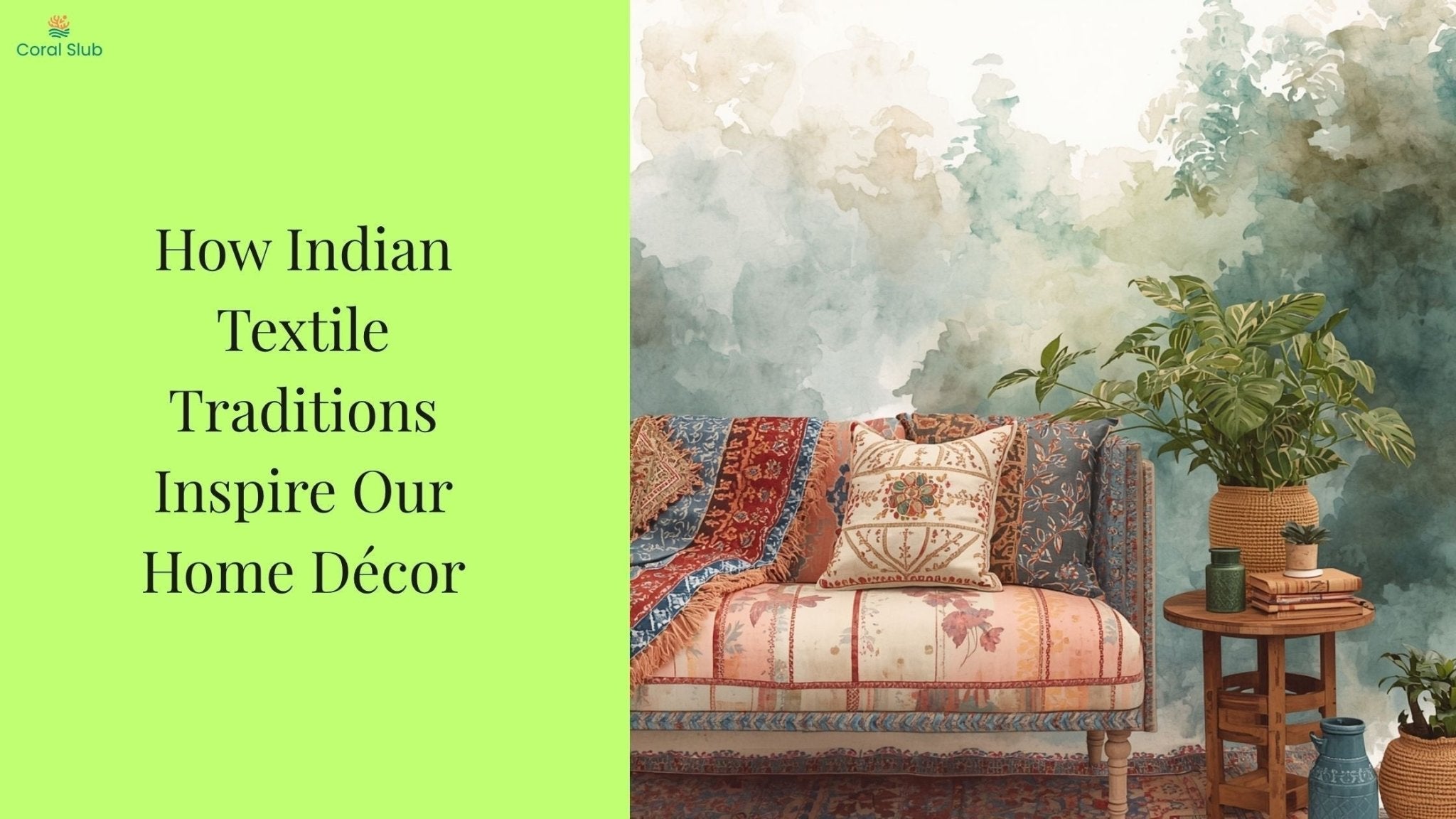
There is a reason Indian homes rarely feel one-dimensional. Even the simplest spaces carry layers of texture, pattern, and warmth. This is not accidental. It comes from a culture where textiles have always been central to living, not just decoration.
Indian textile traditions are among the oldest in the world, with evidence of cotton cultivation and dyed fabrics dating back to the Indus Valley Civilization around 2600 BCE. Over centuries, these traditions have evolved, but their essence remains unchanged. They continue to shape how modern homes are styled, experienced, and lived in.
The Legacy of Indian Textiles in Everyday Living
Textiles as Functional Design, Not Decoration

In India, textiles were never treated as surface-level additions. They defined how spaces functioned.
From charpais and floor seating to layered bedding and dining setups, fabrics played a structural role in everyday life. This is why Indian interiors naturally feel layered and complete.
Unlike modern minimal spaces that are often built first and styled later, Indian homes evolved with textiles at their core.
A Tradition Built on Craft, Not Machines

Indian textile traditions are deeply rooted in hand processes.
Techniques such as weaving, dyeing, and printing were passed down through generations within artisan communities. These were not just skills but systems of knowledge, refined over centuries.
Even today, many of these processes remain largely manual, preserving a level of detail and variation that machine production cannot replicate.
This is what gives Indian textiles their depth. They are not uniform. They are lived.
Block Printing: The Language of Pattern in Indian Homes
A Craft That Dates Back Thousands of Years

Block printing is one of the oldest textile techniques in India, with roots tracing back to the Indus Valley Civilization.
The process is simple in concept but complex in execution. Artisans carve intricate designs onto wooden blocks and stamp them onto fabric, layer by layer. Each colour requires a separate block, and alignment must be precise.
The result is a pattern that feels structured yet organic
Why Block Prints Feel Different

Unlike digital prints, block prints carry subtle irregularities. These are not flaws but markers of craftsmanship.
They break visual monotony. They add rhythm to a space. They create patterns that feel human rather than mechanical.
This is why block prints translate so well into home décor. They add detail without making a space feel rigid.
From Trade Cloth to Global Influence

Historically, Indian block-printed cotton textiles were exported across the world, from Egypt to Europe, where they were highly valued for their quality and design.
These textiles influenced global design movements, including chintz, which became a defining element in European interiors.
What began as a regional craft became a global design language.
Cotton: The Fabric That Defined Indian Living
Why Cotton Became Central

India has been one of the largest producers and exporters of cotton textiles for centuries.
The preference for cotton was not accidental. It was driven by climate and practicality.
Cotton is breathable, adaptable, and comfortable for long-term use. It performs well in both heat and humidity, making it ideal for everyday living.
Comfort as a Design Principle

Indian textile traditions did not separate comfort from aesthetics.
Fabrics were chosen based on how they felt in use, not just how they looked. This philosophy continues to influence modern home décor.
When cotton is used in cushion covers, table linen, or bedding, it brings not just visual softness but physical comfort into the space.
Motifs, Geometry, and Meaning in Indian Textiles
Patterns That Are Not Random

Indian textile designs often draw inspiration from nature, architecture, and spirituality.
Floral motifs, geometric forms, and symmetrical patterns are deeply intentional. Many of them reflect balance, growth, and continuity.
This is why even complex patterns feel cohesive. They follow an underlying visual logic.
Colour as Emotion and Identity

Colour in Indian textiles is expressive.
Earthy tones reflect grounded living. Vibrant hues reflect celebration and energy. Seasonal changes, festivals, and regional influences all shape colour choices.
This layered use of colour is what gives Indian interiors their emotional depth.
How Indian Textile Traditions Shape Modern Home Décor
The Art of Layering

One of the strongest influences of Indian textiles is layering.
Multiple elements such as cushion covers, table runners, and bedsheets are combined to create depth without clutter. Each layer adds to the overall composition rather than competing with it.
This approach allows a space to feel rich without being overwhelming.
Creating Spaces That Feel Lived In

Modern interiors often lean toward minimalism, but they can sometimes feel impersonal.
Indian textiles bring warmth back into the space. They make a home feel used, comfortable, and real.
This balance between simplicity and detail is what defines a well-designed home today.
The Relevance of Tradition in Contemporary Homes
Adapting Without Losing Identity

Indian textile traditions are not frozen in time. They evolve.
Today, these techniques are adapted into modern formats. Simpler palettes, refined patterns, and functional designs make them suitable for contemporary homes.
However, the core remains unchanged. Craft, material, and intention still lead the design.
Small Additions, Lasting Impact

You do not need to redesign your home to experience this influence.
A few well-chosen elements, cushion covers, table linen, or a cotton bedsheet, can introduce texture, depth, and warmth into a space.
These are small changes, but they redefine how a space feels.
Final Thoughts

Indian textile traditions continue to influence home décor because they are rooted in both history and practicality.
They bring texture without excess.
They add detail without noise.
They create warmth without effort.
In a world moving toward uniform design, these traditions offer something rare. A sense of individuality, continuity, and meaning.
That is what makes them not just relevant, but essential.