
Cart
0
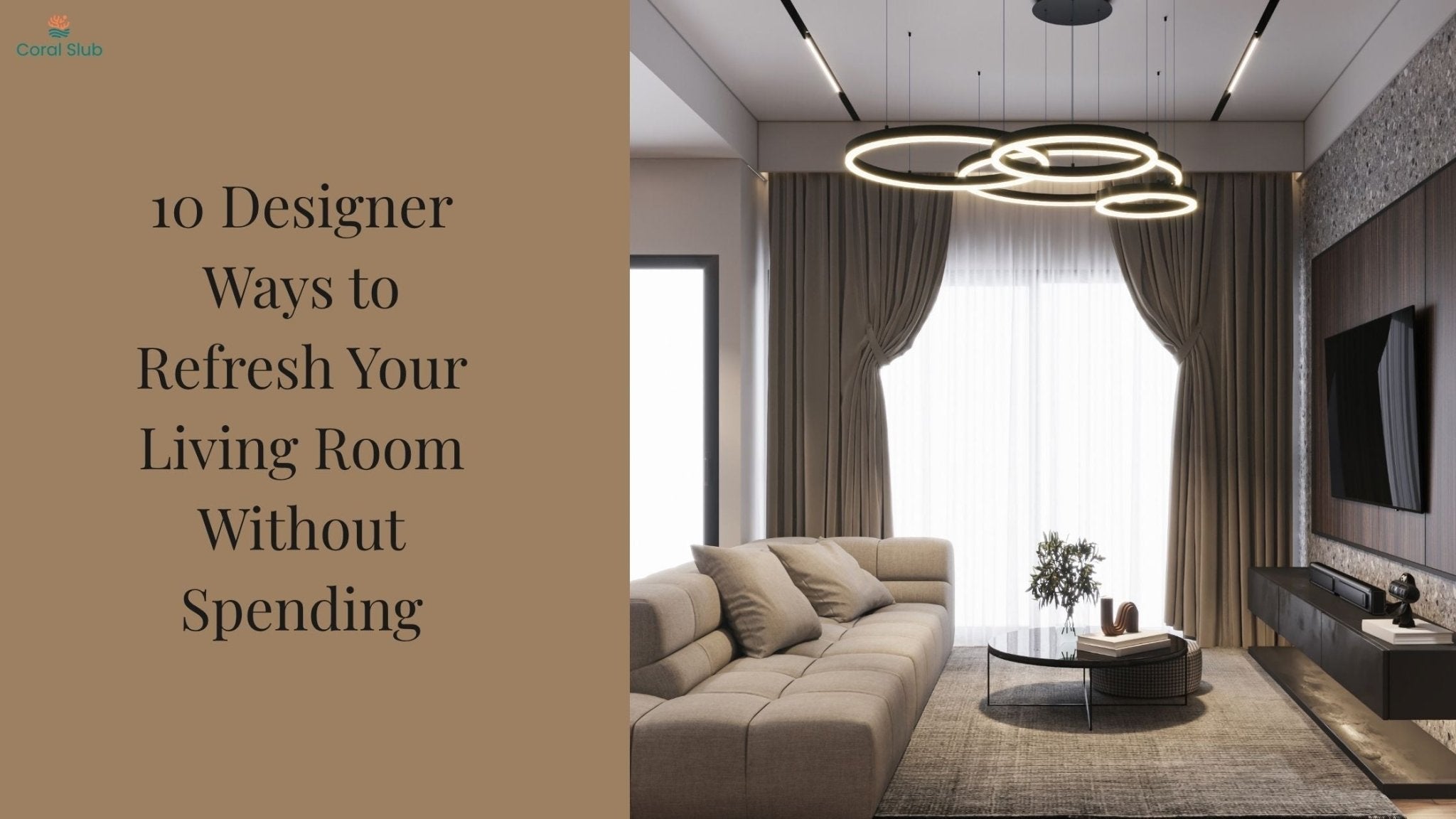
Refreshing a living room often feels like it requires a new sofa, better lighting, or a complete redesign. But ask any designer, and the answer is surprisingly consistent. Most spaces don’t need more things. They need better decisions.
The difference between a room that feels finished and one that feels off is rarely budget. It is usually about layout, proportion, and how thoughtfully the space has been put together.
If your living room feels slightly disconnected, these are the changes that actually make a difference.
Rethink Your Layout First

Before touching décor, designers almost always start with placement. A sofa pushed flat against the wall, chairs that don’t face each other, or a coffee table that feels disconnected can quietly affect the entire room. Pulling furniture slightly inward or angling seating toward conversation instantly changes how the space functions.
Even small shifts can make a room feel intentional rather than accidental.
Style in Odd Numbers and Vary Heights

A common mistake in styling is trying to make everything symmetrical.But spaces feel more natural when they are slightly imperfect. Grouping objects in odd numbers and layering different heights creates visual interest. A stack of books, a taller object, and something low is often enough to make a surface feel styled rather than placed. This is where a room begins to feel curated.
Shift the Focus Away from the TV
In most homes, the television becomes the default focal point. While practical, it rarely adds to the aesthetic of the room. Designers often suggest redirecting attention by styling a console, shelf, or wall in a way that draws the eye elsewhere. Once the focus shifts, the entire room starts to feel more balanced.
Rearrange What You Already Own

One of the most effective ways to refresh a space is also the simplest. Move things around.
A lamp from another room, a piece of artwork from a hallway, or even a chair repositioned differently can completely change how the room feels. Objects that have become invisible in one space suddenly feel new in another.
It is less about adding and more about rediscovering.
Let the Room Breathe

There is a tendency to fill every surface. But restraint is often what makes a space feel refined. Clearing a coffee table, simplifying a shelf, or removing a few decorative pieces allows the room to open up. Negative space is not emptiness. It is what allows everything else to stand out.
Play with Lighting Instead of Buying It

Lighting has a stronger impact than most décor changes. Switching to warmer bulbs, turning off overhead lights, or repositioning a lamp can shift the mood instantly. A softer glow makes the room feel more inviting and layered. It is one of the easiest ways to change how a space feels without changing what it contains.
Add Texture Through What You Already Have

If a room feels flat, the issue is often not colour but texture. Layering fabrics, adjusting how a throw is draped, or combining different materials like wood, ceramic, and cotton creates depth. This subtle layering is what gives a space warmth and character.
It is the difference between a room that looks styled and one that feels lived in.
Restyle, Don’t Replace

Most people stop noticing their own shelves and surfaces. But restyling them can completely transform a room. Rearranging objects, leaning artwork instead of hanging it, or creating small groupings can make familiar pieces feel intentional again. It is not about what you own, but how you present it.
Introduce Something Natural

Even a small natural element can shift the energy of a space. A plant, a branch in a vase, or even fresh leaves can add movement and softness. Natural elements bring a sense of calm that is difficult to achieve through décor alone. They make a room feel grounded.
Change Your Perspective

The most important shift is not physical. It is how you see your space. Instead of asking what your living room needs, start noticing what it already offers. The proportions, the light, the textures. When you begin to see these details, the space starts to evolve naturally.
Good design is not about constant updates. It is about awareness.
Final Thoughts

Refreshing your living room is not about spending. It is about editing, rearranging, and paying attention. Because most well-designed spaces are not created by adding more. They are created by understanding what is already there and making it work better. And once you start looking at your home that way, everything begins to feel different.