
Cart
0
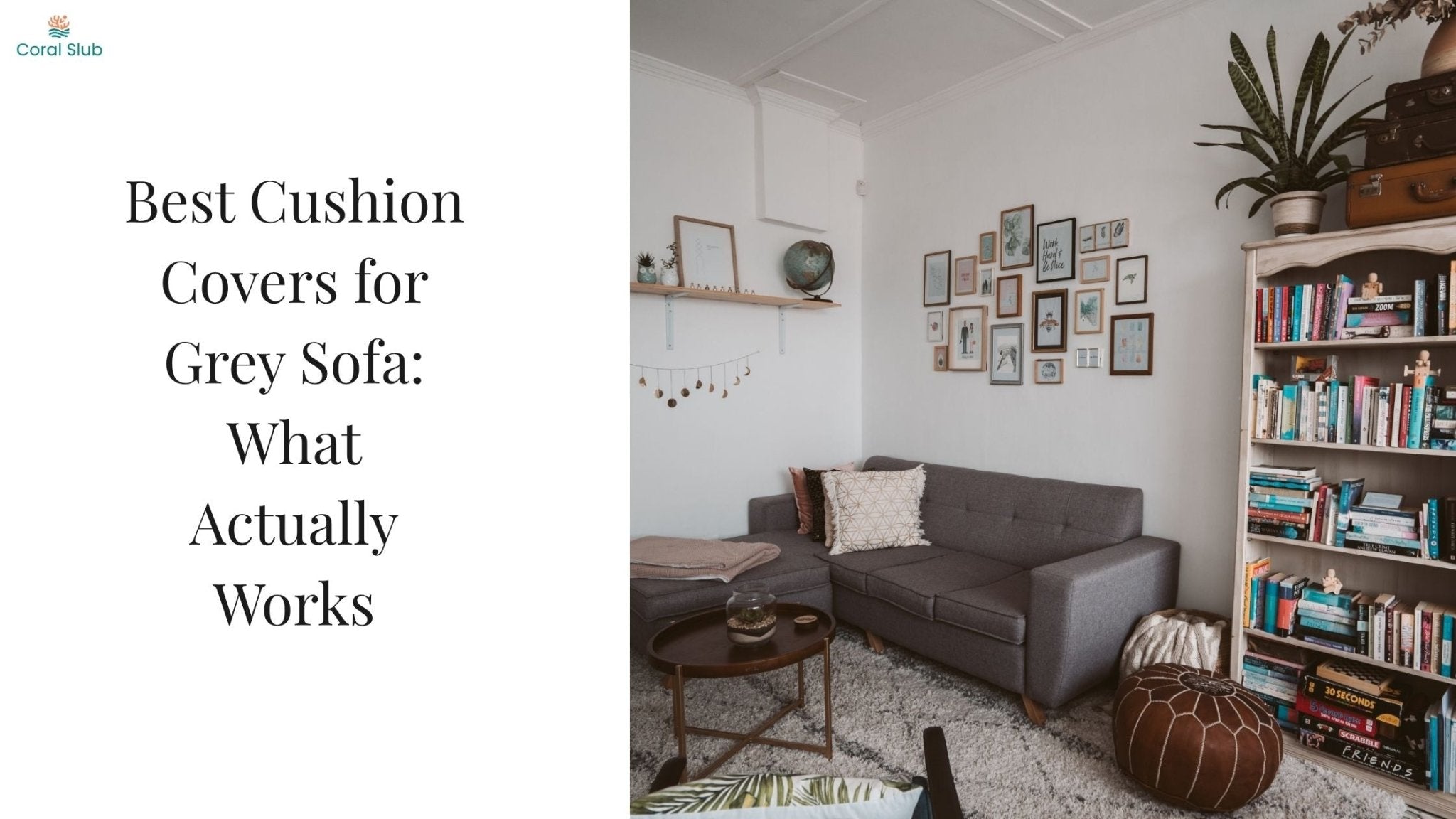
A grey sofa is often considered the safest choice in home décor. It blends easily into different interiors, adapts to changing styles, and offers a neutral base.
However, this same neutrality can make it look flat if not styled correctly.
Cushion covers play a critical role in bringing a grey sofa to life. The right combination can add depth, warmth, and personality, while the wrong choices can make the entire space feel disconnected.
The goal is not to decorate the sofa, but to build a balanced visual composition.
Start with Contrast, Not Colour Matching
Why Grey Needs Contrast

The most common mistake is trying to match cushion covers with the sofa.
Grey does not need matching. It needs contrast.
Warm tones such as rust, mustard, terracotta, or muted earthy shades work particularly well because they balance the coolness of grey. This contrast creates visual interest and prevents the sofa from looking monotonous.
Use Texture to Avoid a Flat Look
Layering Beyond Colour

Even if you stay within a neutral palette, texture can transform the entire setup.
A combination of smooth cotton, slightly textured weaves, or embroidered surfaces creates depth without relying on bold colours. This makes the arrangement feel more refined and intentional.
Texture is often what differentiates a styled space from a basic one.
Balance Prints with Solids
Creating Visual Breathing Space

Patterns add personality, but too many prints can overwhelm the sofa.
A well-balanced arrangement usually includes a mix of printed and solid cushion covers. Solids act as anchors, allowing patterned pieces to stand out without competing for attention.
This balance ensures that the sofa looks curated rather than cluttered.
Choose Patterns That Complement, Not Compete
Structured vs Organic Designs

Not all patterns work equally well with grey sofas.
Geometric prints create a modern, structured look, while floral or block prints introduce softness and warmth. The choice depends on the overall style of your space.
The key is to avoid mixing too many unrelated patterns. Cohesion matters more than variety.
Follow a Structured Arrangement
Why Odd Numbers Work Better

Interior designers often use odd numbers when styling cushions because they feel more natural.
A set of five cushion covers works particularly well for standard sofas. It allows symmetry without making the arrangement look rigid.
Placement should feel balanced, with colours and patterns distributed evenly across the sofa.
Consider the Overall Room Palette
Cushion Covers Should Not Exist in Isolation

Cushion styling should connect with the rest of the room.
Look at your curtains, rugs, and wall colours. Cushion covers should echo these elements rather than stand apart from them.
This creates a cohesive environment where every element feels connected.
Prioritise Fabric for Everyday Comfort
Why Material Choice Matters

Cushion covers are not just visual elements. They are used every day.
Breathable fabrics such as cotton are better suited for regular use. They feel comfortable, adapt well to different conditions, and maintain their quality over time.
Choosing the right fabric ensures that your sofa looks good and feels comfortable.
Avoid Over-Styling the Sofa
Less Is Often More

Adding too many cushions can make the sofa look crowded and reduce its functionality.
The objective is not to fill the space, but to enhance it. A well-edited arrangement always looks more refined than an overloaded one.
Final Thoughts

A grey sofa is not the focal point of a room. It is the foundation.
What you build on it determines how the space feels.
The right cushion covers introduce contrast, texture, and balance. They bring warmth to a neutral base and create a space that feels both styled and comfortable.
When chosen thoughtfully, they do more than decorate your sofa. They define the character of your home.
If you are looking to bring this balance into your space, explore Coral Slub’s cushion cover collection, designed in breathable cotton with thoughtful patterns that blend comfort with everyday styling.