Cart
0
Every handcrafted table runner begins long before ink touches fabric. It starts as an idea, inspired by nature, architecture, and centuries of artistic tradition. Through the hands of skilled designers, block makers, printers, and tailors, that idea gradually transforms into a piece that eventually finds its place at the heart of a home.
The story of hand block printing is not just about creating beautiful textiles. It is about preserving craftsmanship, celebrating heritage, and honouring the journey behind every finished product. Every motif, every carved block, and every printed layer reflects generations of knowledge passed from one artisan to another.This is the journey of a hand block printed table runner, from concept to table.
Finding Inspiration

Where Every Design Begins
Every collection begins with observation.Designers look to the world around them for inspiration. Blooming flowers, winding vines, leaves, birds, traditional Indian architecture, temple carvings, Mughal jaalis, palace ceilings, and ancient motifs often become the starting point for a new pattern.
Translating Nature into Motifs
Rather than copying nature exactly, designers simplify these elements into repeatable motifs that work beautifully on fabric. A lotus may become a stylised floral medallion, while a climbing vine may evolve into a delicate border. Geometric forms inspired by carved windows or heritage architecture are refined into balanced patterns that repeat seamlessly across the textile.
At this stage, creativity meets functionality. Every motif must be visually appealing while also being suitable for block printing.
Designing the Print

Creating a Balanced Pattern
Once the inspiration is finalised, designers begin arranging the motifs into a complete layout.Unlike digital prints, hand block printing requires each element to be printed individually. The placement of every flower, leaf, border, and geometric detail is carefully planned so that the final design feels balanced from edge to edge.
Breaking One Design into Multiple Blocks
A single print rarely relies on just one wooden block.Instead, the design is divided into separate components. For example:
-
One block may print the central floral motif.
-
Another may create the surrounding leaves and vines.
-
A third block may add the decorative border.
-
Additional blocks may be used for accent colours or fine detailing.
Each carved block becomes one layer of the finished artwork.
The Art of Block Carving

Transforming Design into Wood
Once the artwork is approved, skilled craftsmen begin carving the printing blocks.Using seasoned hardwood, artisans carefully carve every line, petal, and geometric detail by hand. Precision is essential because even the smallest carving mistake will appear repeatedly throughout the fabric.
A Craft That Requires Years of Experience
Block carving is one of the most specialised skills in traditional textile production.The carved blocks must align perfectly with one another so that every layer of the design fits together during printing. A single intricate pattern may require several days to complete before the first piece of fabric is ever printed.
Preparing the Cotton Fabric

Creating the Perfect Canvas
Before printing begins, the cotton fabric undergoes careful preparation.The fabric is washed to remove impurities and finished to create a smooth, even surface capable of accepting the dyes evenly. This preparation ensures sharp prints and long-lasting colours.
Quality cotton is especially valued because its natural fibres absorb dyes beautifully while providing a soft, durable finish.
Bringing the Print to Life

Printing One Block at a Time
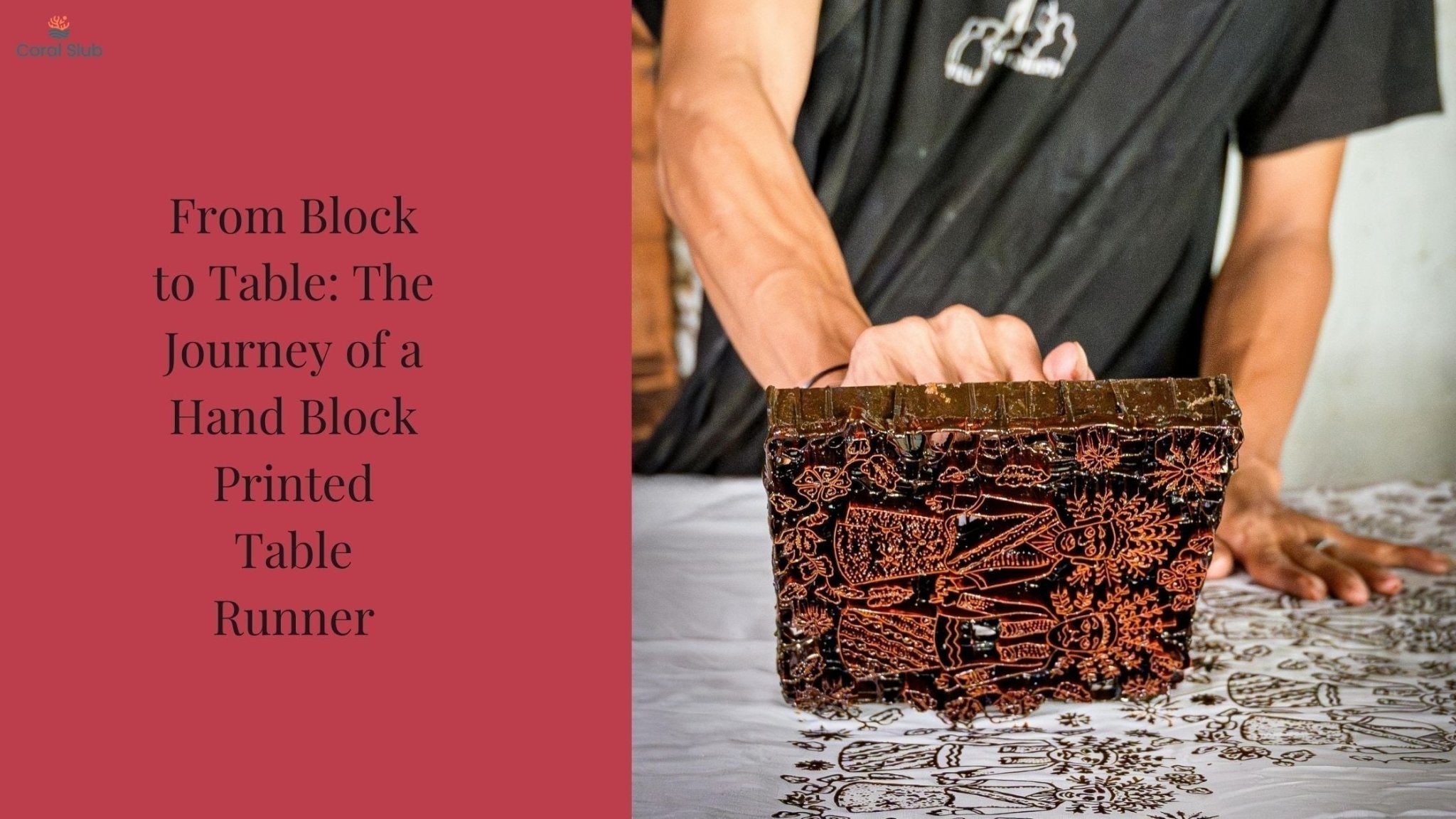
With the carved blocks ready and the fabric prepared, the printing process begins.The artisan dips a wooden block into colour and presses it firmly onto the fabric using steady, even pressure. The process is then repeated hundreds of times across the length of the cloth.
Precision in Every Impression
Each block must align perfectly with the previous impression.The printer relies entirely on experience and careful observation, creating continuous patterns without digital guides or machinery. Every repeat reflects remarkable precision developed through years of practice.
The slight variations created by hand become part of the fabric's unique beauty.
Drying and Finishing

Allowing the Colours to Set
Once printing is complete, the fabric is left to dry naturally.Depending on the printing technique and dyes used, additional washing or finishing processes may follow to ensure colour fastness and fabric softness.
Every stage is completed carefully to preserve the integrity of both the print and the cotton.
Cutting with Purpose

From Printed Fabric to Table Runner
Only after the printed fabric has been fully finished does it move to the cutting table.Each table runner is measured precisely before being cut into its final dimensions. For Coral Slub's table runners, the fabric is carefully prepared to achieve the desired finished size while maintaining perfect alignment of the printed motifs.
Every Motif Is Carefully Positioned
The cutting process is never random.Craftsmen ensure that the central motifs remain balanced and that borders appear symmetrical, allowing every finished runner to look intentional and beautifully composed.
Stitching the Final Piece
Craftsmanship in Every Detail
The cut fabric is then stitched by skilled artisans.Edges are neatly finished, corners are carefully reinforced, and every seam is inspected to ensure durability and elegance.
The result is more than a functional dining accessory. It is a handcrafted textile designed to become part of everyday gatherings, festive celebrations, and family traditions.
From the Workshop to Your Table

A Journey Completed
After passing quality inspections, the finished table runner is carefully packed and prepared for its journey to a new home. What began as an idea inspired by flowers, architecture, and traditional motifs now becomes part of someone's dining table, celebrating everyday meals, festive occasions, and meaningful moments shared with loved ones.Each piece carries with it the story of every artisan who contributed along the way.
Why Hand Block Printing Still Matters

Preserving a Living Tradition
In an age of digital printing and mass production, hand block printing continues to stand apart because it celebrates patience, craftsmanship, and human skill.
No two hand block printed table runners are ever completely identical. The subtle variations in alignment, colour, and texture are not imperfections but signatures of authentic handmade work.Choosing hand block printed textiles helps preserve traditional artisan communities while bringing timeless craftsmanship into modern homes.
Final Thoughts

The journey of a hand block printed table runner is a story of collaboration between creativity and craftsmanship. From the first spark of inspiration drawn from nature and architecture to the careful carving of wooden blocks, the rhythmic printing process, precise cutting, and meticulous stitching, every stage contributes to a finished piece that is both functional and meaningful.
When placed on a dining table, a handcrafted table runner becomes more than a decorative accessory. It carries the legacy of traditional artisans, the beauty of Indian textile heritage, and the countless hours of care invested in its creation. Every meal shared over it becomes part of that continuing story.