Cart
0
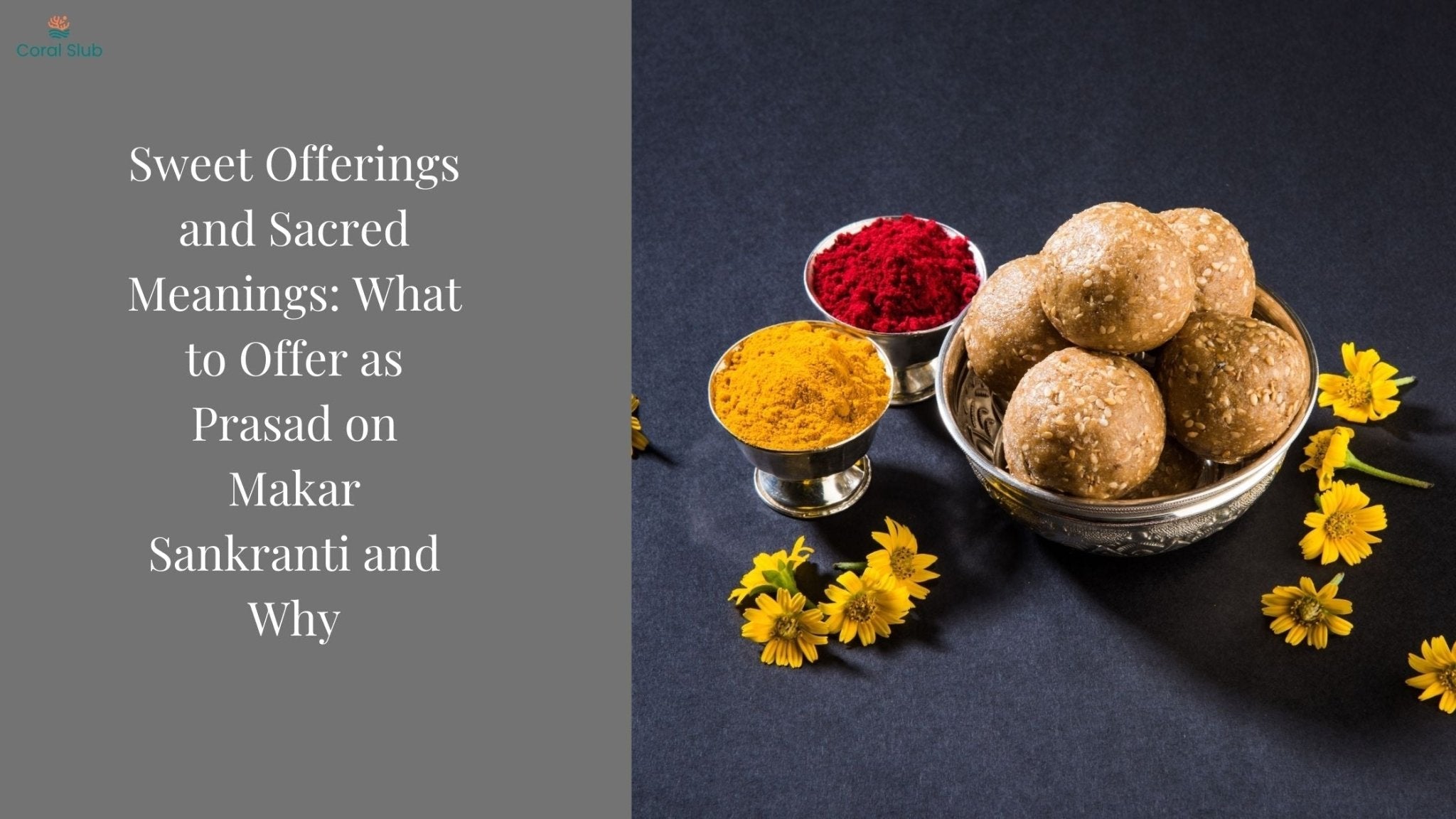
Makar Sankranti is a festival that does not announce itself loudly. It arrives with warmth, sunlight, and a gentle shift in seasons. Celebrated after months of hard work in fields and homes, it marks a moment of gratitude and renewal. Unlike elaborate festivals, Makar Sankranti rituals are simple, and food becomes the most meaningful way to express devotion and balance.
If you have ever wondered what prasad to offer on Makar Sankranti and why certain foods are always present, the answer lies in seasonal wisdom rather than ritual complexity.
Why Is Food So Important in Makar Sankranti Rituals?
The connection between harvest, sun, and nourishment

Makar Sankranti is closely tied to agriculture and the movement of the sun. As crops are harvested and days begin to grow longer, food becomes the natural medium to express thanks. Offering prasad acknowledges that nourishment comes not only from human effort, but from sunlight, soil, and seasonal cycles.
The foods chosen during this period also support the body’s needs in late winter. They provide warmth, strength, and digestive balance, making the ritual both spiritual and practical.
Til and Jaggery: The Foundation of Sankranti Prasad
Why sesame and jaggery are always offered together

Til and jaggery form the heart of Makar Sankranti prasad across India. Sesame seeds symbolise strength and protection, while jaggery represents sweetness and harmony in relationships.
Together, they carry the message of speaking kindly and maintaining warmth in human connections. This is why exchanging til and jaggery is traditionally accompanied by words of goodwill. From a seasonal perspective, both ingredients generate internal heat, helping the body adjust to lingering winter cold.
Til laddoos, til chikki, or simple til and jaggery mixtures are commonly offered because they are nourishing, symbolic, and easy to prepare.
Rice-Based Offerings and the Spirit of Harvest
Honouring freshly harvested grains

Rice holds deep significance in Makar Sankranti prasad, especially in regions where it is the primary crop. Offering freshly harvested rice is a gesture of gratitude to both the land and the sun.
In many homes, rice cooked with jaggery, milk, or ghee is offered. In others, flattened rice preparations are included. These offerings celebrate abundance and mark the completion of the harvest cycle, reinforcing the connection between food and seasonal renewal.
Ghee and Milk: Symbols of Nourishment and Stability
Why richness has ritual meaning

Ghee and milk appear frequently in Sankranti prasad, either on their own or as part of sweets. They symbolise purity, nourishment, and prosperity.
From a traditional viewpoint, ghee strengthens digestion and supports the body during seasonal change. Offering foods prepared with ghee is believed to invite health and stability into the household, making it both a symbolic and practical choice.
Sugarcane and Seasonal Produce: Celebrating Nature’s Patience
Understanding the role of seasonal offerings

Sugarcane represents endurance and sweetness earned through time. Its long growing cycle reflects patience and reward, values closely tied to the harvest season.
Seasonal fruits, vegetables, or grains are also included in prasad in some households. These offerings honour what the land has provided and reinforce Makar Sankranti’s connection to nature and sustainable living.
Why Makar Sankranti Prasad Is Meant to Be Simple
The beauty of restraint and intention

One of the defining aspects of Makar Sankranti prasad is its simplicity. There is no expectation of elaborate dishes or decorative presentation. The focus remains on seasonal ingredients, minimal preparation, and sincerity.
This simplicity reflects the deeper philosophy of the festival. Gratitude does not need excess. It requires awareness and intention.
The Importance of Sharing Prasad
Completing the ritual through community

Prasad is not meant to stay within the prayer space. Sharing it with family, neighbours, and friends completes the ritual. This act symbolises generosity, community, and collective wellbeing.
The exchange of prasad during Makar Sankranti strengthens social bonds and reinforces the idea that abundance grows when it is shared.
Final Thoughts

Makar Sankranti prasad is a quiet conversation between humans and nature. Through til, jaggery, rice, ghee, and seasonal produce, the festival expresses gratitude, balance, and hope for the months ahead.
Understanding what to offer and why transforms the ritual from routine into mindfulness. In a world that often moves too fast, Makar Sankranti gently reminds us to pause, give thanks, and begin again with warmth and sweetness.