Cart
0
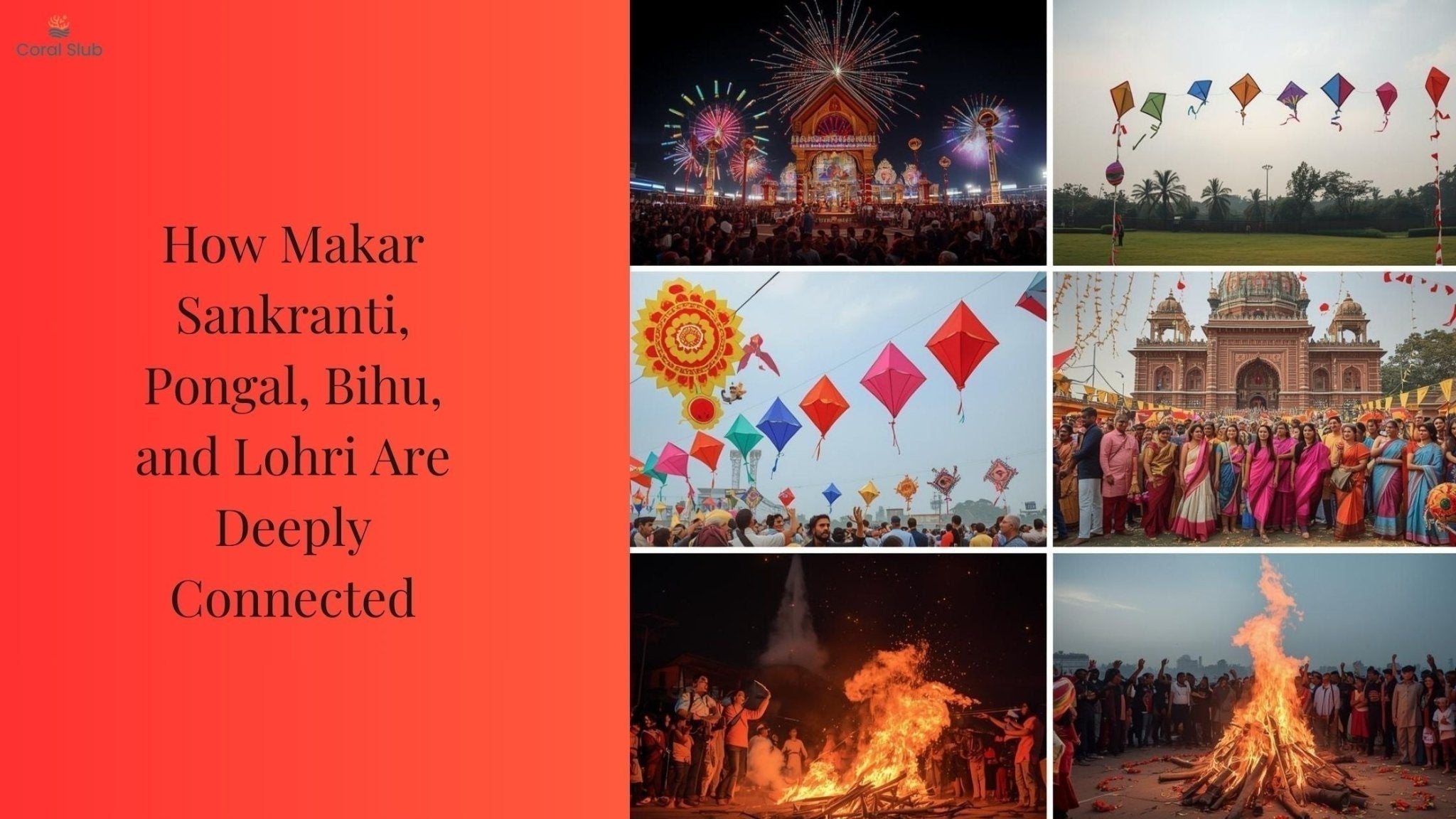
India celebrates its festivals in many languages and rituals, yet some celebrations are bound together by a shared relationship with nature. Makar Sankranti, Pongal, Bihu, and Lohri may appear different in form, but they are deeply connected in meaning. All four festivals mark a seasonal turning point when winter begins to soften, the harvest is gathered, and communities pause to express gratitude.
If you have ever wondered why these festivals fall around the same time or what connects them beyond regional customs, the answer lies in agriculture, sunlight, and seasonal cycles.
What Is the Common Link Between These Harvest Festivals?
The role of the sun and seasonal change
The strongest connection between Makar Sankranti, Pongal, Bihu, and Lohri is their timing. They are celebrated in mid-January, when the sun begins its northward movement. This shift signals longer days, increased warmth, and renewed agricultural activity.
For farming communities, this change determines crop cycles and food security. Across regions, the festivals acknowledge this transition with rituals that honour the sun, soil, and harvest.
Makar Sankranti: The Pan-Indian Seasonal Marker
Why it sets the tone for the harvest season

Makar Sankranti is celebrated across many parts of India and acts as the anchor for this seasonal shift. It marks the sun’s entry into Capricorn, symbolising progress and renewal.
The festival is intentionally simple. Foods like til and jaggery, natural colours, and sunlight dominate rituals. The emphasis is on balance rather than excess, reminding households to align daily life with nature’s rhythm. This philosophy mirrors how many Indian homes adopt seasonal changes through lighter fabrics such as bedsheets and refreshed soft furnishings.
Pongal: Gratitude to the Sun, Earth, and Cattle
How harvest gratitude takes a household form

In Tamil Nadu, the same agricultural moment is celebrated as Pongal. The festival’s name refers to boiling over, a symbol of abundance and prosperity.
Pongal places strong emphasis on thanking the sun, the land, and cattle. Homes are cleaned, entrances decorated, and newly harvested rice is cooked and offered. The celebration feels intimate and domestic, rooted in everyday life rather than spectacle. This makes Pongal a reflection of how gratitude is practised within the home itself.
Bihu: Honouring Cycles of Work and Rest
Why community and continuity matter

In Assam, Magh Bihu marks the completion of the harvest season. It celebrates rest after labour, shared meals, and community bonding.
Bihu is less about ritual formality and more about togetherness. Bonfires, food, and simple living define the celebration. The festival highlights a universal truth that after effort comes rest and after winter comes warmth. This balance between work and renewal is a theme shared with Makar Sankranti and Pongal.
Lohri: Fire as a Symbol of Warmth and Renewal
How fire becomes the centre of celebration

In northern India, Lohri celebrates the same seasonal transition through fire. Bonfires are lit to honour warmth, light, and the return of longer days.
Families gather around the fire, sing, and share food as an expression of collective gratitude. The fire symbolises protection and renewal, echoing the solar reverence seen in other harvest festivals. While Lohri feels more energetic, its meaning remains closely aligned with the harvest spirit shared across regions.
Different Names, One Shared Message
What these festivals collectively teach us

Despite their differences, these festivals share the same values. They celebrate the relationship between humans and nature. They recognise that abundance is seasonal and should be met with humility.
Whether it is til and jaggery, rice and milk, bonfires, or community feasts, the message remains consistent. Live in harmony with the land. Respect the sun. Share what you have. This mindset also influences how homes are prepared, from festive table runners to simple, meaningful decor choices.
Why These Festivals Still Matter Today
Their relevance in modern life
 Even as lifestyles change, these festivals remain deeply relevant. They encourage modern households to slow down and reconnect with natural cycles that often go unnoticed.
In a time of constant consumption, harvest festivals invite awareness rather than excess. They celebrate continuity instead of accumulation, reminding us that gratitude is timeless.
Final Thoughts

Makar Sankranti, Pongal, Bihu, and Lohri are not isolated celebrations. They are regional expressions of one collective gratitude. Together, they tell a story of sunlight returning, crops maturing, and communities coming together in hope.
Different rituals, different foods, different songs, but one shared belief. When nature gives, we pause to say thank you.