Cart
0
There are festivals that are remembered for a particular ritual, and then there are festivals that seem to bring an entire culture together. Onam is one of them.
Every year, as the Malayalam month of Chingam arrives, Kerala comes alive with flowers, traditional meals, new clothes, music, games and elaborate celebrations. Courtyards begin filling with colourful Pookkalam, families prepare the elaborate Onasadya, and the famous snake boat races bring communities together across Kerala.
At the heart of these celebrations is the story of King Mahabali, a legendary ruler remembered for his generosity, equality and prosperity. According to the popular legend, Mahabali was granted permission by Lord Vishnu to return to his kingdom once every year. Onam is traditionally associated with this annual homecoming.
But the history of Onam extends beyond mythology. It is also deeply connected with Kerala's agricultural traditions, regional culture and the changing history of the state. Kerala Tourism describes Onam as both a festival rooted in the Mahabali legend and an agricultural celebration associated with the harvest and prosperity of the land.
To understand Onam, therefore, is to look at both the story that gives the festival its emotional heart and the traditions that have allowed it to remain relevant for generations.
The Legend Behind Onam

Who Was King Mahabali?
The most widely known story of Onam revolves around Mahabali, also known as Maveli.According to Kerala's traditional legend, Mahabali was a powerful ruler and a devoted follower of Lord Vishnu. Although described as an asura or demon king, he was remembered as a just, generous and beloved ruler.
His kingdom was said to have experienced extraordinary prosperity. His subjects were treated equally, and the traditional story describes a society where poverty, crime and cruelty were absent.
Why Did the Gods Become Concerned About Mahabali?
As Mahabali's reputation grew, the devas became concerned about his growing influence. They approached Lord Vishnu for help.Vishnu appeared before Mahabali in the form of Vamana, a dwarf Brahmin. During a ritual being conducted by Mahabali, Vamana asked the king for only as much land as he could cover in three steps.Mahabali agreed.What happened next forms the central part of the legend.
The Three Steps of Vamana

The Sacrifice of Mahabali
Vamana grew to an enormous size. With his first step, he covered the earth. With his second, he covered the heavens. There was no space left for the third.Realising that the visitor was none other than Lord Vishnu, Mahabali offered his own head for the final step.
Vishnu accepted the sacrifice and sent Mahabali to the netherworld, but granted him one wish: he could return once every year to visit his beloved subjects.That annual return is traditionally associated with Onam.
Why Does Mahabali Return During Onam?

A Festival Built Around Homecoming
The emotional centre of Onam is not simply Mahabali's departure. It is his return.According to the legend, the people of Kerala prepare their homes to welcome their beloved king. The flowers, feasts, new clothes and decorations associated with Onam can therefore be understood as expressions of celebration and hospitality.
This is why the festival carries such a strong connection with the idea of homecoming.
The celebration of Mahabali also represents an idealised vision of a society built around equality, prosperity and good governance. Kerala government publications have highlighted this dimension of the Mahabali story, describing Onam as a celebration of the values associated with the legendary king rather than merely an event connected to the distant past.
Is Onam Only a Mythological Festival?

The Agricultural Roots of Onam
The answer is no.Onam is also closely connected with Kerala's agricultural cycle. The festival arrives during Chingam, around August and September, following the difficult monsoon period and coinciding with a season associated with agricultural prosperity.
Onam is both a celebration of the Mahabali legend and a harvest festival representing the abundance and happiness that come with a good harvest.
From Harvest to Celebration
Food naturally became central to this agricultural celebration. Fresh produce, vegetables, rice and other ingredients come together in the elaborate Onasadya, turning the harvest into a communal feast.The festival therefore connects mythology with everyday life: a legendary king, a generous harvest, a shared meal and an entire community coming together.
How Old Is the Onam Festival?

The History Is Older Than the Modern Celebration
It is difficult to identify one exact date when Onam began. Historical references and literary traditions indicate that celebrations associated with Onam existed in ancient Kerala and the Tamil region. Kerala government publications have noted references to Onam in Sangam-era literature, including works such as Maduraikanchi. At the same time, there is no definitive evidence establishing one precise origin date for the festival.
This distinction is important because the historical development of Onam and the mythology surrounding Mahabali are not necessarily the same thing.
The Mahabali story explains the cultural and spiritual meaning attached to the festival, while historical and literary references show that seasonal celebrations associated with Onam have much older roots.
The Connection Between Onam and Thrikkakara

A Place Closely Associated with the Mahabali Legend
Thrikkakara, near Kochi, holds a particularly important place in the history and folklore of Onam.According to tradition, the name is connected with the story of Vamana and Mahabali. The Thrikkakara Vamana Moorthy Temple is associated with Vamana, and Mahabali is also represented there.
Historical traditions recorded by Kerala Tourism connect Thrikkakara with royal gatherings and Onam celebrations. According to the account, the ruler Cheraman Perumal is believed to have held an annual gathering of regional rulers at the temple during the festival period. Over time, celebrations spread beyond the temple and became part of household life across Kerala.
From Royal Celebrations to Every Home
This transition is significant.What may once have been associated with temples, royal gatherings and local communities eventually became a festival celebrated throughout Kerala, with families creating their own traditions around food, flowers, clothing and hospitality.
Why Is Onam Celebrated for Ten Days?

From Atham to Thiruvonam
The traditional Onam celebration spans ten days, beginning with Atham and culminating in Thiruvonam, the most important day of the festival.Each day adds another layer to the celebrations.
Atham Begins the Festivities
The first day marks the beginning of the festive period. Traditionally, families begin creating their Pookkalam, adding flowers as the days progress.
Uthradom Prepares for the King's Arrival
The ninth day, Uthradom, is traditionally associated with final preparations for Mahabali's arrival.
Thiruvonam Marks the Grand Celebration
The tenth day, Thiruvonam, is the centrepiece of the festival. Homes are decorated, families gather, Pookkalam reaches its full form, and the grand Onasadya is prepared.Kerala Tourism identifies Thiruvonam as the pinnacle of Onam celebrations.
The Story Behind Pookkalam

Why Are Flower Carpets Made During Onam?
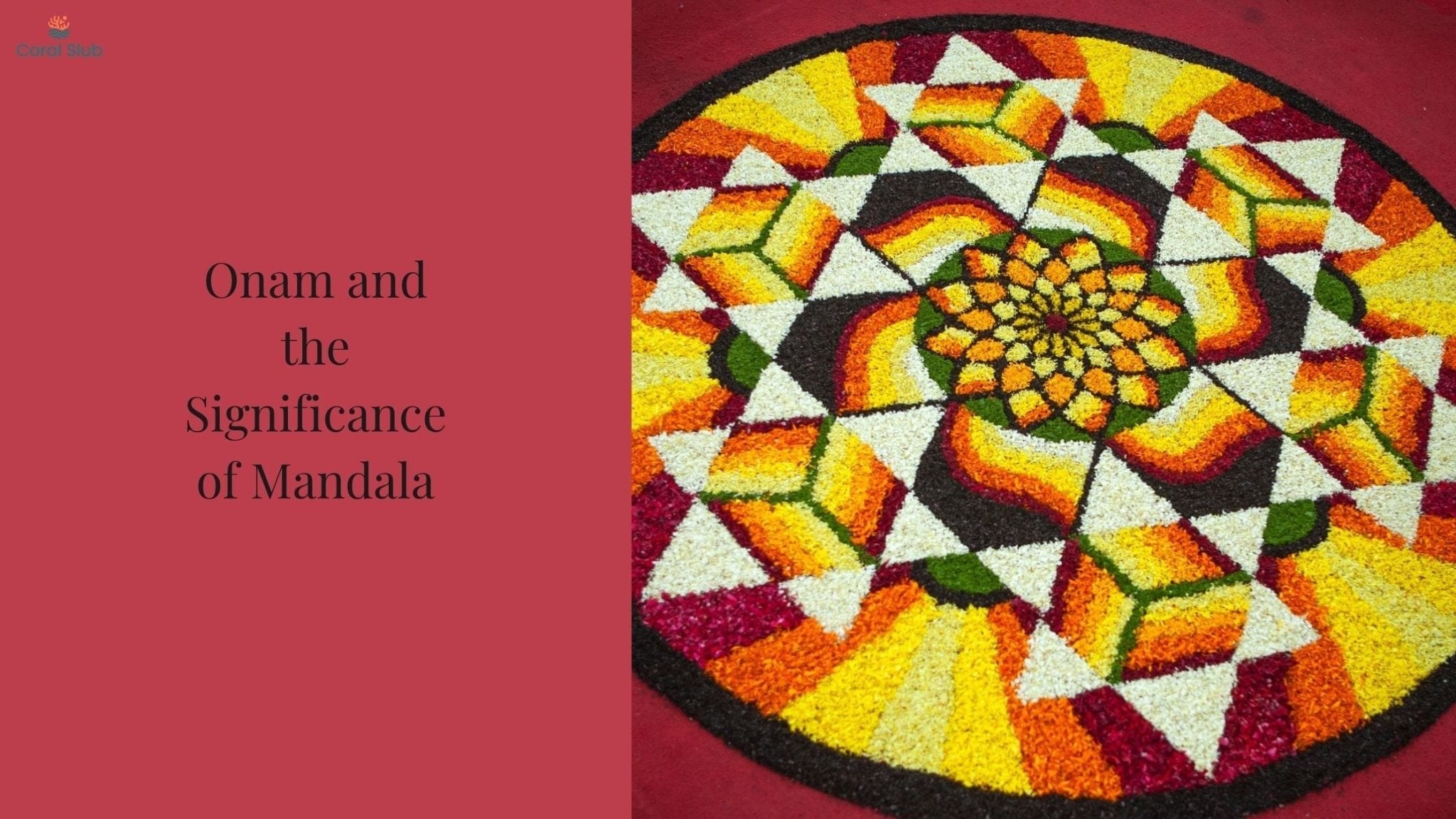
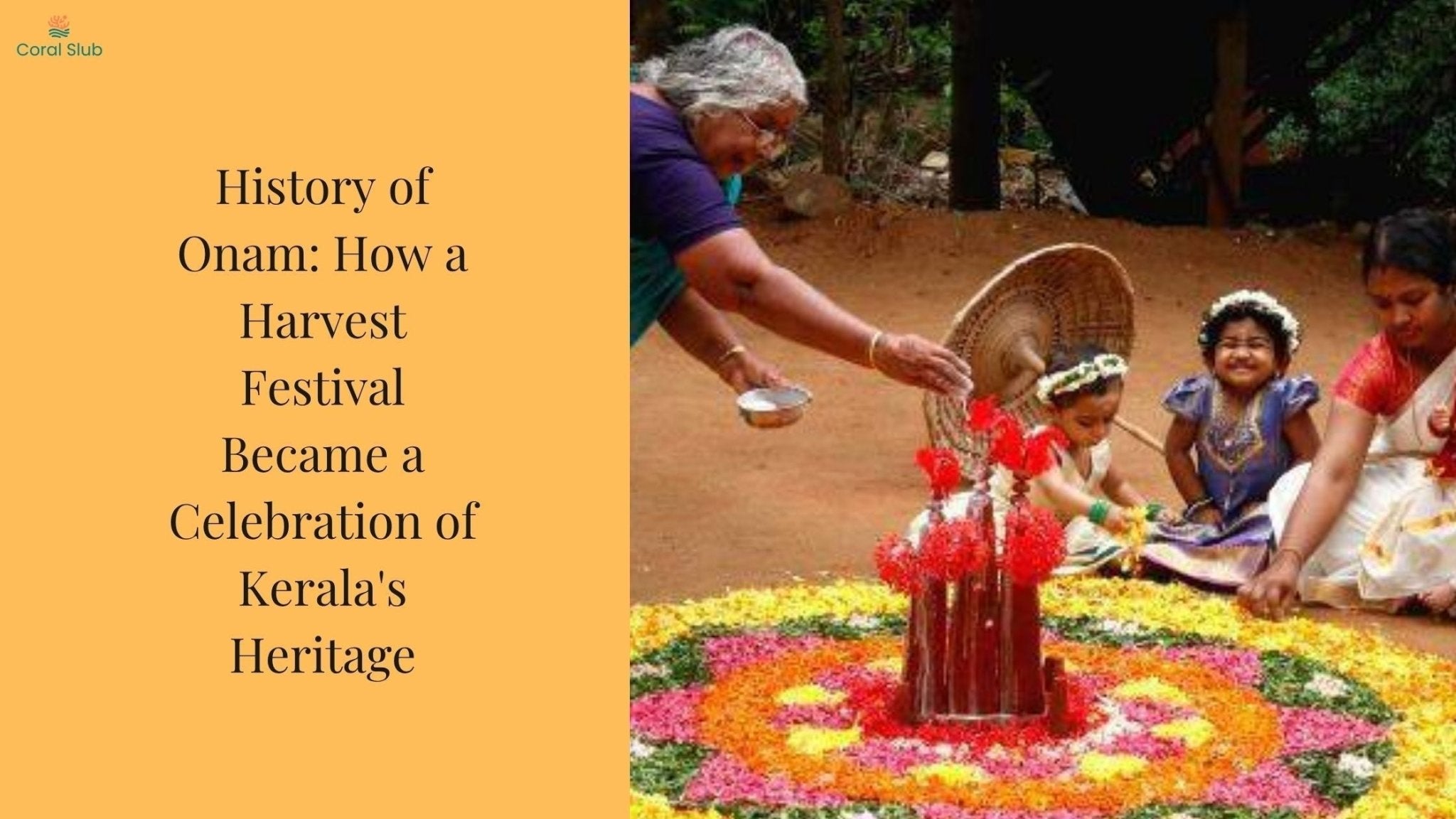
One of the most recognisable symbols of Onam is the Pookkalam, a decorative arrangement of flowers traditionally created outside homes.The tradition is closely connected to welcoming Mahabali.
Each day of Onam brings additional layers and flowers to the Pookkalam, turning it into an increasingly elaborate floral design by Thiruvonam.
More Than Just Decoration
The Pookkalam also represents creativity, community and the beauty of Kerala's natural landscape.
Families, especially children, often participate in collecting flowers and creating designs together. What begins as a small arrangement becomes a shared expression of celebration.
The Tradition of Onasadya

A Feast That Represents Abundance
If Pookkalam represents the visual identity of Onam, Onasadya represents its culinary heart.Onasadya is an elaborate vegetarian feast traditionally served on a banana leaf. It includes a variety of preparations made with rice, vegetables, coconut, lentils, pickles and traditional accompaniments, ending with desserts such as payasam.
Kerala Tourism describes the Sadya as an expression of abundance and togetherness, with the meal traditionally enjoyed communally.
Why Food Is So Important to Onam
The connection goes back to the agricultural character of the festival.A harvest festival naturally celebrates food, and Onasadya transforms that abundance into a shared experience. The meal is not simply about what is served. It is about sitting together, sharing food and making sure everyone has a place at the table.
Vallamkali: The Famous Snake Boat Race

Where Tradition Meets Community Spirit
Another defining feature of Onam is Vallamkali, the traditional snake boat race.Long, narrow boats carrying large teams of rowers move through Kerala's waterways to the rhythm of songs and coordinated rowing. The races have become one of the most spectacular public expressions of the Onam season.
The tradition demonstrates the importance of teamwork and community, with entire groups working together toward a shared goal. Kerala Tourism identifies Vallamkali as one of the major highlights of the Onam celebrations.
Onam's Traditional Arts and Performances

A Festival Filled with Kerala's Cultural Expressions
Onam is also a showcase of Kerala's performing arts.Traditional celebrations can feature Pulikali, Kaikottikali, Thiruvathirakali, Kathakali and other forms of music, dance and performance.
Pulikali, in particular, is known for its performers painting themselves like tigers and dancing to traditional rhythms. These performances add colour, humour and energy to the festival.Through these traditions, Onam becomes more than a religious or harvest festival. It becomes a celebration of Kerala's wider cultural identity.
How Onam Became a Festival for Everyone

A Celebration of Unity
One of the distinctive characteristics of Onam is its broad social participation.Onam is celebrated across communities and that Thiruvonam brings people together irrespective of religion and caste.
The story of Mahabali also contributes to this inclusive character. The legendary king is remembered for treating his subjects equally, making the ideal of social harmony central to the festival's cultural interpretation.This is why Onam today extends far beyond a single religious observance.
Onam in Modern Kerala
From Tradition to Contemporary Celebration
The way Onam is celebrated has naturally changed over time.Modern celebrations include community events, cultural programmes, shopping, public performances, tourism festivals and celebrations among Malayalis living outside Kerala.
Yet the essential elements remain recognisable: flowers, food, new clothes, family gatherings, traditional arts and the story of Mahabali.Onam is as a celebration of Kerala's culture, hospitality and agricultural heritage.
Final Thoughts

Onam is much more than a festival that arrives once a year.It is a living expression of Kerala's cultural memory. Its history brings together ancient agricultural traditions, folklore, mythology, regional history and community celebration. The story of Mahabali gives the festival its emotional centre, while the harvest gives it a connection to the land and the Pookkalam, Onasadya, Vallamkali and traditional arts give it its unmistakable cultural identity.
Perhaps that is why Onam continues to resonate even as lifestyles change. The festival is ultimately built around ideas that remain universal: welcoming loved ones home, sharing what we have, celebrating abundance and imagining a society rooted in equality and happiness.
And every year, when the flowers are arranged and the feast is served, Kerala welcomes Mahabali once again.
Bring the Spirit of Onam into Your Home with Coral Slub

Indian Craftsmanship for Festive Living
Onam celebrates the beauty of Kerala through flowers, food, craftsmanship and togetherness. Coral Slub brings that same appreciation for Indian textile traditions into contemporary homes through thoughtfully designed cotton cushion covers, table runners and home furnishings inspired by India's rich craft heritage.
For an Onam celebration, handcrafted textiles can add warmth and colour to the living room or dining table while complementing traditional floral arrangements and the festive Sadya setting. Thoughtful textiles allow the spirit of Indian craftsmanship to become part of everyday celebrations, long after the festival is over.
Frequently Asked Questions
1.What is the history of Onam?
Onam has both mythological and agricultural roots. It is traditionally associated with the annual return of the legendary King Mahabali, while its timing in the Malayalam month of Chingam connects it with Kerala's agricultural cycle and harvest. Historical and literary references suggest that celebrations associated with Onam are centuries old, although its exact origin date cannot be established with certainty.
2.Who was King Mahabali?
Mahabali, or Maveli, is the legendary king at the centre of the Onam story. He is remembered as a generous and just ruler whose kingdom was associated with prosperity and equality. According to the traditional legend, Lord Vishnu appeared as Vamana and eventually sent Mahabali to the netherworld, while allowing him to visit his subjects once a year.
3.Why is Onam celebrated for 10 days?
The traditional Onam festival begins with Atham and culminates in Thiruvonam, the tenth and most important day. The celebrations gradually build through flower arrangements, preparations, cultural activities and festive meals.
4.What is the significance of Pookkalam during Onam?
Pookkalam is a floral carpet created during the Onam season. It is traditionally associated with welcoming King Mahabali, with flowers and patterns developing throughout the ten-day celebration.
What is Onasadya?
Onasadya is the elaborate vegetarian feast traditionally prepared during Onam and served on a banana leaf. It brings together numerous Kerala dishes and represents abundance, hospitality and communal celebration.
When is Onam 2026?
Thiruvonam, the main day of Onam, falls on 26 August 2026. The broader ten-day celebration begins with Atham and culminates in Thiruvonam. Festival dates can vary slightly according to local customs and traditions, so local calendars should be checked for specific observances.