Cart
0
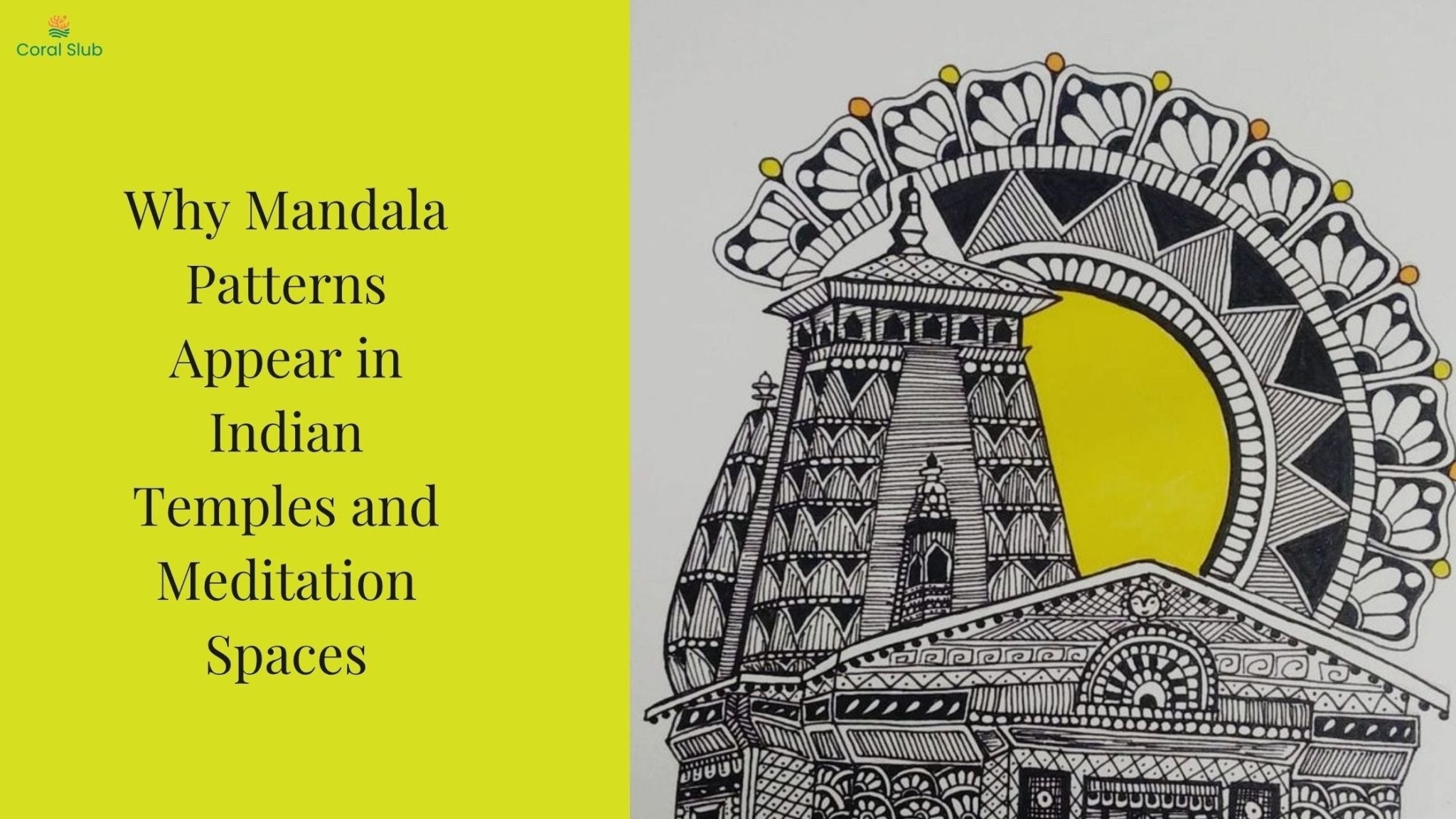
Walk into an ancient Indian temple and you begin to notice something unusual. The repetition of circles. Symmetrical carvings. Lotus formations radiating outward from a central point. Ceilings that draw the eye inward and upward at the same time. Even before understanding the meaning, you feel the effect.
There is a reason for that. Mandala patterns were never created simply as decoration. In Indian spiritual traditions, they were designed as tools for concentration, balance, and connection. Every line, shape, and layer within a mandala carries intention. This is why these patterns appear repeatedly across temples, meditation halls, sacred architecture, and spiritual art throughout India.
A mandala does not just fill a space visually. It changes how the space is experienced.
What Does “Mandala” Actually Mean?

The word mandala comes from Sanskrit and translates to “circle.” But spiritually, it represents much more than a geometric form. In Hindu and Buddhist philosophy, the mandala symbolises the universe, wholeness, and the relationship between the inner self and the cosmos.
At the centre of every mandala is a focal point known as the bindu, which represents stillness, origin, and spiritual consciousness. From this point, patterns expand outward in balanced symmetry. This movement from centre to outer layers reflects both the structure of the universe and the inward journey of meditation itself.
Why Mandalas Are Used in Indian Temples
Temples Were Designed as Spiritual Experiences

Ancient Indian temples were never meant to function only as physical structures.
They were carefully designed spiritual environments intended to guide the mind toward focus and devotion. Architecture, carvings, geometry, sound, and light all worked together to create this experience.
Mandala patterns became central to this process because symmetry naturally calms the human mind. The eye follows the balanced repetition, reducing visual distraction and creating mental stillness.
The Temple Itself Often Follows Mandala Geometry

Many Indian temples are built according to sacred geometric diagrams known as Vastu Purusha Mandalas.
The layout of the temple, including the entrance, pathways, pillars, and sanctum, often follows a structured grid representing cosmic order. The innermost sanctum, or garbhagriha, symbolises the spiritual centre, much like the bindu in a mandala.
This means that when you walk through a temple, you are not simply entering a building.You are moving through a symbolic mandala.
The Connection Between Mandalas and Meditation
Why Symmetry Helps the Mind Slow Down

Meditation requires focus.But the human mind is naturally restless. Mandalas help direct that restless attention into a repetitive and structured visual path. As the eye follows the circular symmetry, the mind gradually becomes quieter and more centred.
This is why mandalas are commonly used in meditation spaces across Indian spiritual traditions.They create visual stillness that supports mental stillness.
Mandalas as a Tool for Concentration

In several yogic and Buddhist practices, practitioners meditate by focusing directly on a mandala.The process of observing the intricate geometry trains concentration while also encouraging inward awareness. Over time, the repeated focus on the centre of the mandala symbolises returning to one’s own centre internally.
This is why mandalas are not merely symbolic.They are functional spiritual tools.The Lotus and Mandala Connection in Indian Temples
Why Lotus Patterns Appear Repeatedly

Many mandalas used in temples include lotus formations.The lotus holds deep spiritual significance in Indian philosophy because it represents purity, awakening, and spiritual growth. It rises from muddy water yet blooms untouched, making it a symbol of transcendence.
When integrated into mandala patterns, the lotus reinforces the idea of spiritual expansion from the centre outward.
Mandalas in Buddhist Meditation Spaces
Sand Mandalas and Impermanence

In Tibetan Buddhist traditions, monks create intricate sand mandalas using coloured grains of sand.
These designs can take days or weeks to complete, yet they are intentionally destroyed afterward. This practice symbolises impermanence, reminding practitioners that everything in life is temporary. The process itself becomes a meditation in patience, precision, and detachment.
Why Mandalas Still Feel Powerful Today
Ancient Symbolism Meets Modern Psychology
 Even outside religious contexts, mandalas continue to resonate strongly.Modern psychology has explored how symmetrical patterns and repetitive geometry affect the brain. Studies suggest that structured visual forms can reduce stress and encourage mindfulness. This helps explain why mandala colouring books, meditation art, and mandala-inspired interiors remain so popular today.
What ancient traditions understood intuitively, modern science is beginning to articulate.
Mandalas in Modern Indian Interiors
Bringing Sacred Geometry Into Everyday Spaces

Today, mandala motifs appear far beyond temples. They are integrated into wall art, textiles, cushion covers, rugs, and meditation corners because they bring a sense of calm and balance into modern homes. Their spiritual symbolism remains, even when adapted into contemporary décor.
This is why mandala patterns often make spaces feel grounded without overwhelming them.
The Emotional Power of Circular Patterns

Unlike sharp or fragmented designs, circular forms feel complete. There is no beginning and no end. This creates a subconscious sense of continuity and balance, which is one reason mandalas feel emotionally calming.
In spiritual spaces, this visual completeness mirrors the idea of unity between the self and the universe.
Final Thoughts

Mandala patterns appear in Indian temples and meditation spaces because they were never meant to be ordinary decoration.
They were created to guide attention, quiet the mind, and symbolise something larger than the physical world. Through sacred geometry, symmetry, and repetition, they transform architecture into experience and art into meditation.
Even today, centuries later, their impact remains unchanged. Because beyond the patterns themselves, mandalas continue to offer something people are still searching for: Stillness, balance, and a sense of connection within the spaces we inhabit.