Cart
0
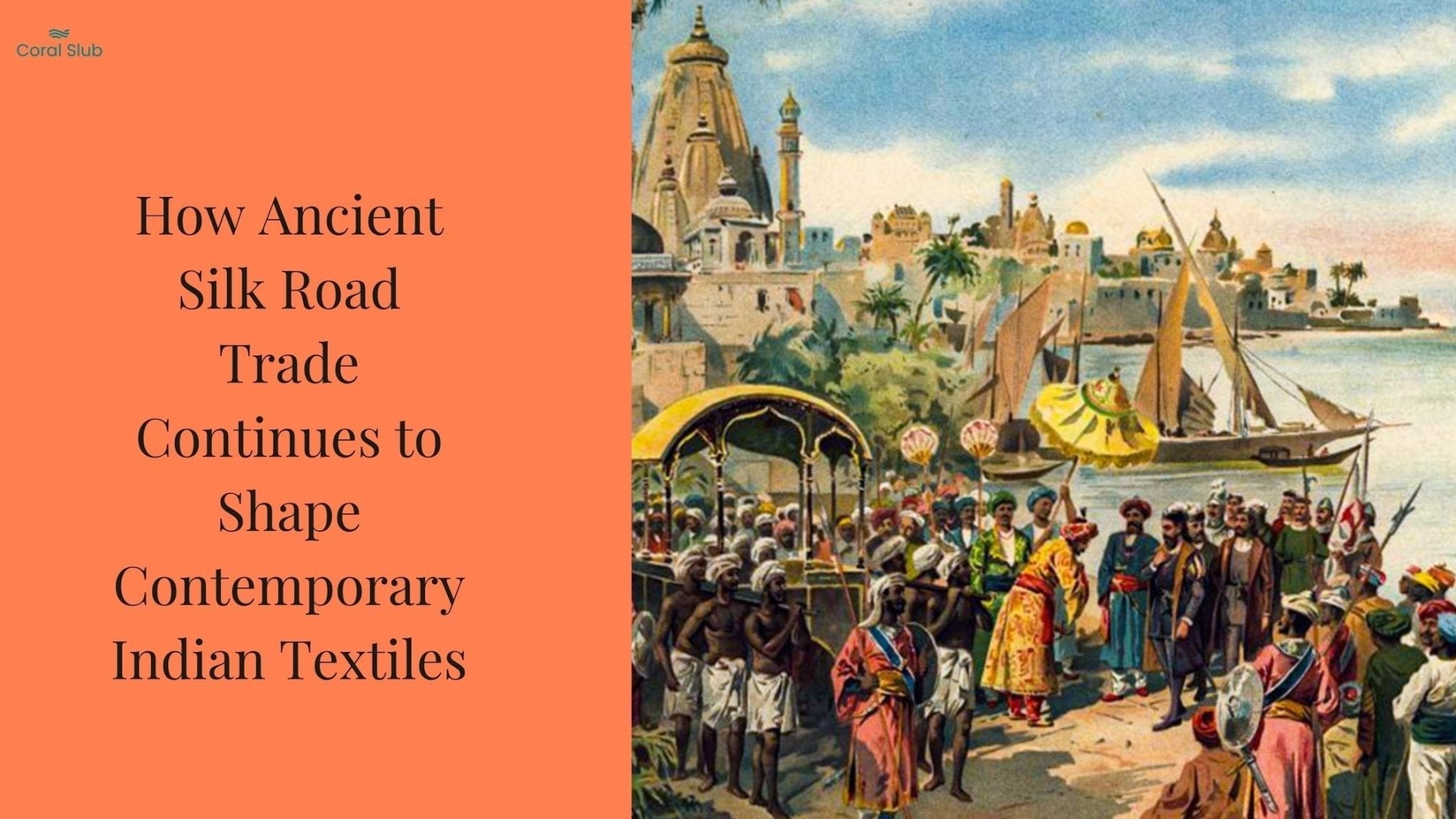
When people hear the words Silk Road, they usually imagine caravans carrying silk across deserts between China and Europe.
But the Silk Road was never just one road. And it was never just about silk.For nearly 1,500 years, it functioned as one of the world’s largest cultural and commercial networks, connecting China, Central Asia, India, the Middle East, Africa, and Rome through both land and maritime trade routes. It carried spices, gemstones, dyes, textiles, paper, porcelain, stories, religions, and ideas across continents long before the modern world existed.
And sitting at the centre of this exchange was India.Not just geographically, but culturally.India became one of the most important textile hubs of the Silk Road, influencing the fabrics, techniques, and motifs that would travel across the world and evolve over centuries. In fact, many of the textiles we think of today as deeply Indian, Kalamkari, Ikat, block prints, tie-dye, actually carry traces of Silk Road exchange within them.
This is precisely why we named our Silk Road sheer curtains in rust and green mul after this historic network.
Because these textiles are not just fabric. They are evidence of centuries of movement, trade, migration, and shared craftsmanship.
What the Silk Road Actually Was
More Than a Trade Route

The Silk Road was not a single road stretching neatly across Asia.It was a massive network of interconnected trade routes that linked East and West from roughly the 2nd century BCE to the 15th century CE. Some routes crossed deserts and mountains through Central Asia, while others travelled across oceans through maritime trade networks.
The maritime branch, often called the Maritime Silk Road, connected Chinese ports to Southeast Asia, India, the Arabian Peninsula, East Africa, and eventually Europe.And India became one of its most influential stops.
Why India Was Central to the Silk Road
India sat at the intersection of multiple trade systems.Merchants travelling between East and West stopped at Indian ports not only to trade goods, but also to exchange knowledge, religion, craft techniques, and artistic ideas. Indian cottons, dyes, spices, and handwoven textiles became some of the most sought-after products across global markets.
At the same time, foreign influences entered India through the same routes, slowly shaping Indian craft traditions over centuries.This is why many Indian textiles are layered with influences from Persia, Central Asia, Southeast Asia, and China while still remaining distinctly Indian.
Silk Was Only One Part of the Story
What Actually Travelled Along the Silk Road

The Silk Road carried far more than luxury fabric. Spices from India moved westward. Paper-making techniques travelled from China. Buddhism spread across Asia through monks and manuscripts. Islamic art and geometric design entered Indian visual culture through trade and migration.
Textiles travelled constantly between regions, carrying techniques, patterns, and dyeing methods with them. Even devastating events travelled these routes. Historians widely believe that the Black Death spread partially through Silk Road trade caravans moving between Asia and Europe. The Silk Road was not just commerce.It was cultural transmission on a global scale.
How the Silk Road Shaped Indian Textiles
Kalamkari and Persian Influence

Kalamkari, one of India’s oldest textile traditions, evolved significantly through maritime trade connections with Persia and the Middle East.
The word itself comes from Persian:
-
Kalam meaning pen
-
Kari meaning craftsmanship
Originally created using hand painting and natural dyes, Kalamkari textiles often included floral vines, intricate borders, and narrative storytelling motifs influenced by Persian aesthetics and Indo-Islamic art traditions.
Through Silk Road trade, these textiles travelled internationally while also absorbing foreign artistic influences into Indian craftsmanship.
Ikat and the Movement of Resist Dyeing

Ikat weaving exists across India, Southeast Asia, Central Asia, and parts of South America. The technique involves dyeing yarns before weaving them into patterns, creating the characteristic blurred effect Ikat is known for. Historians believe resist dyeing methods spread through interconnected Silk Road textile exchanges between Indonesia, India, and Central Asia over centuries.
Indian Ikat traditions, particularly from Odisha and Gujarat, became globally recognised because of these trade networks.
Block Printing and Global Trade

Hand block printing flourished in India partly because of international demand.Indian cotton block prints became highly prized across Persia, Africa, Southeast Asia, and Europe because of their vibrant natural dyes and intricate craftsmanship.
Trade routes encouraged artisans to experiment with motifs, layouts, and colour palettes influenced by different regions. Even today, many traditional Indian block prints carry floral and geometric influences that originated through centuries of Silk Road cultural exchange.
Tie-Dye Traditions Across Cultures

Tie-dye techniques travelled widely across ancient trade networks. Bandhani from Gujarat and Rajasthan shares conceptual similarities with resist-dyeing traditions found across Asia and Africa. Through trade and migration, textile techniques moved continuously between cultures, evolving differently in each region.
This is one reason textile history rarely belongs to a single country alone. Craft traditions grow through exchange.
Why These Textiles Still Matter Today
Handmade Textiles Carry Human History

When you look at handcrafted textiles today, it is easy to see only colour or pattern.But many of these fabrics carry centuries of movement and exchange within them. They reflect journeys made by merchants, artisans, travellers, and migrants across oceans and deserts long before globalisation became a modern term.This is what makes handcrafted textiles feel emotionally rich.They are not static objects.They are living histories.
The Silk Road Influence in Modern Interior
Why Heritage Textiles Feel So Relevant Again

Modern interiors are increasingly moving toward warmth, texture, and storytelling. People are looking for homes that feel layered and meaningful rather than perfectly manufactured. This is one reason handcrafted textiles rooted in history continue to resonate so strongly today.
Block prints, Ikats, Kalamkari fabrics, and woven cottons bring something machine-made décor often cannot: A sense of continuity.
How Silk Road Textiles Add Depth to a Home
Textiles inspired by Silk Road traditions work beautifully in interiors because they naturally combine colour, craft, and cultural richness.A block-printed cushion cover, an Ikat throw, or sheer mul curtains in earthy tones instantly add softness and depth without feeling excessive.These textiles carry movement within them, visually and historically.
The name was never just aesthetic.It was a reminder that textiles have always travelled, evolved, and connected cultures across time.
Which Silk Road Textile Is Already in Your Home?

You may already own one without realising it.
A Kalamkari cushion.An Ikat runner. A hand block-printed bedsheet. A Bandhani textile passed through generations.
These fabrics are not simply decorative pieces.They are fragments of one of history’s greatest cultural exchanges, still quietly living inside modern homes.
Final Thoughts

The Silk Road was never really about silk alone.It was about movement. Of people, ideas, religions, techniques, colours, and craftsmanship across continents over centuries. And textiles became one of the most powerful records of that movement because fabric absorbs history in ways few objects can.
Even today, the textiles we surround ourselves with continue to carry those stories forward.Which means the block print on your table, the Ikat on your sofa, or the Kalamkari hanging in your home may be connected to journeys that began hundreds of years ago across deserts, oceans, and ancient ports.
And perhaps that is what makes handcrafted textiles feel so timeless.They remind us that homes have always been shaped not just by where we live, but by the stories that travelled to reach us.